Your first Nepal trek: expectations versus reality
What a first Nepal trek is really like compared with the photos, from crowds, cold and tiredness to the Everest view that base camp itself does not give you, with honest advice on mindset.
A first Nepal trek is more crowded, colder, more tiring and more communal than the photographs suggest, and also kinder, funnier and more rewarding than most people expect. You will not be alone in a pristine wilderness; you will share narrow paths with porters, yak trains and other trekkers, sleep in a cold room, eat dal bhat more times than you can count and discover that the famous view is not always where you thought. This guide sets out what the experience is really like, using the Everest Base Camp route as the main example, so you can arrive with realistic expectations and enjoy it more.
Everest Base Camp Trek için açık geziler
Partner arayan trekkingcilerin paylaştığı gerçek geziler.

Expectation: wilderness. Reality: a busy, living trail
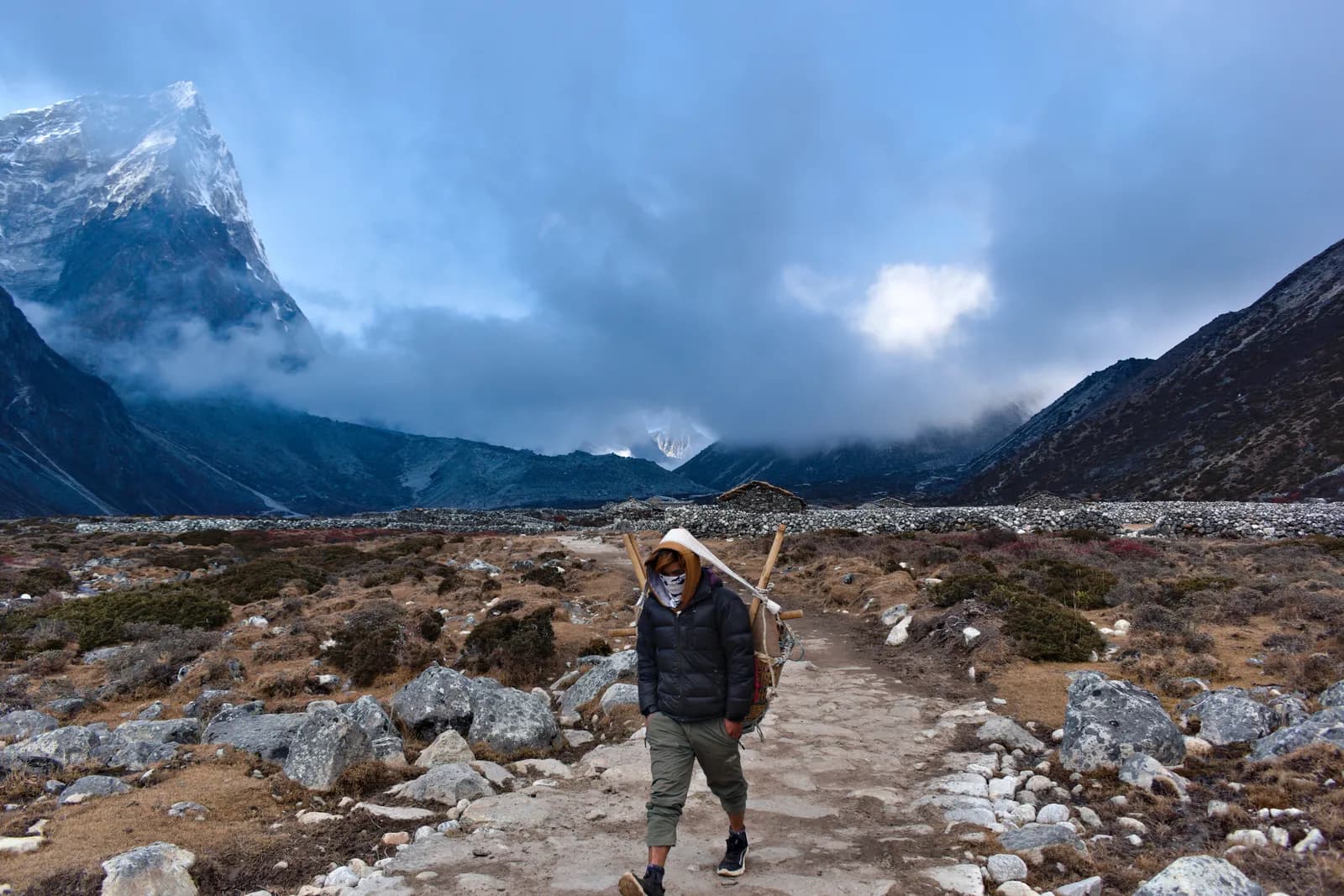
Social media shows empty ridges and a lone figure facing a peak. On a popular route in October or spring, the reality is a working trail. You walk beside porters carrying doors, gas cylinders and crates, past yak and mule trains, through villages with shops and bakeries and into lodges full of other trekkers. On the Everest route, a suspension bridge may have a queue, and a staircase may be shared with a group of thirty.
That is not a complaint. The trail is a lifeline for the communities who live along it, and the company is part of the appeal. Dining rooms are where you meet people from everywhere, compare routes and find walking companions. If you want solitude, choose a quieter route or travel in the shoulder season; our guide to choosing a route compares options.
Expectation: stunning views every hour. Reality: views come in bursts
The mountains appear in the morning and evening, and cloud often covers them by mid-morning. On many days the walk is through forest, along river valleys or beside terraced fields, with the peaks hidden. Then a cloud lifts and the view takes your breath away. The views are real but unpredictable, and you cannot guarantee them. Start early, because mornings are clearest, and be patient.
On the Poon Hill trek, for example, the great view is at dawn from the top, after a pre-dawn climb in the cold, and by the time you have breakfast the cloud may have moved in. Our guide to a typical day on the trail describes the rhythm.
Expectation: Everest at base camp. Reality: no Everest
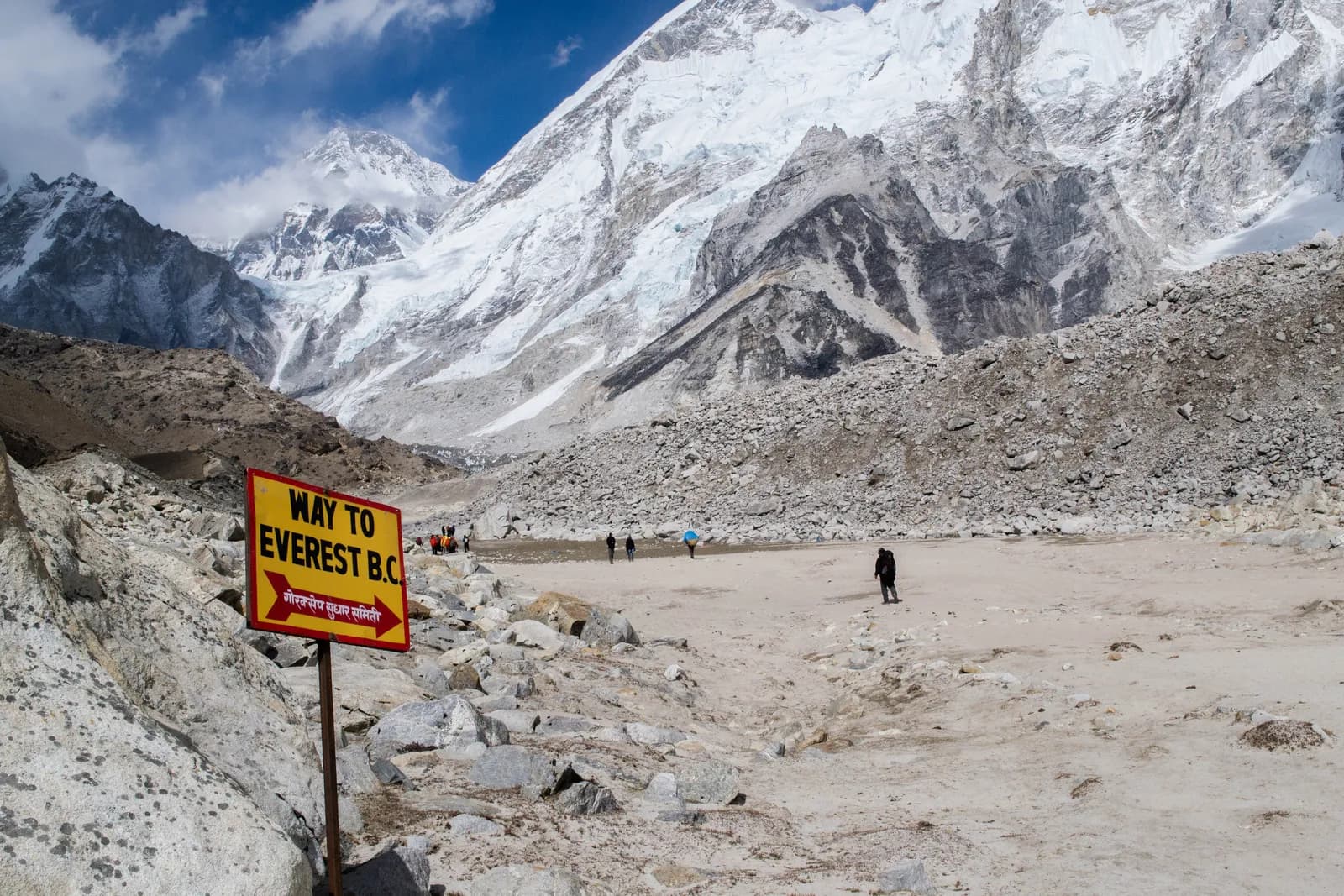
This is the one that surprises the most people. In our Everest Base Camp plan, day 8 walks from Lobuche to Gorak Shep at 5,164 m, then, after lunch and a rest, a further three hours along the glacier edge to Everest Base Camp at about 5,364 m, marked by prayer flags and, in spring, a tent city for expeditions. The Khumbu Icefall is visible above, but Everest itself is hidden behind Nuptse. The view that most people want comes the next morning, on day 9, from Kala Patthar, a rocky ridge at about 5,550 m, reached by a roughly two-hour climb starting in the dark. At the top the sun rises behind Everest, Nuptse and Pumori, and the Khumbu Glacier lies far below. It is cold and often windy.
So base camp is a place, not a view. The signpost in the photograph above, reading "Way to Everest Base Camp", and the trekkers posing on the rubble show the moment. Many people find the tent city and the glacier more interesting than they expected, but if the summit view is your goal, plan for Kala Patthar and a clear morning.
Expectation: I will be fine. Reality: altitude is unpredictable
Altitude affects people in ways that do not follow fitness or age. You may feel a mild headache, poor sleep, loss of appetite or breathlessness on stairs at 3,500 m and above. Some people are ill and need to descend. The CDC suggests, above 3,000 m, raising your sleeping altitude by no more than about 500 m a night, with an extra night for every 1,000 m gained. The plan's rest days at Namche Bazaar and Dingboche exist for this reason. Do not treat them as optional.
The realistic mindset is to expect mild symptoms and to tell your guide about them. Breathlessness at rest, a wet cough, confusion or loss of coordination are emergencies that need an immediate descent. Read altitude sickness basics and what normal looks like at altitude before you go.
Expectation: comfortable lodges. Reality: simple, cold and shared
Teahouse rooms are small, with foam mattresses and thin walls, and no heating. Toilets are shared and basic, hot showers cost extra and may not exist at the top. The only warm room is the dining room, with its stove. You will sleep in your clothes at altitude, wake with a frozen bottle and find that your breath fogs the room. Our guide to rooms and bedding and toilets and hygiene guide prepare you.
On the positive side, lodges are warm in the evening, owners are welcoming and the simplicity grows on you. Most trekkers end up fond of the stove and the tea.
Expectation: easy walking. Reality: stairs, stairs, stairs
Nepal's trails climb and descend constantly, with long flights of stone steps. The distances in the plan look short, but the days run five to seven hours because of the terrain. The fatigue builds over days. On Everest Base Camp, the return days of about seven hours each are as demanding as the climb. Train for stairs and descents, and use poles. Our guide to how fit you need to be and the home training plan help.
Expectation: I will love the food. Reality: it is good and repetitive
Dal bhat, with free refills, is filling, and momos, soups and pancakes are welcome. But menus repeat from lodge to lodge, appetite fades at altitude and by day ten you may crave something fresh and different. Eat anyway, and carry snacks you enjoy. Read dal bhat and the teahouse menu for what to expect.
Expectation: nothing will go wrong. Reality: the plan will change
Flights are delayed, a pass is closed, a partner is ill, a day of rain forces a rest. This is normal. Build spare days into your plan and be ready to adjust. Our buffer days guide explains how, and what if your partner cannot continue covers a common problem. The guide rule also shapes what is possible: a licensed guide through a registered agency is required in restricted areas (Department of Immigration) and, under the Nepal Tourism Board rule of April 2023, in national parks and conservation areas, where 2026 operator reports say checkpoints enforce it in Annapurna and Langtang but not in Khumbu (checked 19 October 2026).
What people say they did not expect
- How much they enjoyed the daily rhythm and the lack of screens.
- How tired they were by day four, and how much better they felt after a rest.
- How kind the lodge families and porters were.
- How cold the nights were, and how much they valued a good sleeping bag.
- How emotional the summit or the last day felt.
- How much they wanted to come back.
A mindset that helps
Go slowly. Treat each day as a separate walk. Talk to your guide, who has seen it all before. Do not compare yourself with faster trekkers. Allow for the weather, your body and the plan to change. Value the process, the villages and the people as much as the view. If you have to turn back, you have still had an extraordinary journey, and the mountain will be there next year.
For more preparation, read the first-time trekking guide, ten mistakes first-timers make and the first-timers hub. If you want company to share the experience and the costs, see the Everest Base Camp partner page.