Trekking in Nepal with Asthma, Diabetes or Pregnancy
Trekking at altitude with asthma, diabetes or pregnancy is a medical decision before it is a route decision. What the CDC and NHS say, what to ask your doctor, how to plan lower and slower, and what to tell your guide.
Trekking in Nepal with asthma, diabetes or pregnancy is possible for some people, but it is a medical decision first and a route decision second, and the safest plans keep you lower, slower and closer to help than a standard Everest or Annapurna itinerary. Talk to your own doctor or a travel clinic well before you book, tell your guide and partner what to expect, and choose a route where a descent or a road is never far away. This guide sets out what the CDC and NHS advise in general terms, and what to plan around; it cannot tell you whether you are fit to go, and it is not medical advice.
Three conditions come up often when people look for a trekking partner, and each has its own problems with altitude, cold and remoteness. Before we go further: if you are pregnant, have a heart or lung condition, or manage diabetes with insulin, the sensible first step is an appointment, not a route search. For the general risks, read altitude sickness basics and the acclimatisation schedule.
ทริปที่เปิดรับใน Poon Hill Trek (Ghorepani)
ทริปจริงที่นักเทรคโพสต์เพื่อหาเพื่อนร่วมทาง

What the guidance says
The NHS describes altitude sickness as a risk above about 2,500 m, most likely if you climb quickly, and gives general rules that apply to everybody: climb slowly, take a rest day every three to four days once you are at 3,000 m or more, avoid sleeping more than 500 m higher than the night before above that height, drink enough water and avoid alcohol. It also advises speaking to a GP or travel clinic if you have had altitude sickness before or are going high quickly.
The CDC Yellow Book's altitude chapter goes further for travellers with existing conditions, advising that people with chronic heart, lung or other conditions, and women who are pregnant, should talk to a doctor before high-altitude travel. Neither source gives a safe altitude for a particular condition, and neither should be read as clearing anyone to go. The honest answer is individual: it depends on how stable your condition is, what you take, and how far from care you will be.
Asthma
Cold, dry air, dust, smoke and exertion can all set off asthma, and a trek has all of them. Lodge dining rooms are often heated by a wood or yak-dung stove and can be smoky, trails are dusty in the dry season and cold air at height irritates airways. Many people with well-controlled asthma trek without problems, and the plan is mostly about preparation.
- See your doctor first. Ask about your action plan, whether you should increase preventer treatment before going, and what to do if symptoms worsen far from a pharmacy.
- Carry more than you think you need. Take reliever and preventer inhalers, a spacer, and any oral steroid course your doctor has prescribed, in your daypack, not the porter's bag. Keep inhalers warm, because cold reduces how well some devices work; ask your pharmacist about your own.
- Know your triggers. If smoke bothers you, ask for a lodge room away from the kitchen and sit by the door in the dining room. A buff or mask across the mouth warms the air in the cold, and avoiding dust on the road sections helps.
- Do not confuse asthma with altitude illness. Breathlessness at rest, a cough that gets worse, a frothy or bloody cough or blue lips are signs of a serious problem and need descent and medical help; see HAPE and HACE warning signs.
Choose a route where you can retreat. Poon Hill, with a highest sleeping point of Ghorepani at 2,860 m, is a better first test than a high route.
Diabetes
Exercise, altitude, cold and unfamiliar food change glucose control, sometimes in opposite directions, and a long trek day uses far more energy than a normal day. Because the details depend on your regimen, the useful step is a conversation with your diabetes team about this particular trek.
Questions to ask include how to adjust insulin or other medication on walking days and rest days, how often to check glucose and what range to aim for, what to do for a low or high reading far from help, and how to store insulin and sensors in cold and heat. Cold can affect pens, pumps and meters, so ask the manufacturer or your clinician how to keep them warm in an inner pocket; do not leave them in a pack that sits outside overnight. Carry extra supplies of everything, split between two bags, plus fast-acting sugar in an easy-to-reach pocket, and a written summary of your condition and medication that a guide or clinician can read.
Tell your trekking partner and guide how to recognise a low and what to do, and show them where your sugar is. A guide who knows can act in minutes; one who does not will lose precious time. On the Everest trail, remember that a stomach upset and reduced appetite from altitude can cause low readings even if you take your medication as normal, which is why a plan matters more than a rule of thumb. Teahouse menus are heavy in rice, noodles, potatoes and sugary tea, so you will often need to ask for what you can eat; our dal bhat and teahouse menu guide covers the standard dishes.
Pregnancy
The CDC Yellow Book advises pregnant travellers to discuss high-altitude travel with a doctor, and most clinicians advise staying lower and near medical care. A remote trek offers neither emergency obstetric care nor a quick evacuation, and weather can ground helicopters and flights for days. If you are pregnant, the questions are for your obstetrician: what altitude, if any, they are comfortable with, how many weeks into the pregnancy you are, how far you will be from a hospital, and whether your travel insurance covers pregnancy-related claims at all.
If your doctor agrees to some walking, the lowest-risk plans are day walks and short, low treks with road access, such as the Kathmandu Valley hikes or the Ghandruk village trek, rather than a multi-day high route. Do not consider Everest Base Camp or the Annapurna Circuit without explicit medical advice, and expect a strong recommendation to wait.
Travel insurance and the paperwork
Declare every condition when you buy insurance, because an undeclared one can void a claim. Check that the policy covers trekking to the altitude you plan, covers emergency helicopter evacuation, and covers pre-existing conditions or says clearly what it excludes; read the schedule for any altitude limit. Carry a printed copy of the policy number and the insurer's 24-hour emergency number, and give a copy to your guide.
The permit system does not ask about health. The restricted-area and conservation-area permits are described in our permits explained guide, and none requires a medical certificate. That is no substitute for your own check.
What to tell your guide and your partner
A guide cannot respond to a problem he does not know about. Before you start, tell your guide and any partner:
- The condition, the medication and the dose, and where you keep it.
- What an attack, low blood sugar or other warning looks like, and what helps.
- What you want done in an emergency, including who to call and what the insurer needs.
- That you may stop, rest or turn back, and that doing so is normal.
A good guide will welcome this. Our guides on trekking partner safety roles, signals and emergency plan and what to do if your partner cannot continue show how to set it up. If you are still looking for a partner who will be patient with a slower plan, matching pace and fitness is the post to read.
Where help is on the trail
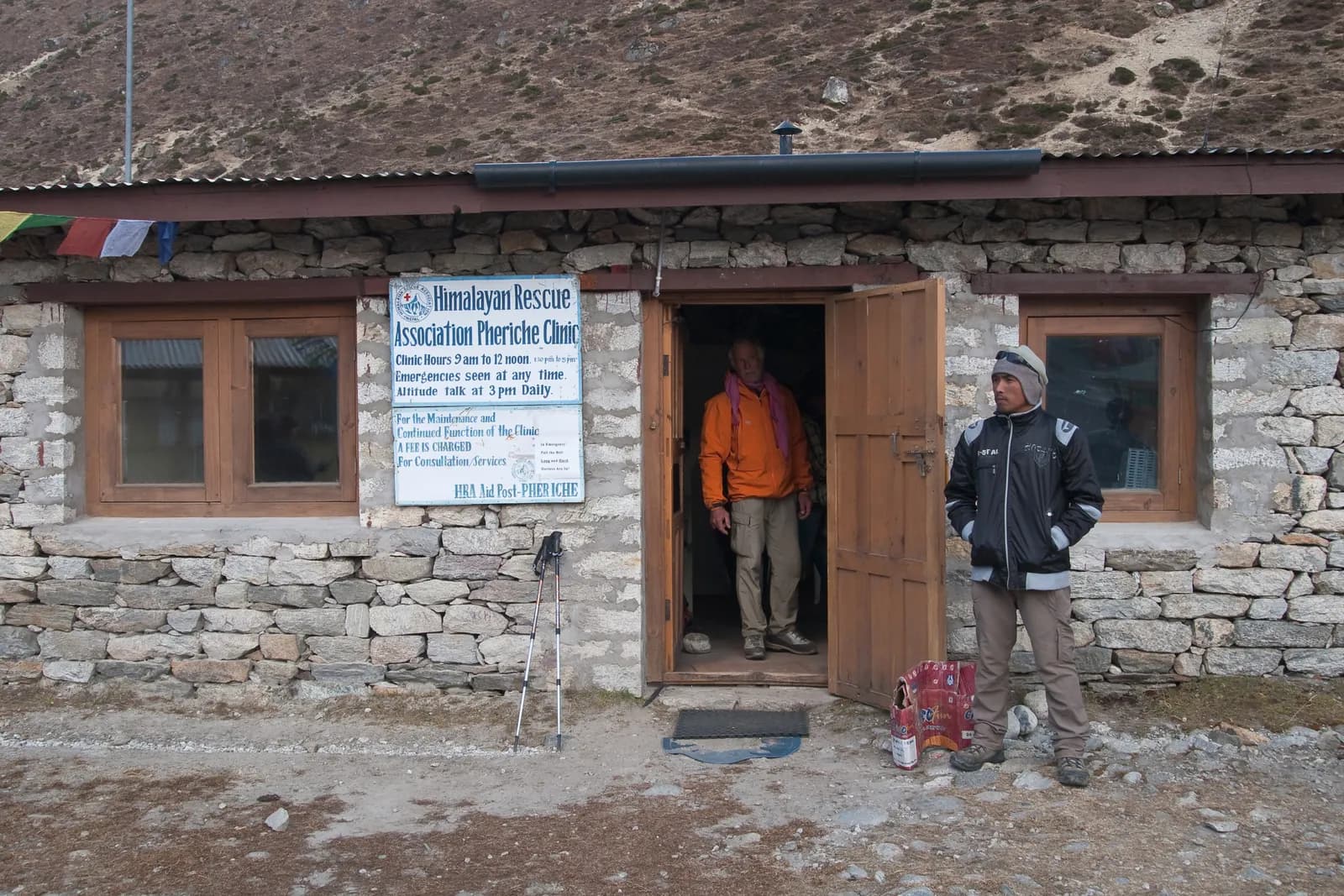
The Himalayan Rescue Association runs seasonal aid posts at Manang on the Annapurna Circuit and Pheriche on the Everest trail that give advice and basic care, and our guide to the HRA clinics at Manang and Pheriche explains what they do and do not offer. Away from them, health posts are small and distances are long. On the Everest Base Camp trek, Pheriche sits at 4,371 m and Gorak Shep at 5,164 m, so a descent takes a day or more; that is the kind of margin that matters if you have a condition.
Choosing a route
The routes with the best margins are the low ones: Poon Hill, the Ghandruk village trek and Kathmandu Valley hikes keep you below about 3,000 m and close to roads. If your doctor is comfortable with more, a gradual route with a spare day and lodges at every stop is better than a fast one. Our which Nepal trek is right for you guide compares options, and the first-time trekking guide covers preparation.
The short version
See your doctor, choose low and slow, carry spare medication in your own pack, insure properly and tell the people who walk with you. For more, browse the altitude and health category.
วางแผนเทรคนี้
- คู่มือภูมิภาค Everest (Khumbu)
- คู่มือภูมิภาค Annapurna
- คู่มือภูมิภาค Pokhara
- Trekking partner for Poon Hill Trek (Ghorepani)
- Trekking partner for Everest Base Camp Trek
- Trekking partner for Ghandruk Village 2-Day Trek
- แผนการเดินทาง Poon Hill Trek (Ghorepani)
- แผนการเดินทาง Everest Base Camp Trek
- แผนการเดินทาง Ghandruk Village 2-Day Trek