

Spring versus Autumn Trekking in Nepal
Spring brings rhododendrons, warm days and haze; autumn brings the clearest air, dry trails and the biggest crowds. A side-by-side comparison of Nepal's two trekking seasons by views, weather, crowds, flowers, passes and cost.
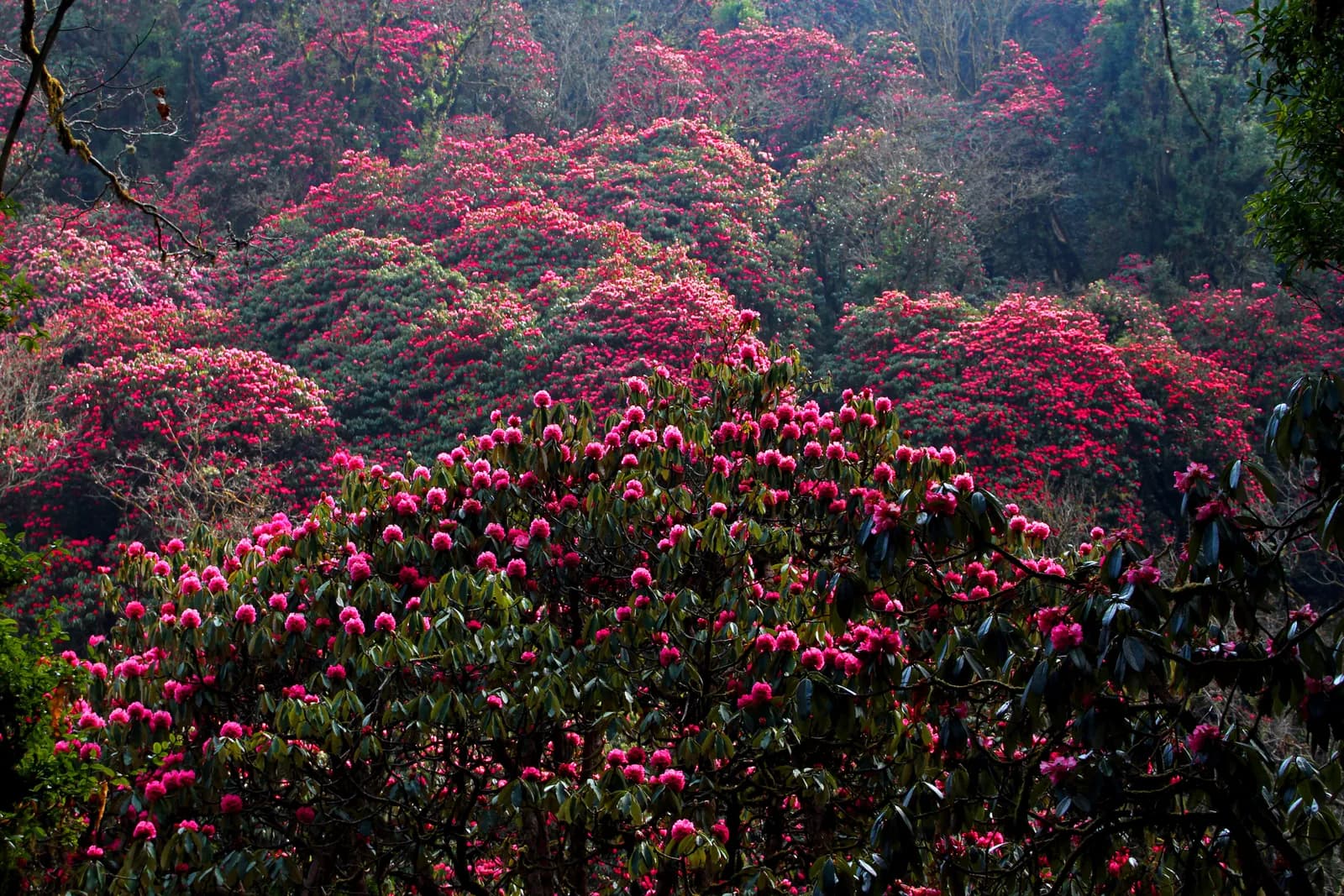
Choose autumn (October to November) if you want the clearest mountain views, dry trails and settled weather and can live with the biggest crowds; choose spring (March to May) if you want rhododendron forests in bloom, warmer days and a quieter month than October, and can accept hazier views and afternoon cloud. Neither is a bad choice; they are the two trekking seasons for good reason. The monsoon sits between them, and the real mistake is to pick a season by the calendar without checking the route.
This comparison uses our region pages (Everest, Annapurna and Langtang list March to May and October to November as best seasons) and our month-by-month guides. The hub is which Nepal trek is right for you, and the full seasonal picture is in best time to trek in Nepal.
ทริปที่เปิดรับใน Poon Hill Trek (Ghorepani)
ทริปจริงที่นักเทรคโพสต์เพื่อหาเพื่อนร่วมทาง

At a glance
| Factor | Spring (March to May) | Autumn (October to November) |
|---|---|---|
| Views | Hazier, best at dawn | Clearest of the year |
| Flowers | Rhododendron bloom at mid altitudes | Harvest colour, few flowers |
| Daytime warmth | Warmer, especially May | Comfortable low down, cold higher up |
| Nights above 4,000 m | Cold | Cold, colder in late November |
| Crowds | April busy, May thinner | October the busiest month, November quieter |
| Cloud and storms | Afternoon cloud, thunderstorms from late April | Few, though early storms can bring heavy snow |
| High passes | Snow settles through May | Usually open; storm risk early |
| Flights and lodges | Tight in April | Tightest in October |
Views and light
Autumn wins on clarity. The monsoon is over, the air has been washed, and mornings and evenings are crisp. Our October guide calls it the most popular trekking month for exactly this reason. Spring is hazier: dust and smoke build through April and May and soften distant peaks, and afternoon cloud gathers over the big mountains. The practical response, from our April guide, is to plan every viewpoint for sunrise. At the Poon Hill sunrise the clearest views are usually before 7:30 in April.
If crisp panoramas are your priority, go in autumn. If you can accept softer distance for other benefits, spring is fine.
Flowers, forests and fields
Spring is the flower season. Rhododendron forests bloom at mid altitudes, most famously on the Poon Hill and Mardi Himal routes, and our route pages say March and April are the best months for the flowers. The Ghorepani to Tadapani and Ulleri to Ghorepani stages are the classic examples. Autumn is the harvest: terraced fields turn gold and the lower valleys feel lush after the rain, but there is little bloom. The monsoon-fed forests are still green in October.
Temperature and gear
Spring days are warmer, particularly in May, when low and mid-altitude walking can be hot and dusty. Autumn days are comfortable low down, with cold nights above 4,000 m that grow colder into late November. The result is that autumn needs a warmer sleeping bag for the same route, and spring needs more sun protection and water. Whatever the season, layer; see the Nepal trek packing list and sleeping bag temperature ratings.
Crowds, lodges and flights
October is the busiest month in Nepal, with fuller lodges, pressure on flights and permits, and festival crowds around the Dashain and Tihar holidays, as our October guide says. April is the second busiest, particularly on Poon Hill, Annapurna Base Camp and the Everest Base Camp trail. May is thinner after the April rush. November is quieter than October but colder. The Lukla flight is the pressure point: in busy months many flights leave from Ramechhap, and a spare day at each end is wise.
If you hate crowds, aim for May or late November, or choose a quieter route such as Mardi Himal or the upper Langtang Valley, or a longer trek that spreads out from the main trails. Book lodges and flights early for October and April.
High passes and snow
Autumn passes such as Thorong La and Cho La are usually dry and open, but storms can arrive early; the 2014 Nepal snowstorm, which hit the Annapurna Circuit in October, is the reminder, and our snow and high-pass conditions guide covers how to read the weather. May often has the most settled snow on passes, though early April may still have lingering snow. Always ask your guide about recent conditions, and consider microspikes or crampons.
Monsoon edges
Spring ends and autumn begins at the monsoon's edges. Late May can bring early rain, and our May guide discusses the calendar and the risk. Early September can still be wet; see trekking in Nepal in September. If you are choosing a shoulder month, read the guide for that month.
Route by route
| Route | Spring | Autumn |
|---|---|---|
| Poon Hill | Excellent: flowers, clear dawns, warm days; busy at Ghorepani | Excellent: clear views; busiest in October |
| Everest Base Camp | Good; busy with expeditions, haze above Dingboche | Excellent; the busiest season on the trail |
| Langtang Valley | Very good: flowers and fewer crowds than autumn | Very good: clear, cold nights at Kyanjin |
| Annapurna Circuit | Good; Thorong La may hold snow early | Classic season; storm risk early |
These come from our April, May and October guides. If you are going to Upper Mustang, Rara or Dolpo, the best windows differ: our region data lists March to November for Upper Mustang, April to May and September to November for Rara, and May to June and September to October for Dolpo, so those routes may suit you outside the usual two seasons.
Cost
Season affects cost mainly through availability. Rates for guides and porters in our Everest and Annapurna data are the same ranges all year as of October 2026, but peak weeks fill lodges and flights, and booking late can mean a more expensive seat or a longer drive. Neither season is cheaper in itself. See the Nepal trekking cost guide.
Which should you choose?
- Clearest views, drier trails, and you can book early: autumn.
- Flowers and warmer days: spring, and March or April for rhododendrons.
- Fewer people: May or late November, or a quieter route.
- First trek with a short time frame: whichever season you have; both work for Poon Hill and Langtang.
- High pass: autumn for reliability, May for settled snow, with a guide's advice.
Flights, roads and booking pressure
The two seasons also differ in how hard it is to get in and out. The Lukla flight is the pressure point: our Everest data notes that fares rose on 1 March 2026 and that Ramechhap departures are common in the busy months, and our Kathmandu to Lukla flight guide explains why a spare day at each end is wise. Flights to Jomsom run in the morning and depend on wind and cloud, which affects both seasons, so keep slack in any plan that includes Upper Mustang or the Kali Gandaki. Buses and jeeps are busier in October, and the October guide describes pressure on flights, buses and permits around the Dashain and Tihar holidays. If your dates are fixed, book flights and lodges as early as you can; if they are flexible, a shoulder week at either end of a season is easier than the middle.
A shortcut through the months
Our monthly guides give a rough ladder. Early April is cool, dry and clear, with snow lingering on high passes and rhododendron buds opening at mid altitudes. Mid and late April bring the flowers and warmer days, with haze and the first afternoon thunderstorms. May is warmer and hazier, with thinner crowds and the most settled snow on the passes, and it ends near the monsoon, so the weather window closes. October is clear and busy, and November is quieter and colder, with short days and cold nights above 4,000 m. If you want a single recommendation for a first trek, early to mid October or mid April gives a good balance of views and weather, provided you book early; see trekking in Nepal in March, April, May, October and November.
Going with a partner
Peak seasons are the best time to find a partner, because more people are planning at the same time. Read how to find a trekking partner in Nepal safely and look at the Poon Hill partner page or the Langtang Valley partner page. For more comparisons, see the comparisons category.
วางแผนเทรคนี้
- คู่มือภูมิภาค Everest (Khumbu)
- คู่มือภูมิภาค Annapurna
- คู่มือภูมิภาค Langtang
- Trekking partner for Poon Hill Trek (Ghorepani)
- Trekking partner for Everest Base Camp Trek
- Find someone to trek Langtang Valley Trek with
- แผนการเดินทาง Poon Hill Trek (Ghorepani)
- แผนการเดินทาง Everest Base Camp Trek
- แผนการเดินทาง Langtang Valley Trek


