Rooms, bathrooms and bedding in Nepal teahouses
What a teahouse room really offers, from foam mattresses, thin walls and cold nights to shared squat toilets, paid hot showers and why a sleeping bag matters, with prices by altitude.
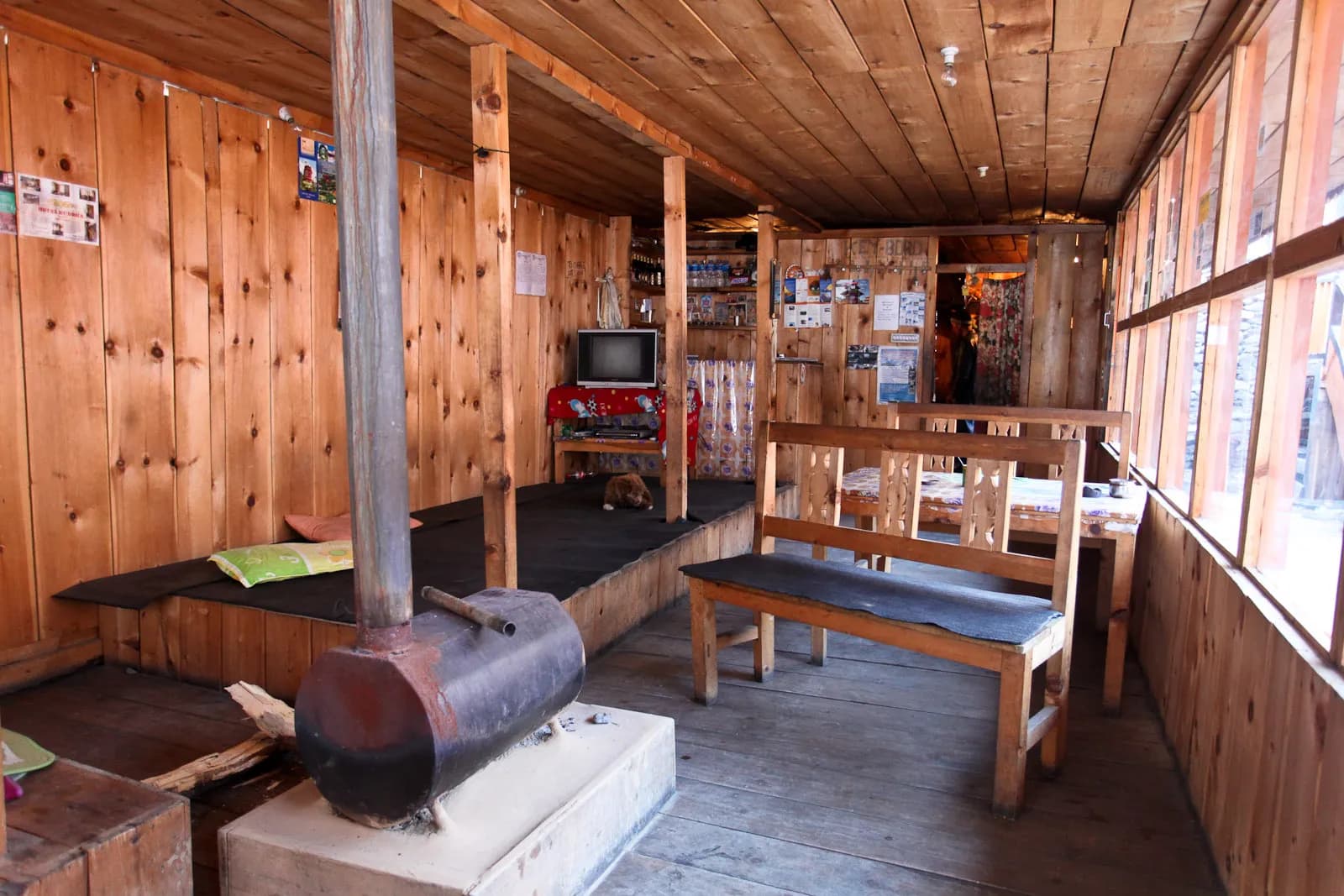
A teahouse room is a small, plain room with two single beds, foam mattresses, a pillow and a blanket or quilt, thin walls, a window and no heating, and it costs only a few hundred rupees a night because you are expected to eat your meals in the lodge. Toilets and washing facilities are usually shared, hot showers cost extra and the only warm place in the evening is the dining room. This guide describes rooms, bathrooms and bedding in practical detail, with prices by altitude, so you know what to expect and what to bring.
Trip terbuka di Everest Base Camp Trek
Trip sebenar yang disiarkan oleh pendaki yang mencari rakan.

The room
Most rooms are twin rooms with two single beds, one against each wall and a narrow gap between. Mattresses are thin foam, sometimes covered with a plain sheet, and there is a pillow and a blanket or quilt. Furniture is minimal: a small table, a shelf or hooks and a window. Many lodges have rooms built of timber or stone with thin partition walls that stop short of the ceiling, so you can hear everything next door. The lodge in Ghorepani in the photo above and the wood-panelled lodge at Pisang are typical of the better-built lodges on the Annapurna routes. In the busiest seasons, a double or triple room may be allocated to you if singles are full, and in the busiest villages, you may be put in a dormitory or an extra bed in the dining room.
Rooms are not heated. At lower altitudes, spring and autumn nights are cool but manageable; at higher altitude they are below freezing, and the water in a bottle left by the bed may freeze. Condensation forms on the inside of windows and may freeze too. Rooms are warmest at the lowest lodges and in the lodges with sun-facing windows, and coldest at the highest villages. The dining room, with a stove burning wood or dried dung or, in lower areas, gas, is the one warm room, which is why people stay there until bed.
Bedding
Lodges usually provide a blanket or quilt, but you should bring a proper sleeping bag. Reasons: warmth, hygiene (blankets are washed rarely) and comfort at higher altitude, where the blankets are not enough. A rented bag is fine for a single trek, and you can pick one up in Thamel or Pokhara's Lakeside for a small fee. Check zips and cleanliness, and ask for the temperature rating. Our guide to sleeping bag ratings shows how to choose, and the down jacket guide lists what else to rent.
A thin liner adds warmth and keeps the bag clean. Bring a small travel pillowcase if you like, and spread a clean sheet over the mattress if you are fussy. Shake out your bag and check the mattress seams. Bed bugs and fleas are not common at altitude but can occur in lower, busy lodges, and the fix is simple: keep your bag off the floor, use your own liner and do not leave clothes on the bed.
A hot water bottle is a pleasant luxury: many lodges will fill a bottle with boiled water for a small charge, and in a cold room it makes a difference. Put it in your bag before you get in.
Bathrooms and toilets
On the lowest sections of the popular routes, some lodges have rooms with attached bathrooms, with a squat or western toilet and a bucket or tap. Higher up, and in many lodges lower down, the toilet is shared and usually outside or at the end of a corridor. Squat toilets are common, as are basic western-style seats without flush. You may need to carry water in a bucket to flush. Bring toilet paper, which is not always provided, and a small bag to carry used paper out where bins are not provided. Our guide to toilets and hygiene on the trail covers this in more detail.
At night, a headtorch and a small bottle for emergencies are practical, especially if the toilet is outside and the temperature is below freezing. Keep your boots and torch by the bed. Washing facilities are usually a cold tap or a basin, with warm water on request.
Hot showers
Many lodges offer hot showers for a fee. Hot water usually comes from solar panels or gas, so showers are hot on sunny afternoons and tepid on cloudy ones, and some high lodges do not offer them at all. The charge varies with altitude, as fuel is carried up. Ask the price first, and shower in the afternoon when the water is hottest and the room can warm up. At altitude, a hot shower in a cold bathroom is not much fun, and wet hair in freezing air makes you colder. Wet wipes are a reasonable alternative on the highest nights.
If you have a sensitive stomach, be careful about washing and brushing teeth with unboiled water. The CDC and NHS Fit for Travel pages for Nepal give general advice on water, and our dal bhat and the teahouse menu gives practical tips. Use treated or bottled water for brushing your teeth if you are at all worried.
Electricity and light
Rooms may have a single bulb or none, and a socket may be available for a fee in the dining room. Bring a headtorch, a power bank and a universal adaptor. Our guide to electricity, wifi and hot showers covers charging, connectivity and what to expect.
Prices by altitude
Room prices are low because the lodge expects your dinner and breakfast. In the Annapurna region, the pack's cost data gives NPR 300 to 800 below 2,500 m, NPR 500 to 1,200 between 2,500 and 3,800 m and NPR 1,300 to 2,000 above 3,800 m. In Khumbu, the middle band is NPR 800 to 1,500 and the high band NPR 1,000 to 2,500 (all as of October 2026). Prices rise with altitude because supplies are carried up by porter and mule, and the highest lodges charge the most. In peak season, lodges may fill, so your guide may book ahead by phone. Do not bargain heavily on rooms; the cheap price already assumes you eat there. See the teahouse prices guide for more.
Noise, privacy and etiquette
Thin walls mean noise. Snoring, early packing, torches and conversations all carry. Be considerate: pack your bag the night before, keep your voice down after 8:00 or 9:00, and use earplugs if you are sensitive. If you share a room with a partner or a stranger, agree on a time to switch off lights. Lock your door with a small padlock if the lodge has latches, and keep valuables in your daypack. Do not hang wet clothes where they drip on someone else.
Ask before moving furniture or rearranging beds. In winter, the lodge may ask you to keep doors closed. Be gentle with the building; many lodges are simple and family-run.
Packing for the room
A short list for comfort in a teahouse room:
- Sleeping bag and thin liner.
- Earplugs and an eye mask.
- Headtorch with spare batteries.
- Small padlock.
- Wet wipes and hand sanitiser.
- Toilet paper in a plastic bag.
- A hot water bottle if you feel the cold.
- A plastic bag for dirty or wet clothes.
For more about how the system works, read what is a teahouse trek and the first-time trekking guide, and browse the first-timers hub. To plan a first route with company, see the Poon Hill itinerary, the Everest Base Camp itinerary, the Poon Hill partner page and the Everest region page.