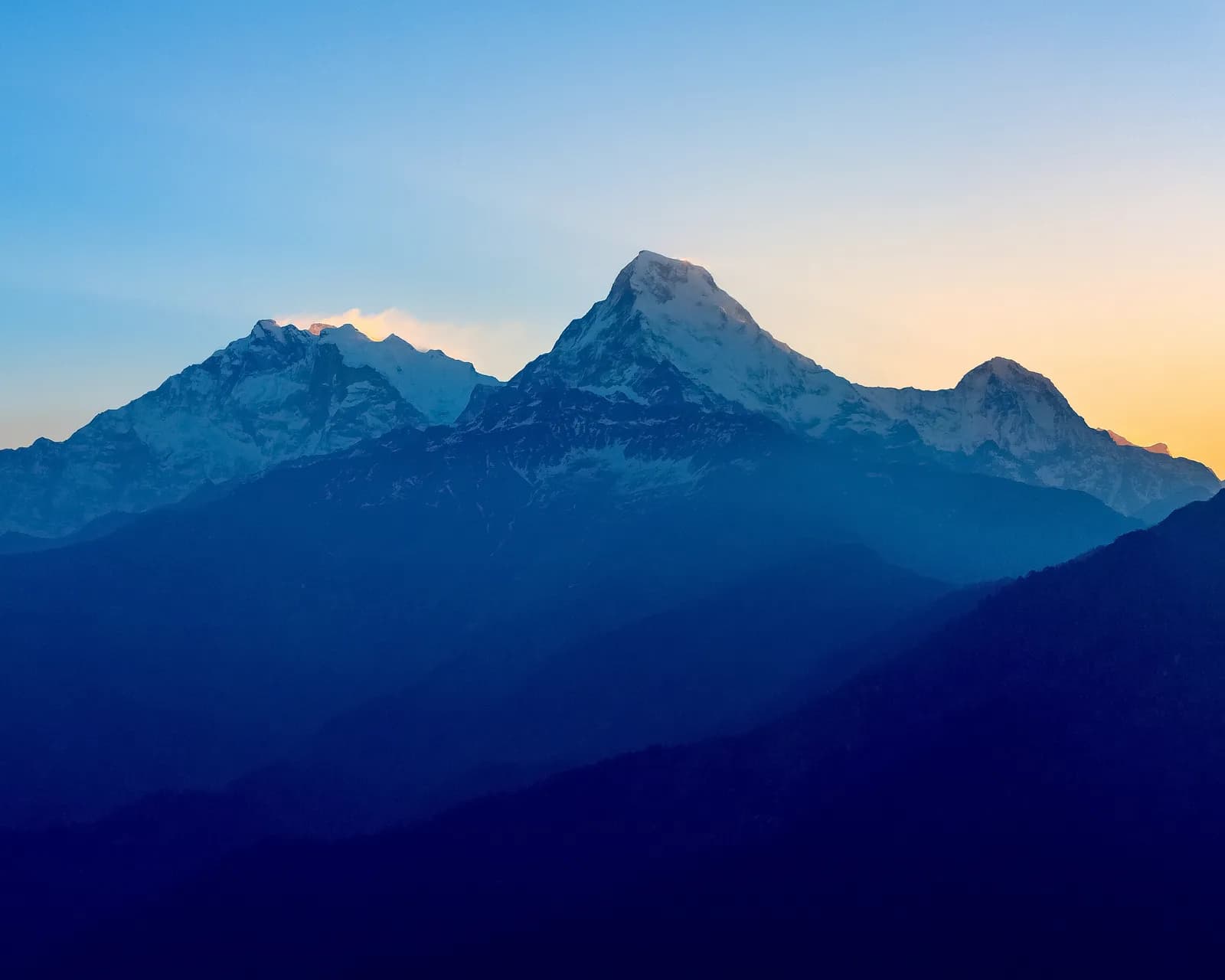
Ghorepani Poon Hill itinerary, day by day
A 4-day Ghorepani Poon Hill itinerary from Pokhara via Ulleri, Ghorepani, Tadapani and Ghandruk, with the sunrise timing, the stone-step reality and ways to make it 3 or 5 days.
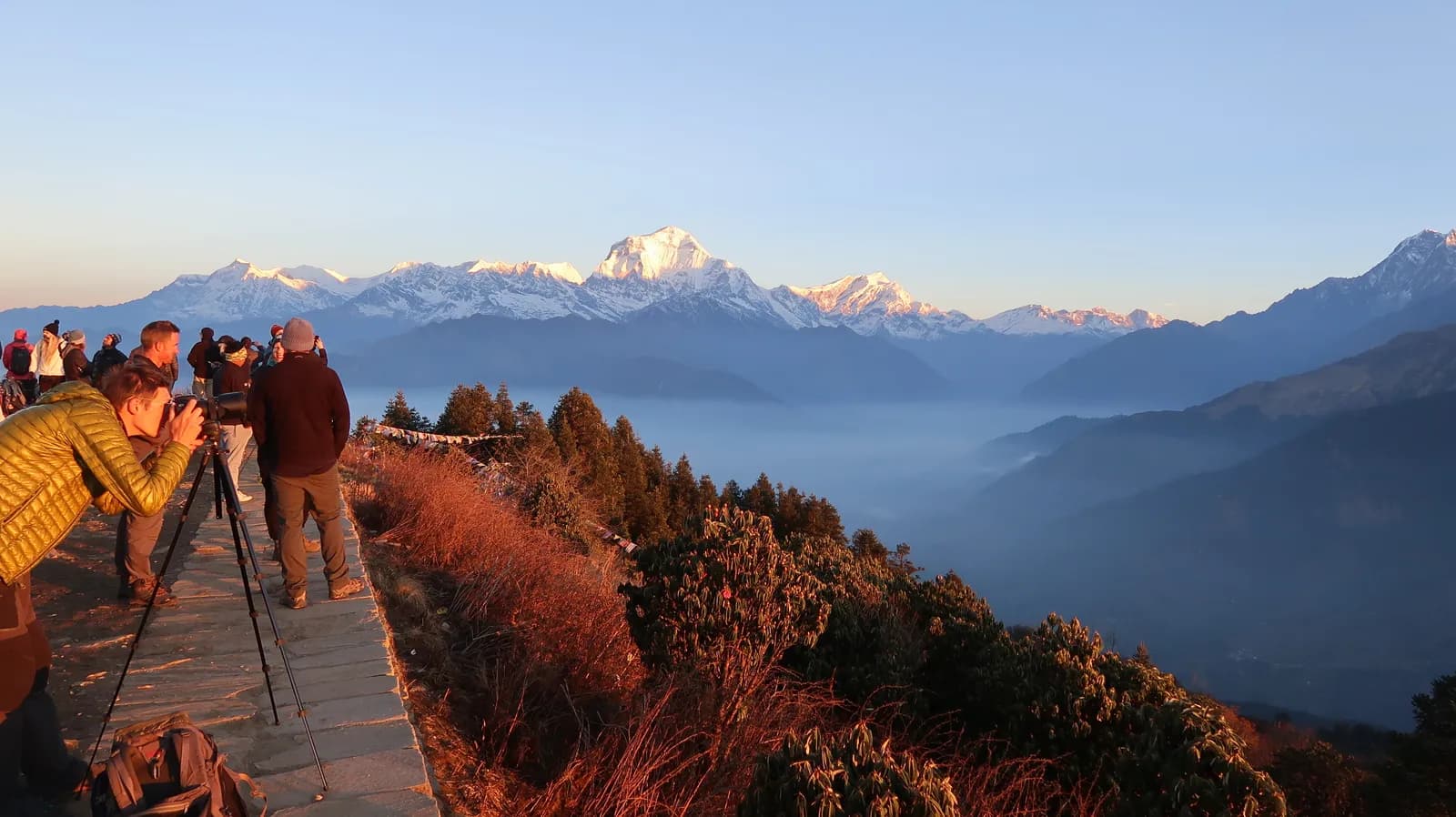
The Ghorepani Poon Hill itinerary here takes four days from Pokhara: drive to Nayapul, walk up the Bhurungdi valley and the Ulleri staircase to Ulleri, climb to Ghorepani, watch the sunrise from Poon Hill (3,210 m) and walk on to Tadapani and down through Ghandruk. The highest sleeping altitude is 2,860 m, so it is the gentlest altitude profile of the classic Annapurna treks. The effort comes from the steps, not the height.
This page gives the day plan with altitudes and hours, the timing for the sunrise and ways to shorten or lengthen it. The route data is on the Poon Hill route page and the Annapurna region guide.
Trip terbuka di Poon Hill Trek (Ghorepani)
Trip sebenar yang disiarkan oleh pendaki yang mencari rakan.

The 4 days at a glance
| Day | From - to | Time | Sleep |
|---|---|---|---|
| 1 | Pokhara - Nayapul - Ulleri | 5-6 h | about 2,070 m |
| 2 | Ulleri - Ghorepani | 4-5 h | 2,860 m |
| 3 | Poon Hill sunrise - Tadapani | 6 h | 2,630 m |
| 4 | Tadapani - Ghandruk - Pokhara | 3-4 h plus drive | 820 m |
Day 1: Pokhara to Ulleri (about 2,070 m)
Drive to Nayapul, about an hour and a half, and walk through Birethanti, where permits are checked, up the Bhurungdi valley to Tikhedhunga. After Tikhedhunga the trail climbs the famous Ulleri staircase, thousands of stone steps, through forest to Ulleri. The steps arrive on the first afternoon when legs are fresh, which is why many people reach Ulleri tired. Pace yourself and take photos of the valley as an excuse for short rests.
Day 2: Ulleri to Ghorepani (2,860 m)
Climb through oak and rhododendron forest to Banthanti and Nangethanti, then cross a ridge through tall forest with occasional views of Annapurna South. Ghorepani is a large pass village of lodges, busy in season. In spring the rhododendrons colour the forest and langur monkeys can be seen. Go to bed early: the next morning starts in the dark.
Day 3: Poon Hill at sunrise, then Tadapani (2,630 m)
Climb Poon Hill before sunrise, about 45 minutes up a staircase through rhododendron forest, to 3,210 m. Bring a headlamp and warm clothes. The light spreads over Dhaulagiri, Annapurna I, Annapurna South and Machhapuchhre. Return to Ghorepani for breakfast, then follow the ridge through Deurali and forest to Banthanti and a long descent and climb to Tadapani, a quiet lodge settlement. It is a six-hour day.
Day 4: Ghandruk and back to Pokhara
Descend from Tadapani through rhododendron forest to Ghandruk, a large Gurung village at about 2,050 m, with stone houses, a museum of Gurung culture and views of Annapurna South and Machhapuchhre. The path drops by stone steps. Continue down towards Kimche and the road, or take a jeep to Nayapul and on to Pokhara. The walking is three to four hours.
Getting the sunrise right
The Poon Hill sunrise is why most people come, and it depends on weather more than effort. Leave Ghorepani about 45 to 60 minutes before sunrise so that you are on the hilltop with time to spare. Take warm layers, a headlamp and a hot drink: the viewpoint is crowded and cold in season. If it is cloudy at dawn, ask your guide or lodge whether the sky is expected to clear, and consider waiting an hour rather than leaving at once. A spare morning is the best insurance, so a five-day version with a night at Ghorepani and a second try is worth considering.
Variations: 3 days or 5 days
| Version | Route | Notes |
|---|---|---|
| 3 days | Pokhara - Ulleri - Ghorepani, Poon Hill, return the same way or via Ghandruk | Very tight, no spare time |
| 4 days | The itinerary above | Standard |
| 5 days | Add a night at Ghorepani or Ghandruk | Second sunrise attempt, slower pace |
For a longer route that joins this trail, the final two days of the Annapurna Circuit pass through Ghorepani, and the Khopra Ridge trek leads onward to a quieter ridge.
Month by month on this trail
- March: cool, clear mornings and the first rhododendron flowers.
- April: the spring peak. The forest around Ghorepani and Ghandruk flowers, skies are mostly clear and lodges fill up.
- May: warmer and hazier, with cloud building by afternoon.
- June to August: monsoon. The southern slopes are wet, leech-prone and cloudy.
- September: the monsoon fades and the air clears by the end of the month.
- October: the busiest month, with the steadiest weather.
- November: colder but very clear and quieter.
- December to February: cold, but Poon Hill and Ghandruk stay walkable and the views can be sharp, though snow can lie on the upper sections.
A normal day on the trail
Most days start with breakfast around 6 or 7 am, a first stretch of walking before the heat builds, tea or lunch at a village around midday and arrival at the next lodge by mid-afternoon. Menus are standard across the lodges: dal bhat, noodles, fried rice, soup, eggs and pancakes. Rooms are simple twin rooms with shared washrooms, and a hot shower, where offered, is usually extra. Sunset and sunrise are the best photography windows, so the gaps in the middle of the day are for rest and washing clothes.
Packing light for four days
You do not need heavy gear. Bring layers rather than one thick jacket, a rain shell, a sun hat, a warm hat and gloves for the sunrise, trekking poles and shoes with grip for the stone steps. A sleeping bag liner is useful, and lodges provide blankets. If you are travelling in December to February, add a down jacket, which you can rent in Pokhara. Leave unneeded luggage at your hotel. Our Nepal packing list breaks down what to bring and what to rent.
Common mistakes
- Starting the Ulleri steps late in the day. Begin early so you climb in the cool morning.
- Skipping the permit check. Birethanti is the first checkpoint, so arrange everything in Pokhara.
- Packing too much. Every extra kilogram feels heavier on stone steps.
- Relying on one sunrise. Leave a buffer for weather.
- Planning a flight out the same day. The walk and drive can run late, so keep the evening free.
Sharing the walk
Poon Hill is easy to do in a group, and lodge rooms are cheaper per person when two people share. The guide and transport lines fall as the group grows, so find partners before you book if you want a guide. Read how to find a trekking partner safely for the practical checks.
Is Poon Hill your best first trek?
It stays below 3,300 m, has lodges at every stop and takes four days, so it is a sensible first trek if you are unsure how you cope with walking day after day. It is less suitable if your goal is high mountains close up: for that, compare the Mardi Himal itinerary and the Annapurna Base Camp itinerary. Our first-time trekking guide explains how to choose.
Permits and practicalities
Permits are checked at Birethanti, so arrange them before you leave Pokhara. You need the Annapurna Conservation Area entry permit and a TIMS card where required: check the permits explainer and the current rules with your agency. Carry a rain layer in any season, and take poles for the steps. For more itineraries see the itinerary index.