Renting trekking gear in Pokhara: a Lakeside guide
What to rent in Pokhara Lakeside before an Annapurna trek, what to bring from home, how to check a jacket, bag and poles in daylight, and how to schedule shopping around permits and the drive to the trailhead.
If you are trekking in the Annapurna region, Pokhara is the best place to rent your missing gear: the shops on the lakeshore are a short walk from your hotel, you can fit items a day before you walk, and the trailheads for Poon Hill, Mardi Himal and Annapurna Base Camp are a short drive away. Rent the bulky, rarely used items (a down jacket, a sleeping bag, trekking poles), bring your boots and everything that touches your skin from home, and give yourself a day to check what you rented in daylight. The rest of this guide explains what to rent for each route, how to inspect each item and how to fit the errand around permits and transport.
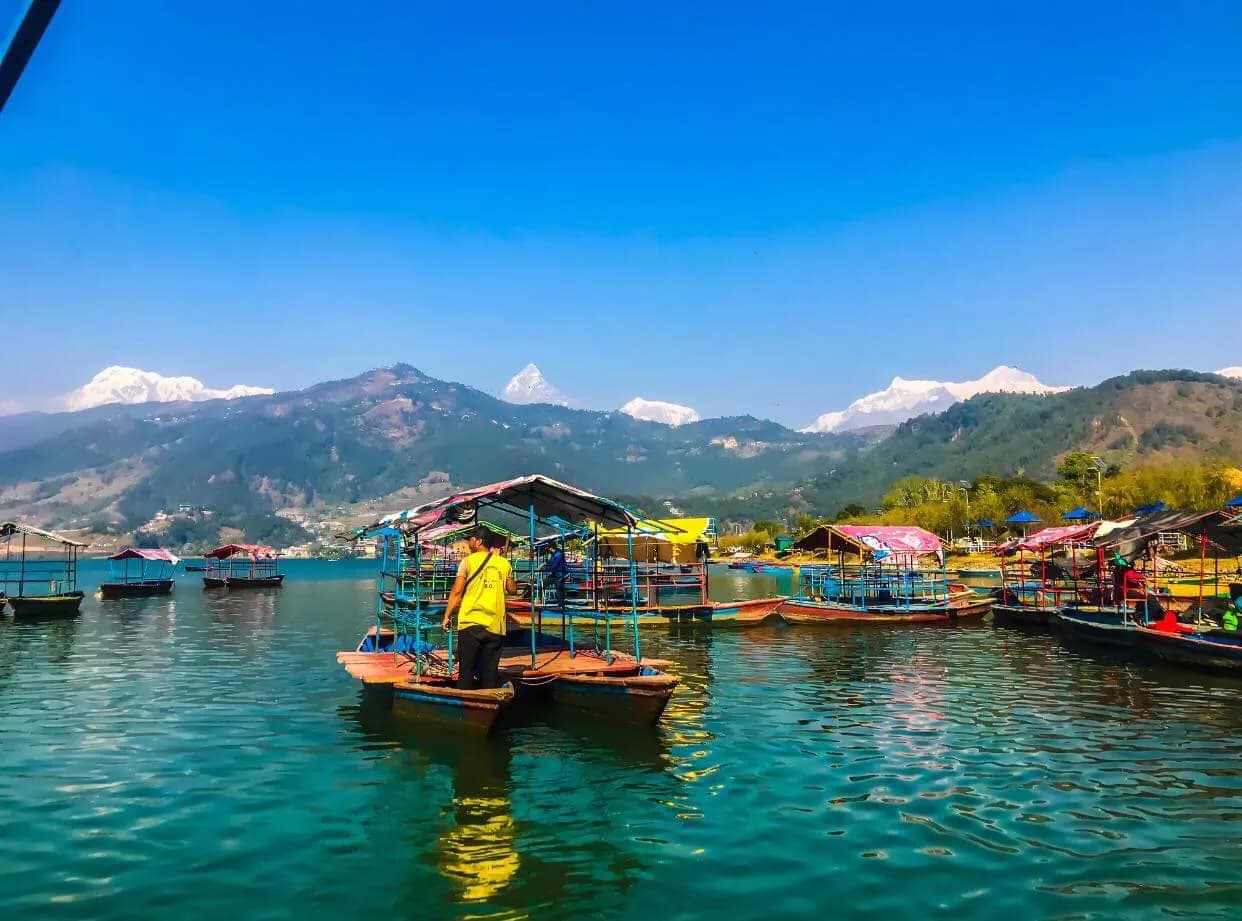
Pokhara sits on the shore of Phewa Lake at an average elevation of about 822 m, roughly 200 km west of Kathmandu, according to Wikipedia. The tourist district runs along the north shore of the lake in the areas called Baidam, Lakeside and Damside, and is made up mainly of small shops, budget hotels, restaurants and bars. Wikipedia notes that the town was reachable only on foot until the first road was completed in 1968, after which tourism grew quickly. Today it is a base for the Annapurna routes, and gear shops are part of the furniture. Our general list is in the Nepal trek packing list; this post is about getting the missing pieces in Pokhara. If you are shopping in the capital instead, read renting gear in Kathmandu: a Thamel shop guide.
Trip terbuka di Annapurna Base Camp Trek
Trip nyata yang diposting trekker yang mencari teman.

Why Pokhara works for Annapurna treks
Most Annapurna treks start from Pokhara or from places a short drive from it. The region page notes that Poon Hill and Ghandruk start near Nayapul, that Mardi Himal and Dhampus start from Phedi or Kande and that the Circuit starts from Besisahar. That means you can spend your last evening in a hotel at Lakeside, shop in the afternoon, sleep, and leave in the morning with a bag you have repacked once. You also avoid the problem of renting in one city and carrying it across the country, and you can walk back to the shop if something is wrong.
The same logic applies to your own bags. Pack once, weigh your bag and send anything you do not need on the trail back to the hotel, which many hotels will store; ask before you book and see our luggage storage guide for Kathmandu for the questions to put to a hotel.
What to rent for each route
The kit depends on the highest place you sleep, not only the highest point you reach.
- Poon Hill is a four-day route that peaks at 3,210 m. In spring and autumn a warm jacket, a fleece and a light sleeping bag liner are usually enough, because the lodges supply blankets. If you do not own a down jacket, renting is cheaper than buying for four days.
- Mardi Himal is a five-day ridge route whose upper viewpoint is at about 4,500 m according to the region page, with fewer and more basic lodges. A down jacket, warm hat and gloves matter here, and a sleeping bag or a heavier liner is sensible.
- Annapurna Base Camp is a seven-day route to 4,130 m. Renting a down jacket and a warm sleeping bag is common, and poles help on the long stone stairs.
- Annapurna Circuit crosses Thorong La at 5,416 m, so a bag rated for the coldest night and a very warm jacket are not optional. Read the Annapurna Circuit itinerary before you buy or rent, and consider a partner to share the cost of a guide; the Annapurna Circuit partner page lists trips.
On every route, rent poles if you will use them, and bring a rain shell, boots and socks from home. The article on sleeping bag temperature ratings explains how to match a bag to your highest night.
How to inspect a rental at Lakeside
Do the check in daylight, with the item in your hands, before you pay.
Jacket. Shake it by the shoulders. Real loft springs back; flat, clumped sections mean damp or worn-out down. Smell the lining. Run each zip twice and check pockets and the hood. Ask what it is rated for and compare that with your coldest night.
Sleeping bag. Unzip it fully and look inside. A strong smell of smoke or damp is a reason to walk away. Check the zip, the draught collar and the hood drawcord. If a bag looks thin, it is thin, whatever the label says. Bring a liner of your own.
Poles. Extend them to full length, lean on them and twist the locks. A pole that slips on a steep descent can hurt your knee or your wrist.
Rain gear. Look at the seams and the zips. A cheap poncho will keep a daypack dry, but it flaps and tears in wind, so a proper shell is worth bringing from home.
Daypack and duffel. Fill the pack and carry it around the shop. Check the hip belt and the zips.
Treat every brand label with caution. Counterfeit branded gear is common in Nepal's tourist districts, according to our packing guides, so judge a product by how it feels and performs, not by its logo.
What to ask a shop before you pay
We publish no rental prices here because we have no verified source for them, and rates change with the season and the demand. Ask every shop the same questions and compare:
- What is the price per day or for the whole trek, and does it count the days I will be away or the days I hold the item?
- What deposit do you take, and in what form? Offer cash or a photocopy of your passport, not your original, because you need the original for permits, flights and hotel check-in.
- What happens if something is damaged, wet or lost, and who decides the charge?
- Can I return early or late if the weather or a flight changes my plans?
- Will you write the rate, the deposit and the return date on a receipt?
Take a photograph of each item at the counter. It protects you if someone later claims a tear or a stain was your doing.
Timing around permits and transport
Annapurna treks need an Annapurna Conservation Area permit and, where asked, a TIMS card, which are issued by the Nepal Tourism Board in Kathmandu and Pokhara. The Annapurna region page says that Pokhara has gear shops, an airport, buses and a lakeside tourist district and that permits are straightforward to arrange there. Do the permits and the shopping in the same afternoon if you can, and keep the evening free to repack. Our permits explained guide lists the paperwork and the ACAP guide covers the Annapurna permit specifically.
On the guide rule: the Nepal Tourism Board rule of April 2023 requires foreign trekkers to use a licensed guide in national parks and conservation areas, and 2026 operator reports say checkpoints enforce it in Annapurna (ACAP) and Langtang, but not in Khumbu, where the municipality opted out (checked 19 October 2026). Check the details on the guide rule explained page. Practically, it means that a guide will probably carry some of the planning load for your Annapurna trek, and it is worth asking your guide or agency what the lodges supply and what you really need to bring.
What to buy rather than rent
Some items are better bought, even for a single trek:
- Socks. You want clean, dry, well-fitting socks, and a pair or two bought in the shop can be taken home. Our guide to socks, blisters and foot care goes through the choices.
- A sun hat and sunglasses. Fit and UV protection matter more than brand.
- A warm hat and gloves. Cheap woollen or fleece ones are plentiful and you can leave them behind or give them to your porter or guide at the end.
- Blister plasters and a basic first-aid kit. Buy before you start walking; the lodges may not stock them.
- A water bottle and treatment tablets. Compare options in our water bottles, filters and purification tablets guide.
Common problems
- The jacket is too thin for the highest night. Add layers, and ask the lodge for an extra blanket. Do not rely on one garment.
- The sleeping bag smells. Use a liner, air it out, and change shops if the smell is strong.
- A zip fails. Take a safety pin and a few metres of cord. Lodges often have a needle and thread.
- You are tall or small. Go early in the day or the week, because common sizes run out in October and in spring.
- Your flight or drive changes. Tell the shop in advance, and ask whether a late return affects the price.
A final checklist before you leave Lakeside
Before you walk out of the shop, make sure you have the receipt, the deposit terms, the return date, photographs of each item and a working zip, lock and buckle on everything you carry. Back in the hotel, pack everything once, weigh the bag and take out anything you cannot justify. For other suggestions, go back to the gear and packing hub. If you are looking for a partner to share a guide and a porter on an Annapurna route, the Annapurna Base Camp partner page is the place to start. Do the checks, take your time, and you will start walking with gear you have chosen rather than gear you were sold.