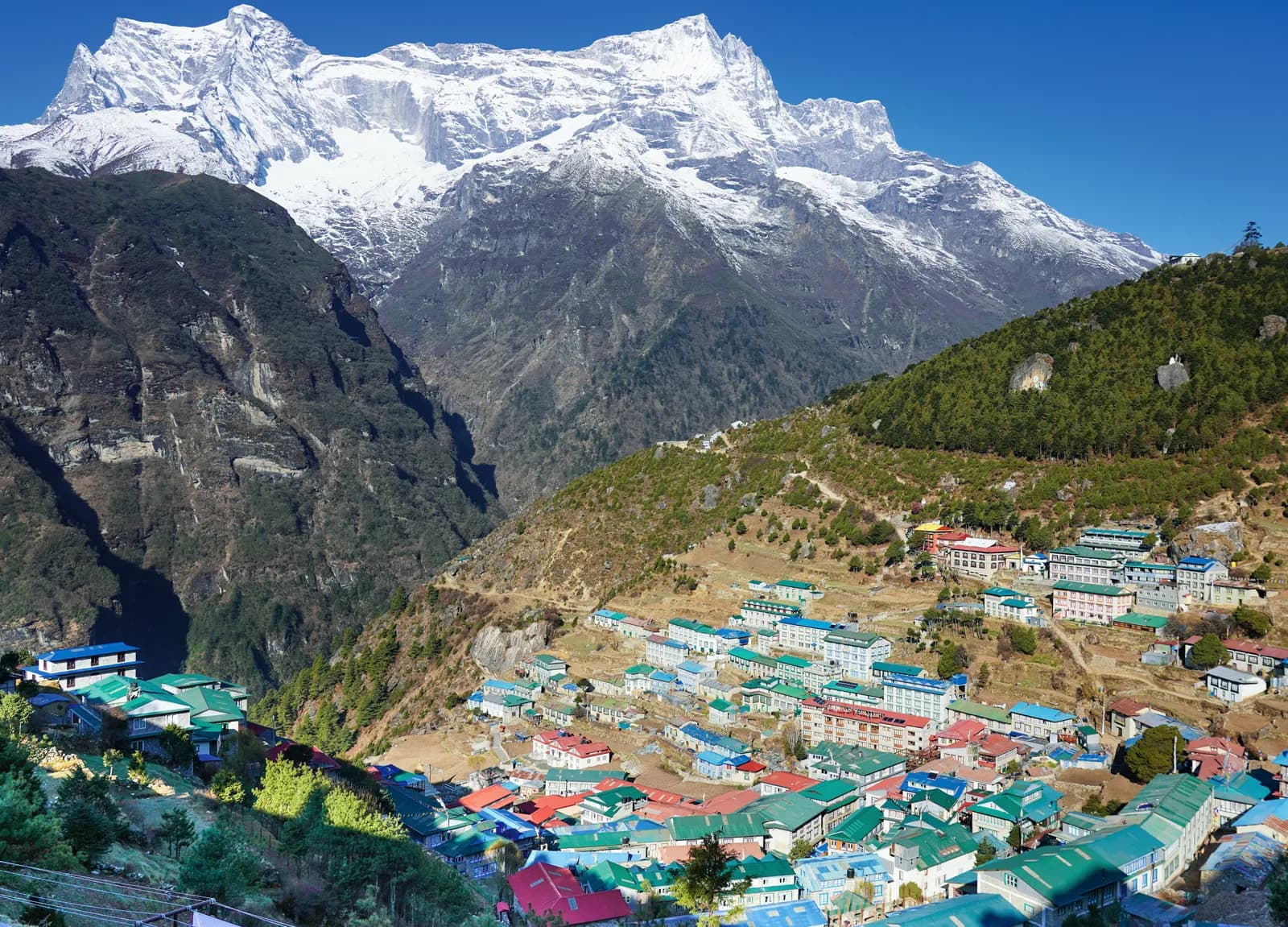
Mani Rimdu festival in Khumbu: what it is and how to attend
What Mani Rimdu is, where it is held (Tengboche, Thame and Chiwong), why dates move each year, how to plan an Everest trek around it, how crowded the lodges get, and how to behave as a guest at a Sherpa monastery festival.
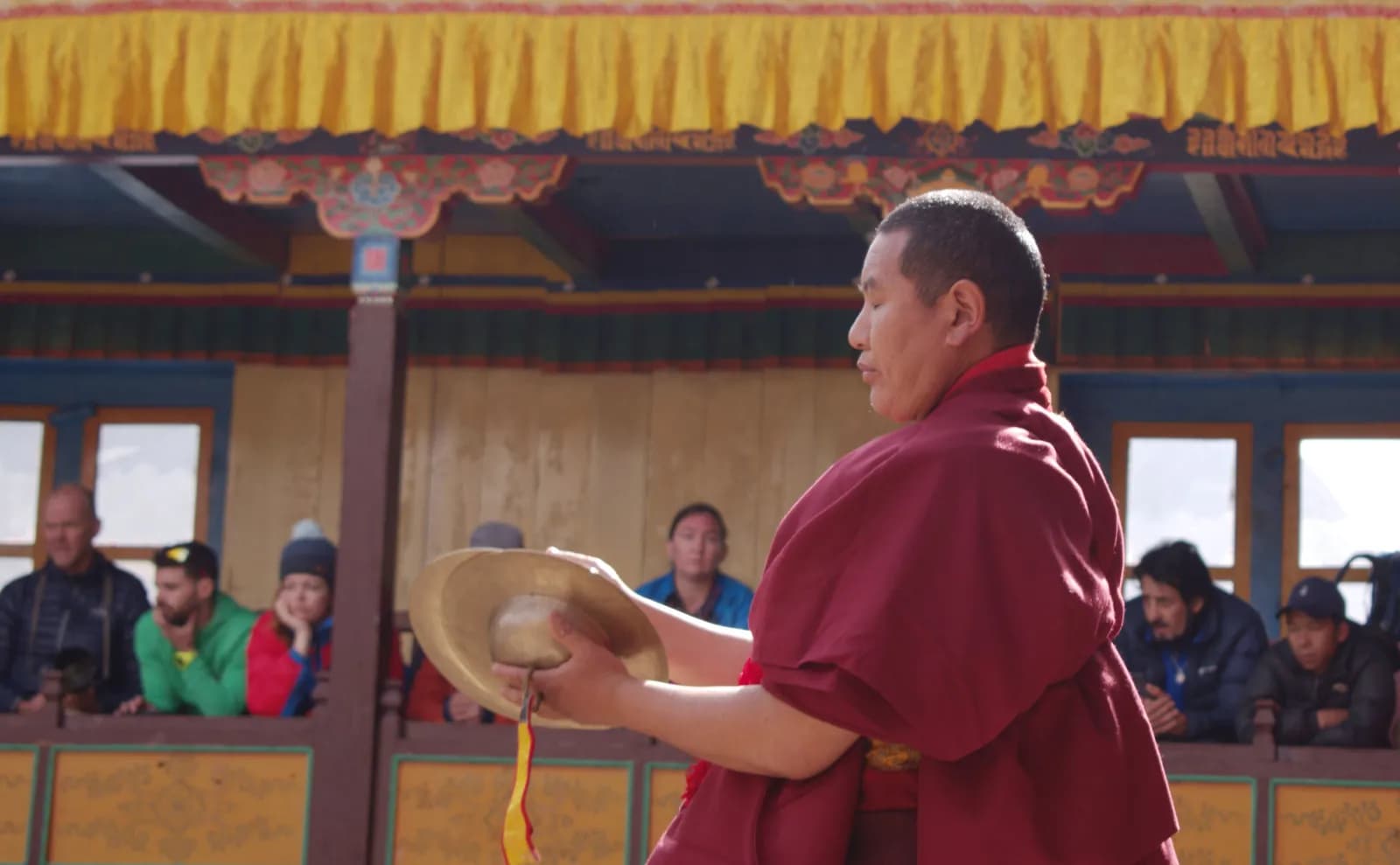
Mani Rimdu is the great monastery festival of the Everest region: a Buddhist celebration of masked dances, prayers and feasting held in October or November at Tengboche, Thame and Chiwong, and the biggest event of the year for the Sherpas of Khumbu. If your Everest trek coincides with it, you will see something that locals have been organising for months; if you plan around it, you need to book early, confirm the dates through the monastery or your agency, and arrive ready to be a quiet guest rather than a spectator at a show. This guide covers what the festival is according to Wikipedia, how it fits on the Everest Base Camp itinerary, why the dates move and how to behave. It does not describe the rituals in detail, because they are monastic and best learned from the monks; where we are unsure, we say so.
Trip terbuka di Everest Base Camp Trek
Trip nyata yang diposting trekker yang mencari teman.
What Mani Rimdu is
According to Wikipedia, Mani Rimdu is a 19-day festival celebrated by Buddhists in the Everest region of Nepal to mark the founding of Buddhism by Guru Rinpoche Padmasambhava. Performances are held at the monasteries of Tengboche, Thame and Chiwong. The festival consists of a series of thirteen acts involving religious ceremony, dance and drama, and a large crowd of lamas and Sherpa meet at the monastery for the welfare of the world, with masked dances, prayers and feasts. Today, Wikipedia says, it is the biggest event of the year for the Sherpas of the Khumbu region.
The same article gives the origin: Mani Rimdu began at Rongpuk Monastery in Tibet in the early 1900s, at the initiative of Ngawang Tenzin Norbu, who had studied at Mindroling Monastery in Central Tibet, and most of its rituals come from Mindroling, a Nyingma monastery. That fits what our Everest region page says about the Sherpa: they follow Tibetan Buddhism of the Nyingma school, and the valley is dotted with mani walls, chortens and monasteries.
We stay close to what a visitor can see and verify. Public dances take place on particular days; the longer cycle of ritual is carried out by the monks and is not a performance.
Dates: why they move
Mani Rimdu follows the Tibetan lunar calendar. Wikipedia says it is observed from the first day of the tenth month of the Tibetan calendar, falling between October and November, and elsewhere in the same article that it is performed at Tengboche in the ninth Tibetan month, usually coinciding with the full moon in October or November. The two statements do not match, which is a reason to be careful with any single source. Our Everest region page simply says Mani Rimdu is held at Tengboche in October or November, and that the high lodges begin to close late in the month.
So do not plan around a date you found online for another year. Ask your agency, a lodge in Namche or Tengboche, or the monastery for the dates of the public days, and confirm again a week before you fly. Because the calendar is lunar, the dates shift by a few weeks from one year to the next.
Where it is held
- Tengboche is the best-known site. Wikipedia describes Tengboche Monastery, also known as Dawa Choling Gompa, as the largest gompa in the Khumbu, founded in 1916 by Lama Gulu. It was destroyed by an earthquake in 1934 and by a fire in 1989 and rebuilt, with help from volunteers and international support. It stands amid Sagarmatha National Park, with views of Everest, Nuptse, Lhotse, Ama Dablam and Thamserku. On our route plan, Tengboche is the stop at about 3,860 m on day four between Namche and Dingboche. Our region page gives the founding year as 1916 and the rebuilding after the 1989 fire.
- Thame and Chiwong are the other monasteries where Wikipedia says Mani Rimdu is performed. Our region page mentions the Namche to Khumjung and Thame hike as a four- or five-day taste of the Khumbu that reaches only about 3,900 m.
Wikipedia also notes that Tengboche is the terminus of the Sacred Sites Trail Project of the park, a circular trail covering ten monasteries in a clockwise direction.
Planning an Everest trek around it
The festival is a reason to go in October or November, which are already busy months. Practical points:
- Check the dates early and build your itinerary so you are at the monastery on the public days, not a day after.
- Book lodges ahead through your agency. Our region page says lodges fill from mid-month, and the busiest stops fill in peak weeks.
- Allow spare days for flights. The Lukla flight is weather-dependent; see Kathmandu to Lukla flight guide. A cancelled flight can cost you the festival.
- Acclimatise properly. Tengboche is about 3,860 m. Our Everest Base Camp itinerary puts it after two nights at Namche; do not rush to arrive on the day. See acclimatisation schedule.
- Bring warm clothes for sitting outside. Courtyards are cold at about 3,860 m in late autumn, and ceremonies last for hours. Read packing list for Everest Base Camp in spring for the layering logic, and add the autumn cold.
- Expect crowds. The festival draws monks, local families and visitors; rooms, dining rooms and viewing spots are full.
- Have a fallback. If you miss the dates, the monastery is still worth a visit, and the best time for Everest Base Camp guide explains the season.
A shorter Khumbu walk can also fit the festival if you have only a week; see Everest Three Passes itinerary for a long alternative, but do not cross passes in a rush to arrive.
How to behave
The monastery and the village own the festival. Our route and region pages give the rules for any Sherpa monastery; at a festival they matter more.
- Dress modestly and warmly. Cover shoulders and knees; carry a scarf. See dress and modesty on the trail.
- Walk clockwise around the monastery, chortens and mani walls, and remove your shoes before entering a building.
- Do not touch prayer wheels with your left hand, and do not step over anything sacred, as our Everest page says.
- Stand where you are told. Monks or marshals will show visitors where to sit or stand. Keep clear of the dancers and the processions.
- Ask before photographing, and follow the monastery's rule on photography. Never use flash, and do not block the view of local families. See photography etiquette.
- Keep quiet, turn your phone to silent and do not talk through the ceremony.
- Donate through the monastery, in person, and ask your guide what is appropriate. Do not give sweets or money to children.
- Eat and sleep locally, and buy from local families.
- Respect the sacred and the schedule: ceremonies start when they start.
Our monastery etiquette guide explains each rule with Tibetan Buddhist examples, and the Sherpa culture guide explains the community whose festival it is.
What you may see
Wikipedia describes masked dances, prayers and feasts. In practice that means drums, long horns, monks in elaborate costumes and masks and a crowd that includes elders, families and children in festival clothes. We will not describe the meaning of particular dances, which is the monks' to explain; a guide who is Sherpa or from the area can tell you what each one is. Treat the day as a religious ceremony that you are allowed to witness.
The guide rule and permits
Sagarmatha National Park requires its entry permit and the Khumbu Pasang Lhamu Rural Municipality trek card; our Sagarmatha entry guide has the details. On the guide rule, the Nepal Tourism Board April 2023 rule is reported not to be checked in Khumbu, where the municipality opted out, according to 2026 operator reports (checked 19 October 2026); see the guide rule explainer. A local guide is still the best way to understand a festival.
Sharing and planning
The festival season is also peak season, so costs and demand are high, and partners help: you can share a guide, a porter and the cost of booking early. Post your dates on the Everest Base Camp partner page, and read finding a trekking partner for Everest Base Camp. For the other customs on the trail, return to the trail etiquette and culture guide. If you reach Tengboche in the cold light after the festival, with the courtyard empty and Ama Dablam behind the roof, you will have seen the monastery as the monks usually do.
For route detail see the Everest region guide and the Everest Three Passes itinerary.