Khaptad National Park trekking guide
The Khaptad plateau explained: a 10-day trek from Silgadhi to meadows at about 3,000 m, the ashram of Khaptad Baba and Khaptad Daha, with permits, flights, lodging and the best months.
Khaptad National Park is a high grassland plateau in far-western Nepal where rolling meadows, oak and pine forest, a sacred lake and a hermit's ashram sit at about 3,000 m, and the Khaptad National Park trek reaches it in ten days from Kathmandu: a flight to Dhangadhi, a drive of about nine hours to Silgadhi, a walk up the valley and a forest climb to the plateau. It is a moderate trek in altitude and a demanding one in logistics. The foreign entry fee is NPR 3,000, it is not a restricted area, lodging is sparse, and the best months are March to May and October to December.
That answers the main question: Khaptad is for trekkers who want a gentle, quiet, culturally rich walk in a part of Nepal few foreigners visit, and who accept two long travel days at each end. It is not a high-mountain trek, and it is a poor choice if you need hotels and certainty. The Khaptad region page has the reference data.
Trip terbuka di Khaptad National Park Trek
Trip nyata yang diposting trekker yang mencari teman.
What the park is
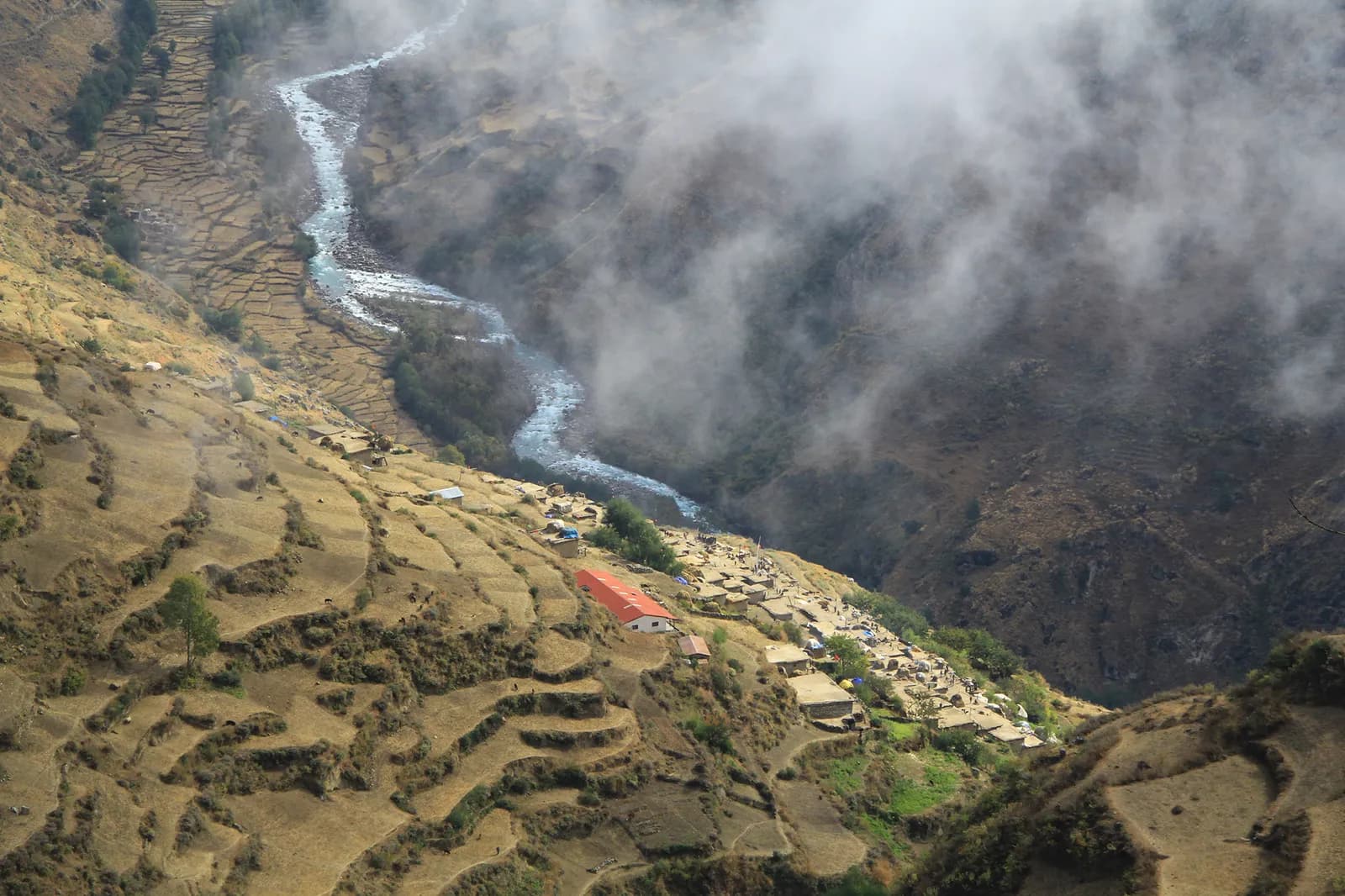
The park was established in 1984, on the advice of the ascetic known as Khaptad Baba, according to Wikipedia. It covers 225 square kilometres across Bajhang, Bajura, Achham and Doti districts and ranges from about 1,400 m to 3,300 m. The plateau that gives the park its character lies at about 3,000 m, a broad area of rolling grass called patan, with stands of oak, pine, fir and rhododendron on the edges. Wikipedia counts 567 flowering plant species in the park, 23 mammals and 287 birds, which is a long list for its size.
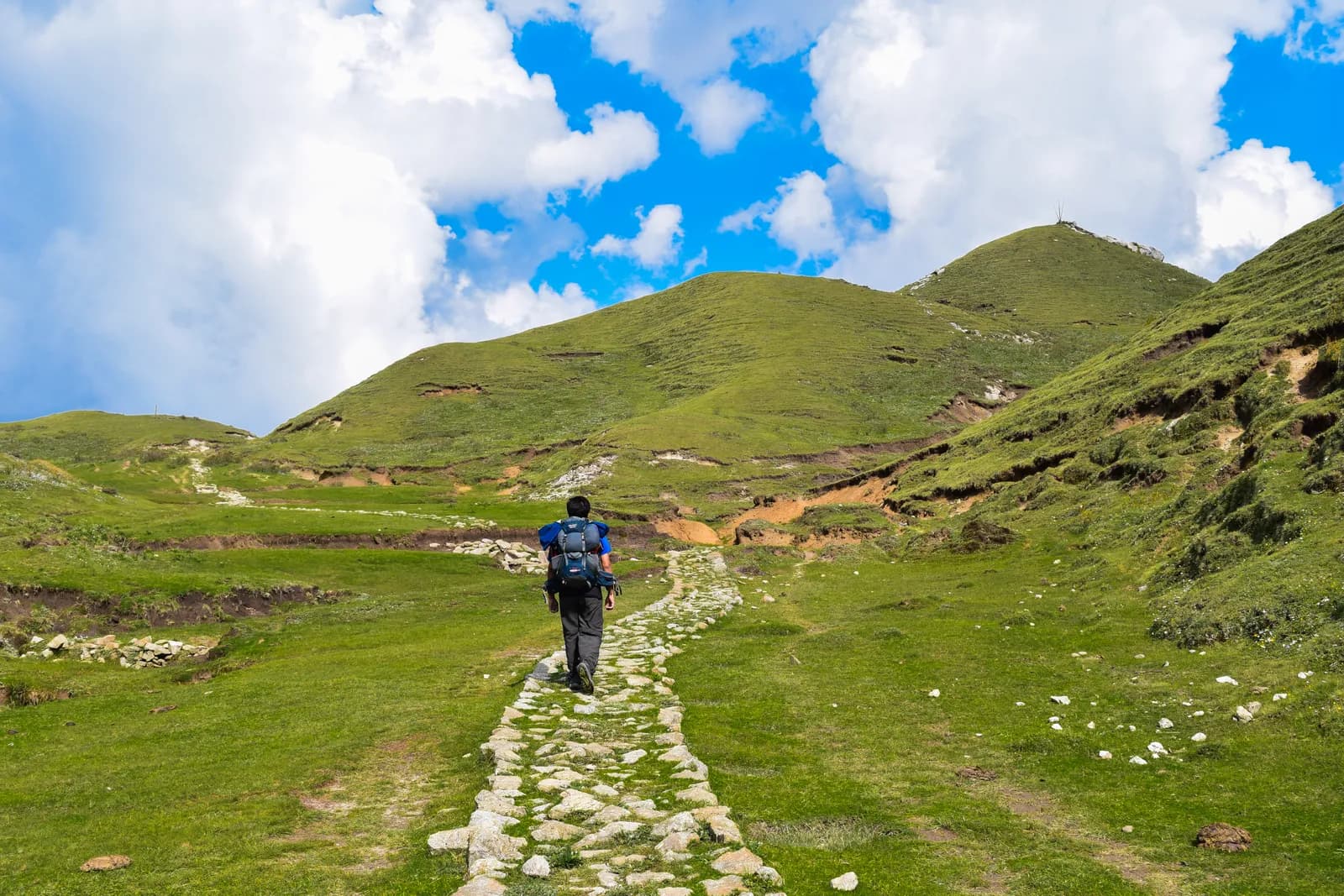
The walking feels very different from the high Himalayan treks: it is on soft grass and forest tracks, and the views are across rows of hills toward the Saipal range on the horizon in clear weather.
The route in stages
Flights and roads. Fly Kathmandu to Dhangadhi (about an hour), then drive eight to nine hours to Silgadhi, the headquarters of Doti District at about 1,330 m. The road is rough in places and can be blocked by landslides in the monsoon.
Silgadhi to Jhigrana. The first walking day is long: about 17.7 km and 1,250 m up the valley road to Jhigrana (about 2,250 m), where the park entrance is. It takes seven to eight hours by our estimate, and some groups hire a vehicle for part of it.
Jhigrana to Bichpani Camp. A shorter, steep day of about 6.2 km and 920 m on a marked forest path of rhododendron and oak to Bichpani Camp at about 3,100 m, a meadow with a few huts and tents.
Across the plateau to Khaptad. About 9.5 km, three to four hours, nearly level at about 3,000 m on grass and forest tracks. This is the best day: the trail rolls across open meadow past oak and fir.
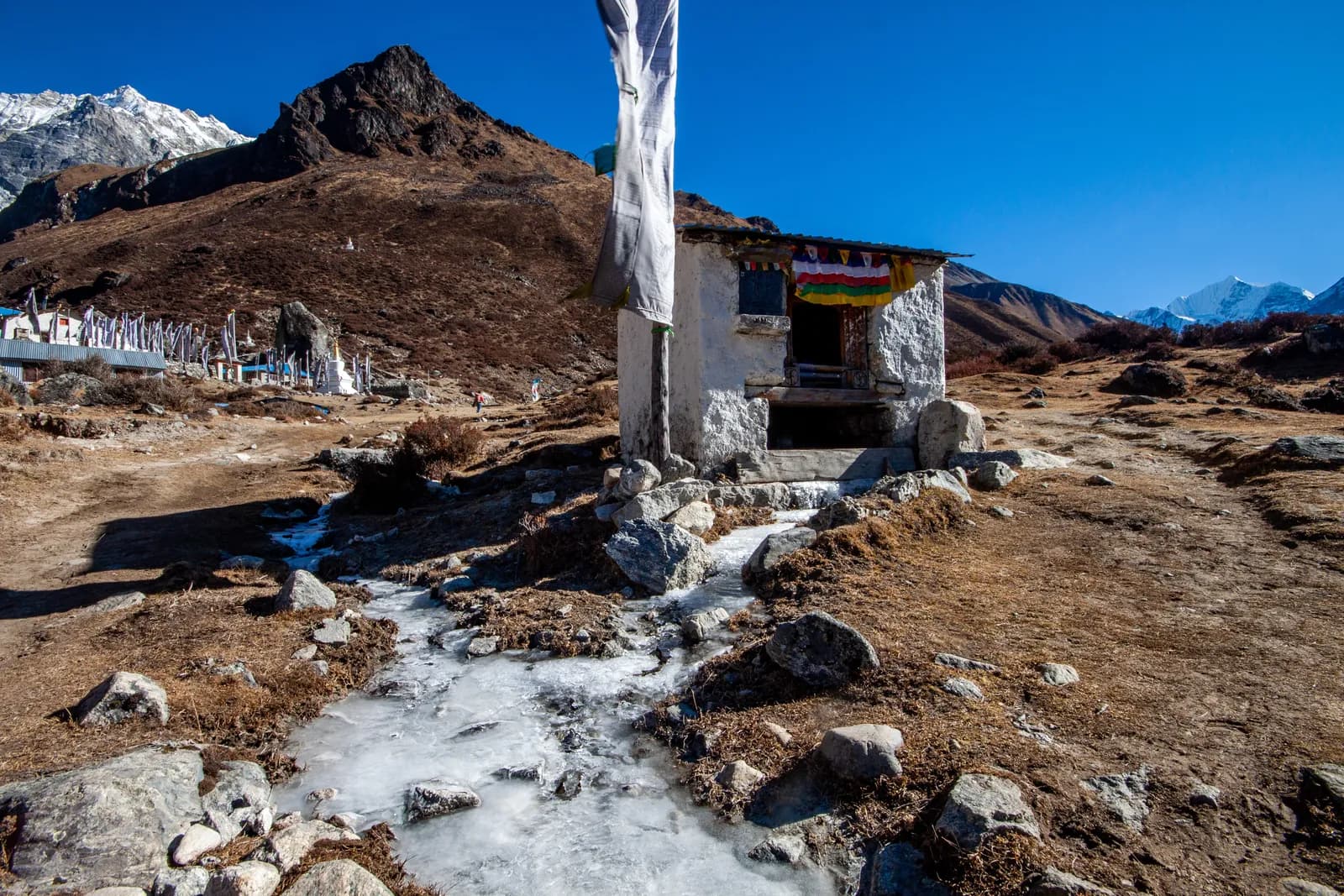
Rest day. A walk of about 5.7 km round trip, three to four hours, to Khaptad Daha, a lake beside the trail to Kolti where local people believe Shiva bathed, plus the ashram near the park headquarters. Tribeni, a confluence of three streams with a Shiva temple at about 3,010 m, and Sahashra Linga, a hill of stone lingams at about 3,276 m and a five-hour return walk from the park headquarters, are the other sites.
The return. Khaptad to Jhigrana is a long downhill day of about 15.7 km, then Jhigrana to Silgadhi another 17.7 km on the road, then the drive to Dhangadhi and the flight to Kathmandu.
Khaptad Baba and etiquette
The park's spiritual centre is the ashram of Sachidananda Saraswati, known as Khaptad Baba. The Great Himalaya Trail description says he spent about fifty years meditating at his hermitage on the plateau and died in 1996. Treat the ashram, Tribeni and the lake as shrines: dress modestly, keep noise down and ask before photographing people. Our trail etiquette guide has the general rules.
Permits and the guide question
The park entry fee is NPR 3,000 for foreigners and NPR 1,500 for SAARC nationals, per the Nepal Tourism Board. Khaptad is not a restricted area: the Nepal Tourism Board's Bajhang restricted-area entry covers only Saipal Rural Municipality. A TIMS card may be requested by your agency.
On the guide: for national parks and conservation areas the written rule is the Nepal Tourism Board announcement of April 2023 (we found no separate Department of Immigration or DNPWC notice), and 2026 operator reports say checkpoints enforce it in Annapurna (ACAP) and Langtang, the strictest, and most other parks, but not in Khumbu (checked 19 October 2026). We found no operator report about the Khaptad gate itself. The trails are lightly marked and lodging is sparse, so most visitors go with an agency. The guide rule by region page keeps the dated wording, and our permits overview shows how park fees fit in.
Lodging and what to carry
Lodging is sparse: expect tents at Bichpani and on the plateau, and homestays or lodges in the villages. The plateau has no shops, so the crew carries tents, stoves and food. Bring a warm sleeping bag, a down jacket, waterproofs, poles, a head torch, water treatment, a first-aid kit and a printed copy of your permits. Weather on the open plateau can change quickly, and there is no shelter in a storm. Our Nepal trek packing list covers the kit.
Doti and the far west around the park
Silgadhi is the headquarters of Doti District in Sudurpashchim Province, a district of 2,025 square kilometres. Wikipedia explains that Doti was a medieval kingdom founded by a member of the Katyuri dynasty of Kumaon, ruled by the Raikas, and that it passed to the expanding Nepali kingdom in 1790. The park is shared by four districts, each with its own access road. The Doti side from Silgadhi is the most used by foreigners and has the clearest trail, so it is the one on our map; the Bajhang and Bajura sides are described by a few operators only. Spend an hour in Silgadhi on the way if time allows: this corner of Nepal has its own dialects and customs, which differ from those of the east.
Seasons
March to May and October to December. Winter snow closes the park from late December to the end of February, according to the Great Himalaya Trail page, and monsoon rain can close roads for weeks. Spring brings wildflowers across the meadows and autumn clearer views, but check road and flight conditions before committing to a date.
Costs and sharing
The pack's dated cost data (checked 18 October 2026) gives a guide day rate of NPR 4,000 to 6,000 and a porter day rate of NPR 2,100 to 3,400, with 8 guide days and 6 porter days on this route, plus the park fee of NPR 3,000. The Dhangadhi flight and the Silgadhi road transfer have no published fare in our sources, and tents, crew and food on the plateau are quoted by the agency. A private vehicle and the camping crew are the shared costs, so a partner helps. The Khaptad partner page lets you post dates, and the trekking partner hub explains the process.
Getting there and buffers
Flights in the far west are the most likely to be cancelled, so keep a spare day before an international flight. An alternative approach is by road or air to Nepalgunj and about six hours by road to Silgadhi. Compare our guides to the other far-west trips: Api Base Camp, the Limi Valley and the far west Nepal trekking guide.
Verdict
Choose Khaptad for quiet meadows and a rare look at the far west, in spring or autumn, with an agency and a buffer day. Skip it if you want views of big mountains every day or a hotel at each stop. For other regions start from the Nepal trekking regions guide.