

What Is a Teahouse Trek in Nepal?
What a teahouse trek is: lodge-to-lodge walking with a daypack, how rooms, meals and the room-for-meals bargain work, which routes have lodges and which need camping, and what it costs by altitude.
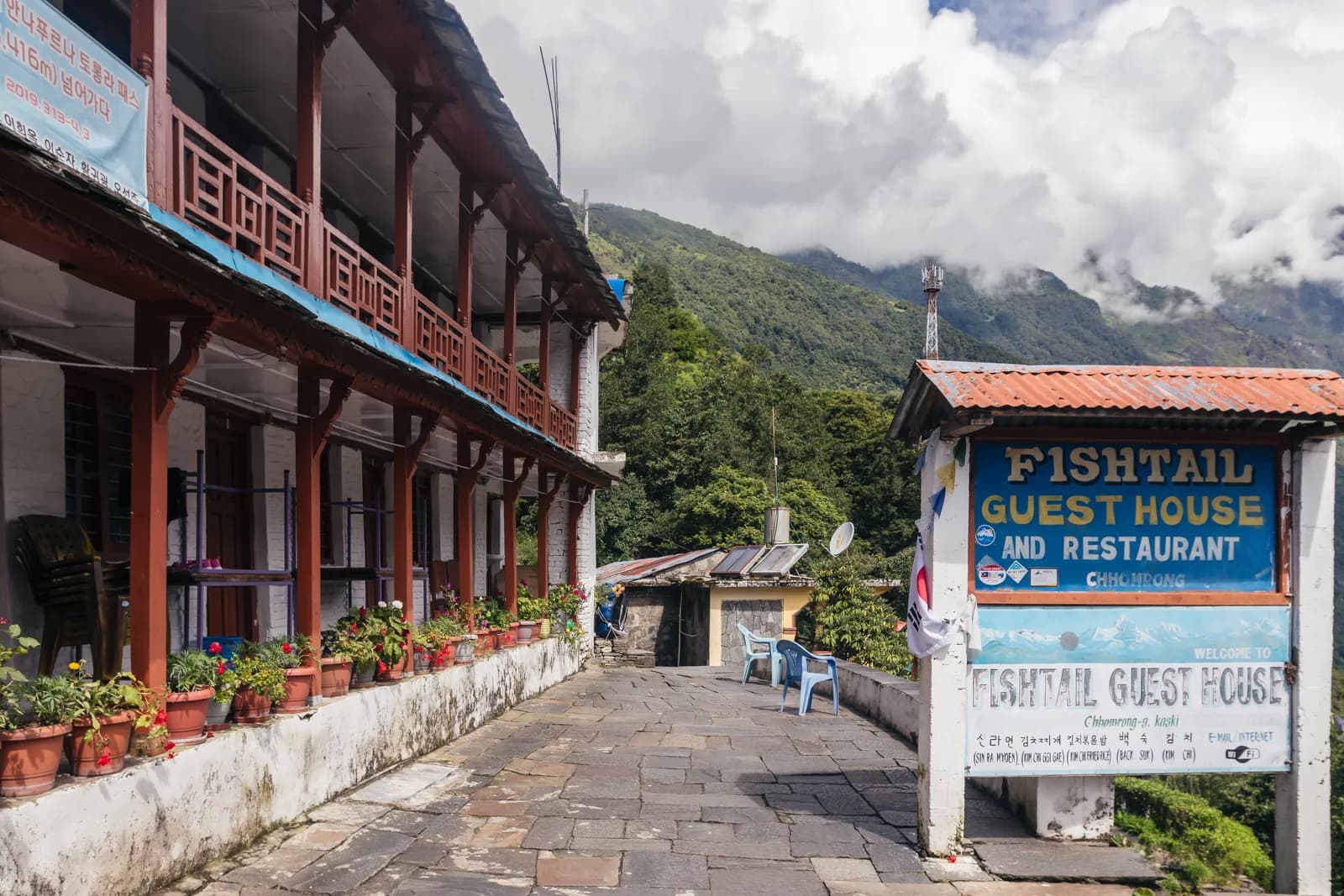
A teahouse trek is a trek where you sleep and eat in small family-run lodges along the trail instead of carrying a tent and a kitchen. You walk from village to village, check in to a lodge in the afternoon, eat in its dining room, sleep in a simple twin room and set off again in the morning, so your pack holds clothes and a sleeping bag, not camping gear. It is the standard way to trek in Nepal's busiest regions, and it is why a first-time trekker can do Poon Hill or Everest Base Camp with a daypack and no outdoor cooking skills.
Today the lodges sell rooms and full meals, and a teahouse trek is simply a lodge-to-lodge trek. This guide explains how it works, what a room and a day look like, where teahouse treks are possible and where they are not, what the system costs and what to do differently from a camping trek. For the price details, see teahouse prices by altitude.
Poon Hill Trek (Ghorepani) के ओपन ट्रिप
पार्टनर खोज रहे ट्रेकर्स के असली ट्रिप।

How a teahouse trek works
Most days follow the same rhythm, which our first-trek guide describes. You start with an early breakfast and a morning walk of three to four hours, stop for lunch in a village, and walk the afternoon to the next lodge, arriving by mid-afternoon. You carry a daypack with water, layers, a camera and valuables, while a porter or the agency carries the rest in a duffel. The evening is spent in the dining room, which is often the only heated room.
The bargain between you and the lodge is simple. The room is cheap, sometimes nearly free, because the owner expects you to eat dinner and breakfast there. If you eat elsewhere, the owner may charge more for the room. That custom is the engine of the whole system, and it is why you are asked to order food on arrival. You can read more in our guide to teahouse prices.
What a room is like
Rooms are basic. Expect twin beds with foam mattresses and blankets, thin partition walls and no heating. Toilets and washrooms are usually shared, and at higher altitude they are simple. Rooms above about 4,000 m are unheated, as our packing list says, so you sleep in your sleeping bag, often fully dressed. Electricity may be limited and charged for, hot showers are extra and wifi, where it exists, is slow. These are not failings of the lodges; they reflect the fact that everything above the road is carried up the valley on someone's back.
Standards differ by route. On the Poon Hill and Annapurna Base Camp routes, our Annapurna page says lodges stand every hour or two, while Khopra Ridge and parts of Mardi Himal have fewer, more basic places. Langtang has lodges in every village. On the Manaslu Circuit, lodges at Samagaun, Samdo and Dharamsala are smaller and more basic than on the Annapurna or Everest routes, menus are limited above Namrung and there are no cash machines. In the Makalu region, lodges operate at Seduwa, Tashigaon, Khongma Danda, Dobate, Yangle Kharka and Langmale Kharka, with a small teahouse and camping area at base camp.
A typical evening and morning
You arrive by mid-afternoon, so there is daylight to wash socks, change out of sweaty layers and take a short walk. Ask the owner what the room costs with dinner and breakfast, and put your name down for a hot shower if there is one. The dining room stove is usually lit around late afternoon, and that is where everyone gathers: guides, porters, trekkers from several countries and the family who run the lodge. You order dinner early so the kitchen can plan, since everything is cooked to order on a small stove, and then you eat, drink tea, write up the day and go to bed early. Nights are cold from Dingboche or Manang upward, so most people are in their sleeping bags by eight or nine.
In the morning you order breakfast the night before or on waking, pack the duffel for the porter and settle the bill when you leave, checking the total against the price board you photographed. Ask for boiled water for your bottle, and carry the day's snacks. The next lodge is a few hours away, and the same routine repeats. It is repetitive in the best way: after two days you stop thinking about logistics and only walk.
Food
Meals are served in the dining room, from a menu that is much the same in every lodge: dal bhat, noodles, fried rice, potato dishes, eggs, porridge and Tibetan bread, with pasta, pizza and apple pie at lower altitudes. Dal bhat, rice with lentil soup and vegetables, usually comes with refills and is the best value. Our dal bhat guide goes through the menu. Prices rise with altitude, since food is carried up. As of October 2026 our dated data puts dal bhat at NPR 500 to 1,000 below 2,500 m in the Annapurna region and NPR 1,300 to 1,600 above 3,800 m, and at NPR 1,200 to 2,000 above 3,800 m in the Everest region.
Where teahouse treks work and where they do not
| Region and route | Lodging style |
|---|---|
| Poon Hill, Annapurna Base Camp | Lodges every hour or two |
| Annapurna Circuit | Lodges in every village, with some jeep-road sections |
| Everest Base Camp, Gokyo | Lodges every few hours, stove-heated dining rooms |
| Langtang Valley | Lodges in every village |
| Manaslu Circuit | Smaller, more basic lodges, no machines |
| Makalu Base Camp | Lodges and seasonal teahouses, a small camping area at base camp |
| Kanchenjunga | Small seasonal lodges or camps in the upper villages, basic and short menus |
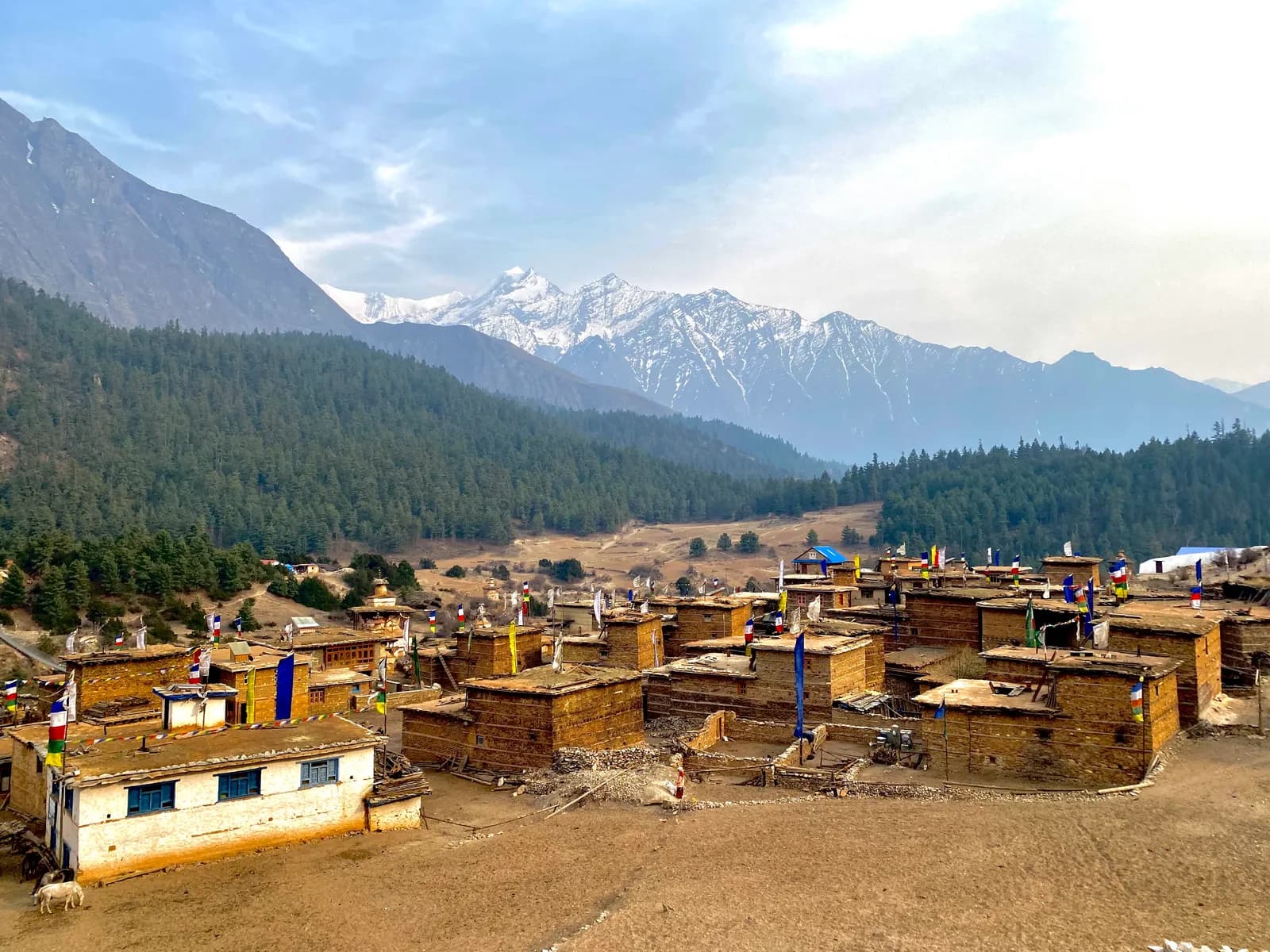
| Upper Dolpo | Few or no hotels in most villages; camping with a cook is the norm |
Upper Dolpo is the clearest exception: our route page says most itineraries use camping and a cook, and the region page says there are no hotels in most villages, so a guide and camping gear or homestay arrangements are essential. Camping treks need an agency, a cook, porters or animals and a different budget; our Upper Dolpo itinerary and Dolpo permits guide explain.
What it costs
As of October 2026 our dated regional bands give a mid-range cost per person per night, covering room, three meals and small extras, of NPR 2,900 to 4,700 in the Annapurna region below 2,500 m, NPR 3,800 to 5,600 between 2,500 and 3,800 m and NPR 6,400 to 7,900 above that. In the Everest region it is NPR 5,300 to 7,600 between 2,500 and 3,800 m and NPR 6,300 to 9,000 above 3,800 m. A camping trek adds a cook, a crew, equipment and food carried in, so it is priced very differently; our Upper Dolpo page calls it one of the more expensive treks in Nepal. The cost guide has the full picture.
What to bring and do differently
You carry less than on a camping trek, but you still need a warm sleeping bag for the cold nights, which you can rent in Kathmandu or Pokhara (see our sleeping bag guide), a down layer, a refillable bottle and a way to purify water, and cash in small rupee notes because machines are scarce above the lower villages. Habits that help:
- Eat where you sleep. It keeps the room cheap and you in the warm dining room.
- Order dinner and breakfast when you check in, so the kitchen can plan.
- Photograph the price board at each lodge to plan the next day's budget.
- Use the dining room stove, which is the main comfort.
- Arrive by mid-afternoon, since lodges fill and the afternoon cloud and cold set in.
- Book ahead in peak weeks for the busiest stops. Our Everest and Annapurna guides note that Namche, Manang and Thorong Phedi fill in October.
Teahouse trek or camping trek?
The choice is usually made for you by the route. On Poon Hill, Annapurna Base Camp, Everest, Langtang and the Annapurna Circuit, a teahouse trek is the norm, and a camping trek is a luxury choice. On Upper Dolpo and parts of Kanchenjunga and Makalu, camping or a mix is essential. Our guide on Kanchenjunga versus Makalu shows how facilities thin out as routes get remote.
If you are weighing it as a first-timer, a teahouse trek with a guide or guide-porter is the lowest-friction way into the Himalaya. Read the first-time trekking guide, and how many days you need to match a route to your holiday.
इस ट्रेक की योजना बनाएँ
- Everest (Khumbu) क्षेत्र गाइड
- Annapurna क्षेत्र गाइड
- Langtang क्षेत्र गाइड
- Manaslu क्षेत्र गाइड
- Dolpo क्षेत्र गाइड
- Trekking partner for Poon Hill Trek (Ghorepani)
- Trekking partner for Everest Base Camp Trek
- Trekking partner for Annapurna Circuit Trek
- Find someone to trek Langtang Valley Trek with
- Upper Dolpo: Shey Phoksundo to Shey Gompa trekking partners
- Poon Hill Trek (Ghorepani) यात्रा-कार्यक्रम
- Everest Base Camp Trek यात्रा-कार्यक्रम
- Annapurna Circuit Trek यात्रा-कार्यक्रम
- Langtang Valley Trek यात्रा-कार्यक्रम
- Upper Dolpo: Shey Phoksundo to Shey Gompa यात्रा-कार्यक्रम


