Poon Hill versus Mardi Himal
Poon Hill or Mardi Himal for a short Annapurna foothills trek: days, altitude, difficulty, views, lodges, crowds and season compared, with advice for first-timers and families.
Poon Hill and Mardi Himal are the two most popular short treks from Pokhara, and they are different in feel. Poon Hill is a four-day lodge-to-lodge walk through villages and rhododendron forest that peaks at a sunrise viewpoint of about 3,200 m; Mardi Himal is a five-day ridge climb to a viewpoint of about 4,500 m with simpler lodges and fewer people. If you want an easy, social first trek, choose Poon Hill. If you want more altitude and quiet, choose Mardi Himal.
This guide compares them using our two day-by-day plans: Poon Hill and Mardi Himal. For longer options, see Annapurna Base Camp versus Mardi Himal.
Poon Hill Trek (Ghorepani) के ओपन ट्रिप
पार्टनर खोज रहे ट्रेकर्स के असली ट्रिप।

At a glance
| Factor | Poon Hill | Mardi Himal |
|---|---|---|
| Typical length | 4 days | 5 days |
| Highest sleeping point | Ghorepani, 2,860 m | High Camp, about 3,550 m |
| Highest point reached | Poon Hill, about 3,200 m | Viewpoint, about 4,500 m |
| Style | Villages, forest, one sunrise climb | Forest, then exposed ridge |
| Difficulty | Easy to moderate | Moderate to hard (short but steep) |
| Lodges | Many, comfortable, in villages | Fewer, simpler, along the ridge |
| Crowds | Very busy in peak seasons | Busy but quieter |
| Best for | First-timers, families, short on time | Fit beginners, quiet seekers |
| Permit | ACAP, TIMS if required | ACAP, TIMS if required |
| Route pages | Poon Hill | Mardi Himal |
The routes
Poon Hill
The standard four days run Pokhara to Ulleri (about 2,070 m) after a drive to Nayapul, then up the famous stone steps to Ghorepani (2,860 m), a pre-dawn climb to Poon Hill for sunrise, on to Tadapani (about 2,630 m), and down via Ghandruk to Pokhara. You pass Gurung and Magar villages, terraced fields and some of Nepal's best rhododendron forest in spring. Lodges are frequent and comfortable.
Mardi Himal
The five days run Pokhara to Forest Camp (about 2,500 m), Low Camp (about 2,970 m), High Camp (about 3,550 m), then a long day to the viewpoint at about 4,500 m and back, and down to Siding and Pokhara. The ridge is narrow and open, and Machapuchare dominates the view. Lodges are small and simple, so spaces can be tight in October and April.
Difficulty and altitude
Poon Hill never goes above about 3,200 m, so altitude illness is unlikely for most people, and the walking is steady. The hardest part is the Ulleri steps (thousands of them) and the cold dawn climb to the viewpoint.
Mardi Himal is steeper, and its viewpoint day climbs about 950 m from High Camp to about 4,500 m and back. That is a long, cold day, and some trekkers get altitude symptoms. Read the acclimatisation schedule and keep a spare night at High Camp if you feel unwell.
Views
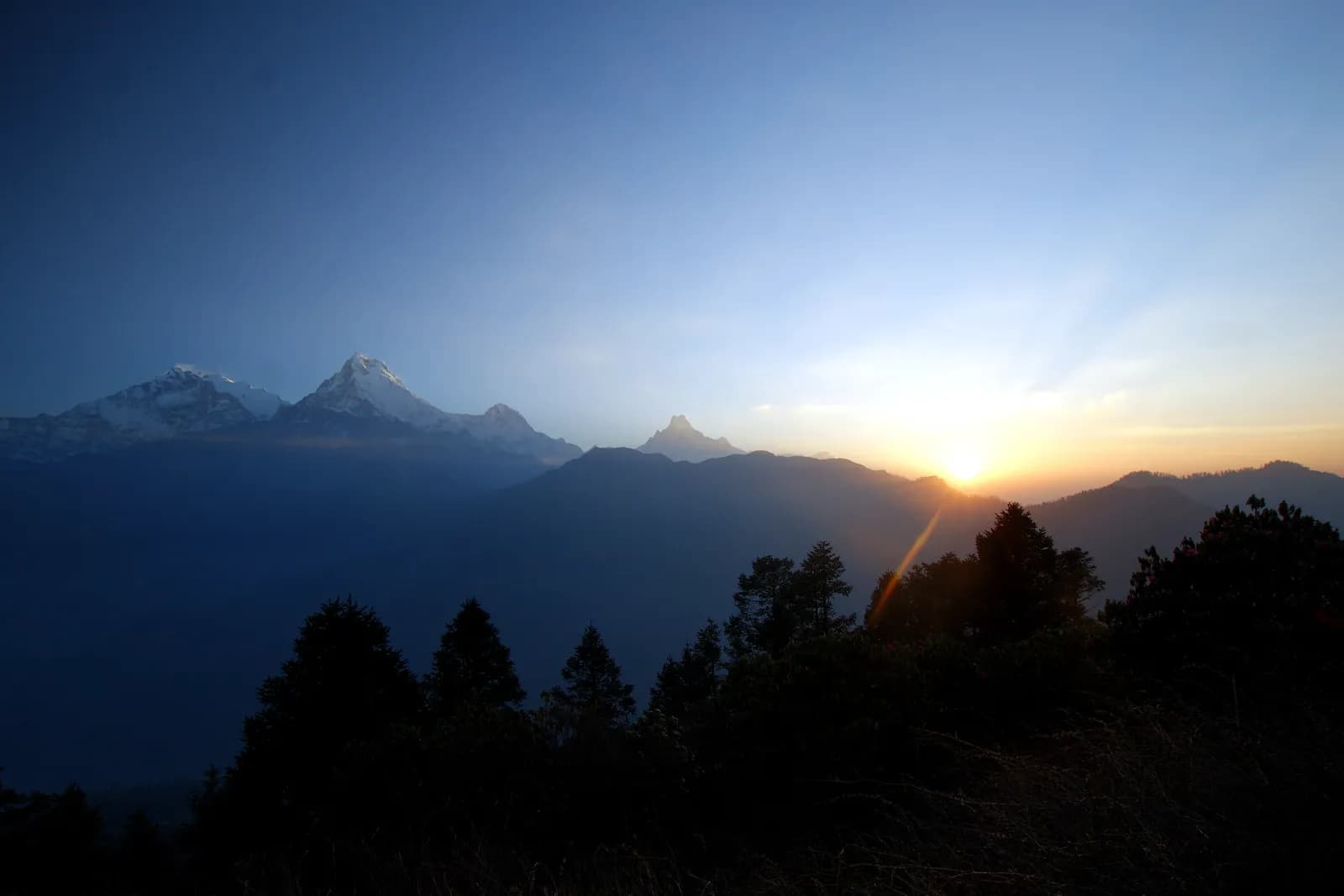
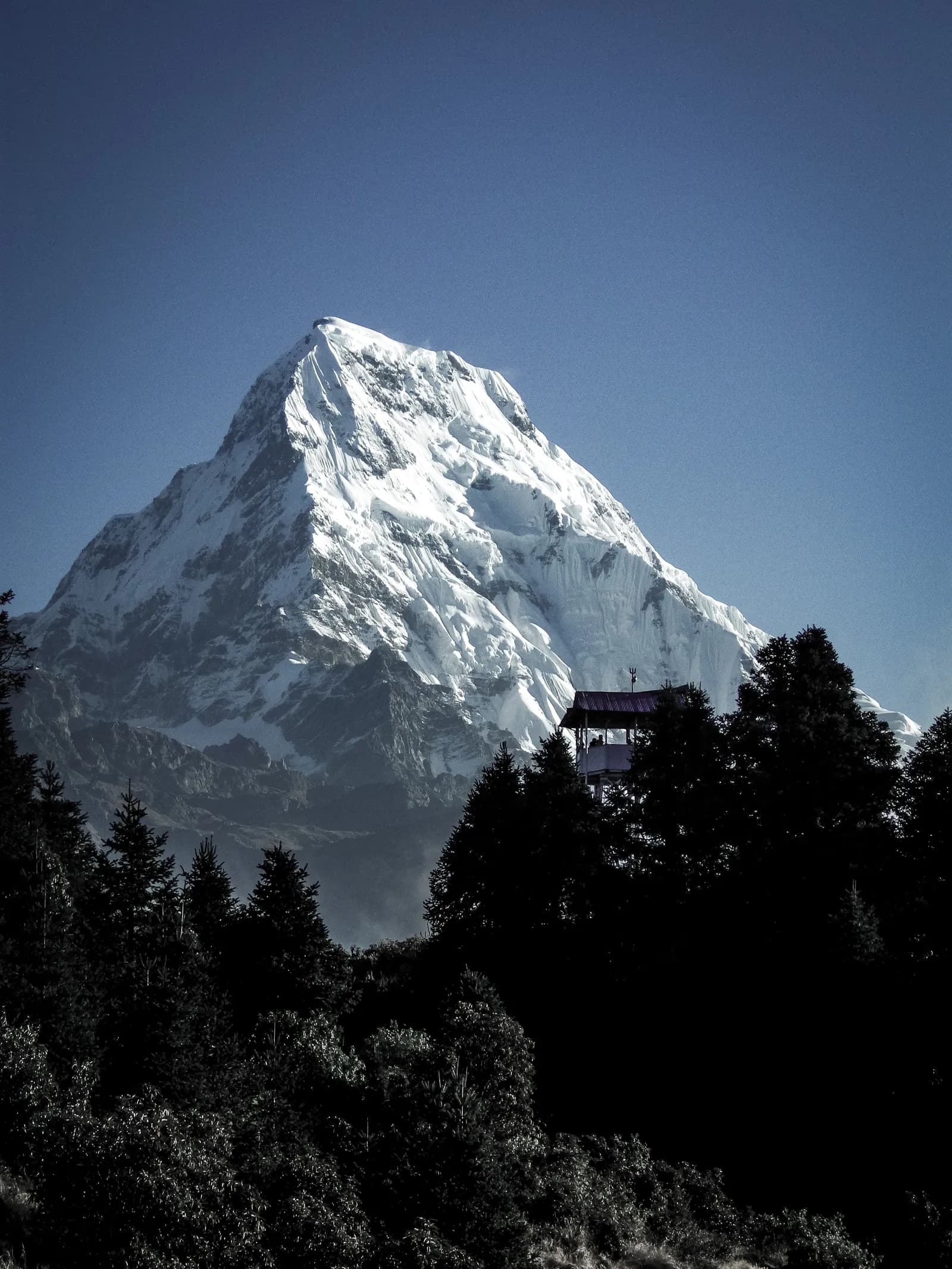
At Poon Hill you get a wide sunrise panorama of Dhaulagiri, Annapurna I, Annapurna South and Machapuchare, with a crowd of other trekkers sharing the viewpoint. On Mardi Himal you walk a ridge for two days with the Annapurna range along one side and Machapuchare close, and at the top the view opens. Poon Hill is a single moment; Mardi Himal is a sustained view.
Crowds and lodges
Poon Hill has many lodges and a well-worn trail, which makes it easy for beginners and families. It is also crowded at sunrise in peak months, so leave early to get a spot. Mardi Himal has fewer, simpler lodges that sit close together, and you have less choice if one is full. In winter, some lodges close on both routes.
Season
Poon Hill is a good winter route because it stays low, though snow can fall near Ghorepani. Mardi Himal's upper ridge is cold and snowy in winter and monsoon cloud hides views. For flowers, the best months for both are March and April. See trekking in Nepal in April and the best time to trek in Nepal.
Cost and permits
Both require the ACAP permit, and costs differ mainly by the number of days. Poon Hill is cheaper because it is shorter and lodges are plentiful. If you share a guide and porter, the cost per person falls on either trek. See the ACAP permit guide and the cost guide.
Which to choose
- First trek, or trekking with children: Poon Hill.
- Four days or fewer: Poon Hill.
- Fit and want altitude with few people: Mardi Himal.
- Winter: Poon Hill (lower), with warm gear.
- Both: link them with a few extra days, or do Poon Hill first as a warm-up.
Read the first-time trekking guide if you are new, and the route comparison hub for the bigger picture.
Doing them with others
Both are popular with small groups, and sharing a guide cuts costs. If you want a partner, see how to find a trekking partner safely. If you are thinking of going alone, read is solo trekking in Nepal safe?.
Day by day side by side
| Day | Poon Hill | Mardi Himal |
|---|---|---|
| 1 | Pokhara to Nayapul and Ulleri, about 2,070 m (5 to 6 hours of walking) | Pokhara to Kande and Forest Camp, about 2,500 m (5 to 6 hours) |
| 2 | Ulleri to Ghorepani, 2,860 m (4 to 5 hours) | Forest Camp to Low Camp, about 2,970 m (3 to 4 hours) |
| 3 | Poon Hill sunrise, then Tadapani, about 2,630 m (6 hours) | Low Camp to High Camp, about 3,550 m (3 to 4 hours) |
| 4 | Tadapani to Ghandruk and Pokhara (3 to 4 hours plus drive) | High Camp to the viewpoint and back (6 to 7 hours) |
| 5 | High Camp to Siding and Pokhara (5 to 6 hours plus drive) |
Look at the shape of each. Poon Hill front-loads its effort on day 1 and 2 with the steps, then relaxes. Mardi Himal builds slowly to a single big day. If you do not like long climbs, the first suits you; if you like a summit-style day, the second does.
Fitness and training
Poon Hill needs basic fitness: if you can walk four to five hours on hills with a daypack, you can do it. A few weeks of stair climbing will make the Ulleri steps easier. Mardi Himal needs more: practise hill walking with a loaded daypack and include at least one day of six hours or more. Trekking poles help on both, especially on the descents.
Poon Hill with children and older trekkers
Poon Hill is the standard choice for families and older trekkers because it stays below 3,200 m, the gradient is gentle apart from the first climb and lodges are comfortable and frequent. Plan a five-day version with a spare night at Ghorepani or Ghandruk for a slower pace, and read the packing list for warm layers, since Ghorepani is cold on winter mornings. Mardi Himal is less suited to young children because of the altitude on the viewpoint day and the exposed ridge.
What can go wrong
| Problem | Poon Hill | Mardi Himal |
|---|---|---|
| Crowded viewpoint | Very likely at sunrise | Less likely |
| Full lodges | Possible in peak weeks | More likely, with fewer options |
| Altitude symptoms | Rare | Possible on the viewpoint day |
| Cloud at sunrise | Common in the monsoon and winter storms | Common |
| Knee strain | Long stone-step descents | Steep ridge descent |
If cloud hides Poon Hill on the first morning, many trekkers wait for a second attempt the next day; plan the extra night if you can.
A simple decision rule
Count your days and your appetite. With four days and a wish for a gentle, scenic trek, go to Poon Hill. With five days and the energy for a steep ridge, go to Mardi Himal. With a week or more, consider Annapurna Base Camp instead.