Everest Three Passes versus Everest Base Camp
The Three Passes loop adds six days, three glaciated cols and the Gokyo lakes to the Base Camp route. How they compare on difficulty, days, cost, gear, risk and crowds, and who should do which.

The Three Passes trek contains the Everest Base Camp trek and adds six days, three high crossings (Kongma La, Cho La and Renjo La), the Gokyo lakes and a loop through quieter valleys, so choose Base Camp for a first high trek of 12 days, and the Three Passes only if you are fit, experienced above 4,500 m and have 18 days plus spare time. The passes are the difference: they add long days, glacier-edge walking and weather dependence, and they remove most of the crowds. This guide compares the two trek by trek, using our route data for Everest Base Camp and the Everest Three Passes.
Both sit in Sagarmatha National Park in the Khumbu, both use the Lukla flight, and both are busiest in spring and autumn. The hub for comparisons is which Nepal trek is right for you; for the quieter lake valley on its own, see Everest Base Camp versus Gokyo Lakes.
Everest Three Passes Trek के ओपन ट्रिप
पार्टनर खोज रहे ट्रेकर्स के असली ट्रिप।
At a glance
| Factor | Everest Base Camp | Everest Three Passes |
|---|---|---|
| Days (our plan) | 12 | 18 |
| Difficulty (route data) | Moderate-hard | Hard |
| Highest point | Kala Patthar, about 5,545 m | Same, plus passes of about 5,370 to 5,535 m |
| Highest sleeping point | Gorak Shep, 5,164 m | Gorak Shep, 5,164 m |
| Longest walking day | 7 to 8 h (Lobuche to Gorak Shep) | 8 to 9 h (Chhukung to Lobuche over Kongma La) |
| Passes | None | Kongma La, Cho La, Renjo La |
| Guide and porter days (cost model) | 11 and 11 | 17 and 17 |
| Crowds | The busiest trail in Khumbu | Busy to Lobuche, quiet on the passes |
What the Base Camp trek covers
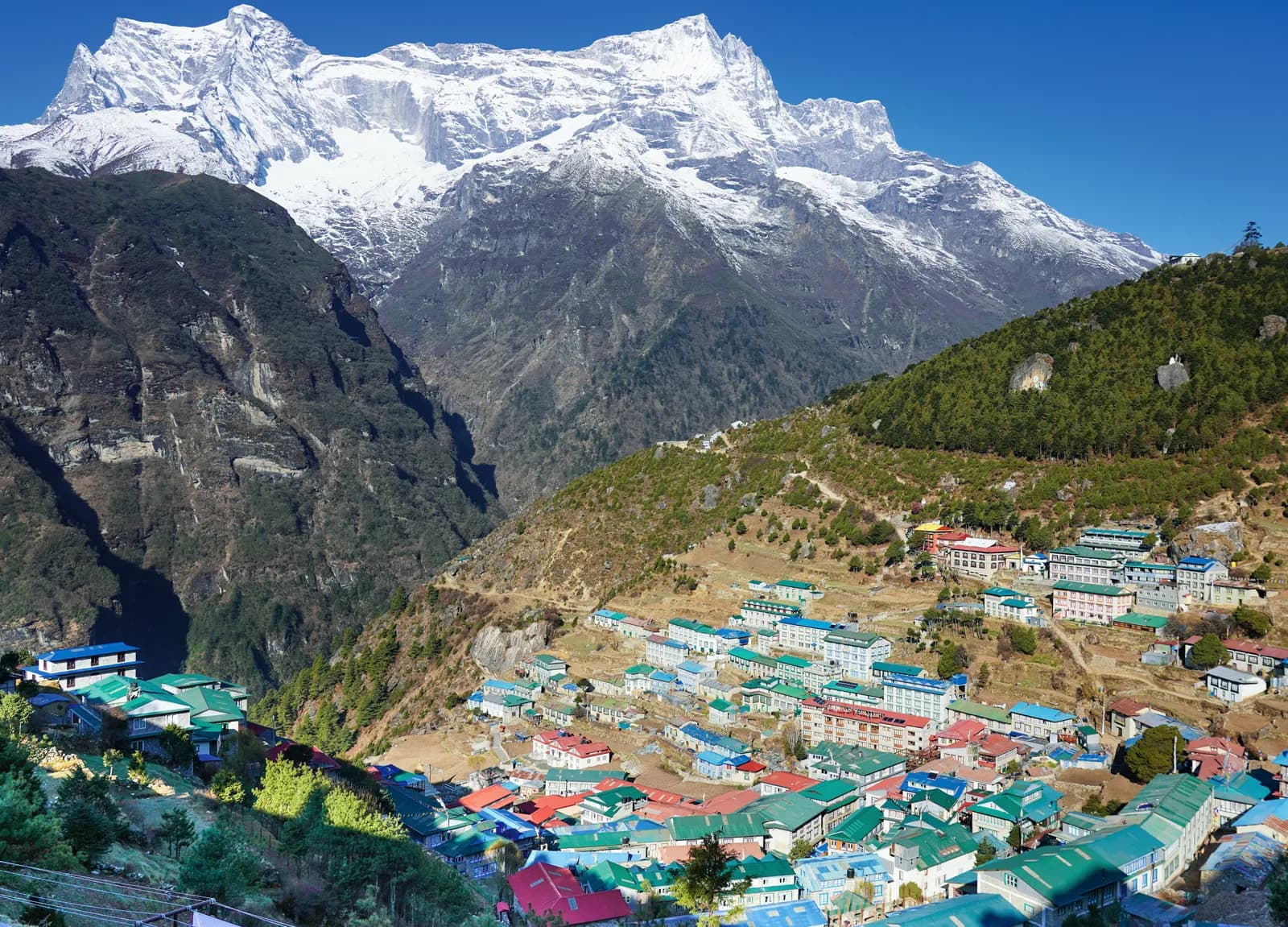
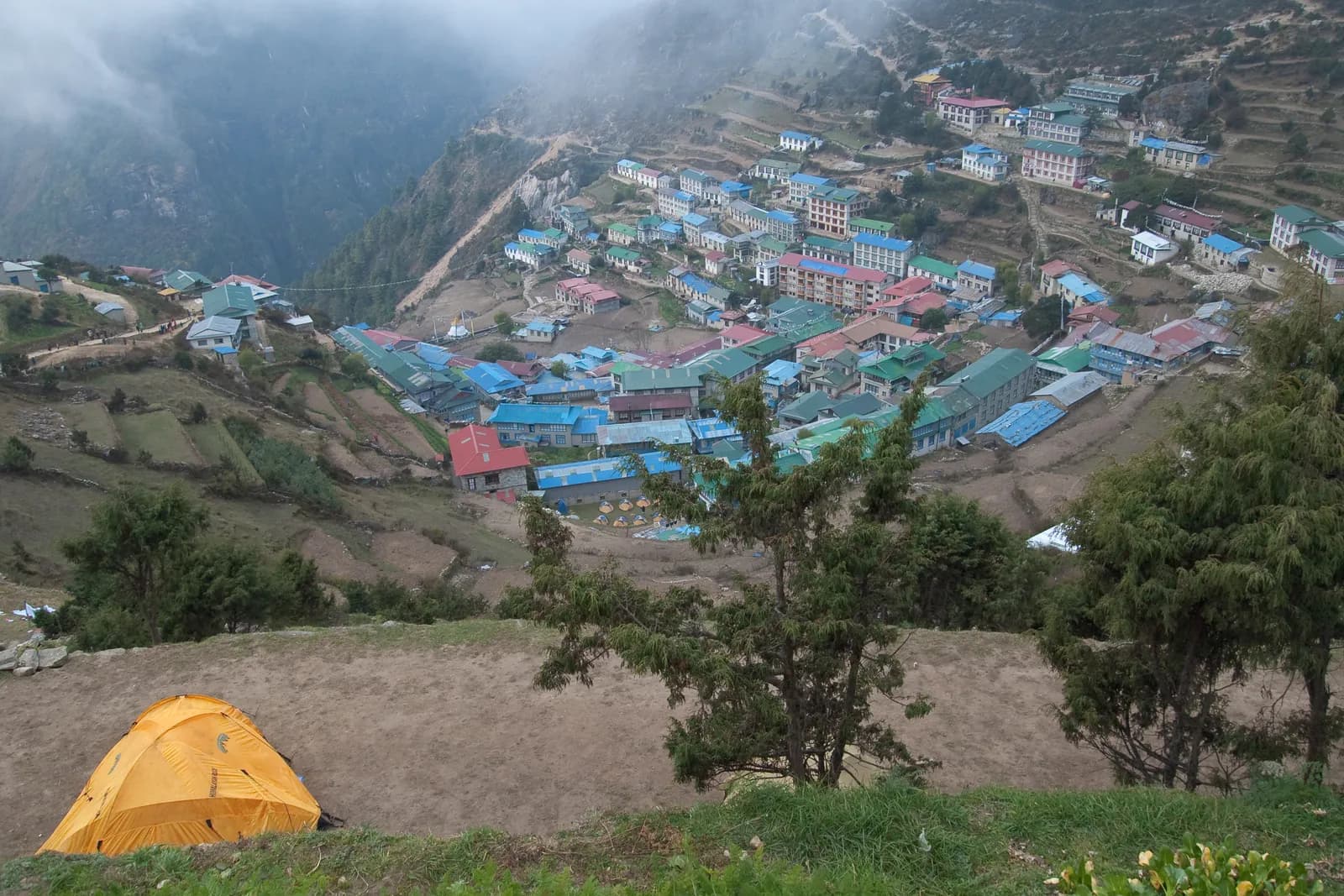
Our 12-day plan flies Kathmandu to Lukla (about 2,846 m) and walks to Phakding (2,610 m) on day 1, climbs to Namche Bazaar (3,440 m) on day 2, rests at Namche on day 3 with a hike toward the Everest View Hotel, continues to Tengboche (3,860 m), then Dingboche (4,410 m), rests again at Dingboche on day 6, goes on to Lobuche (4,940 m) and Gorak Shep (5,164 m), and visits Everest Base Camp (about 5,364 m) and Kala Patthar on separate mornings before descending in about three days. It is a long, high, non-technical walk on well-built trails with lodges at every stop. The challenge is altitude. Read the Base Camp day by day and the best time for Everest Base Camp.
What the Three Passes adds
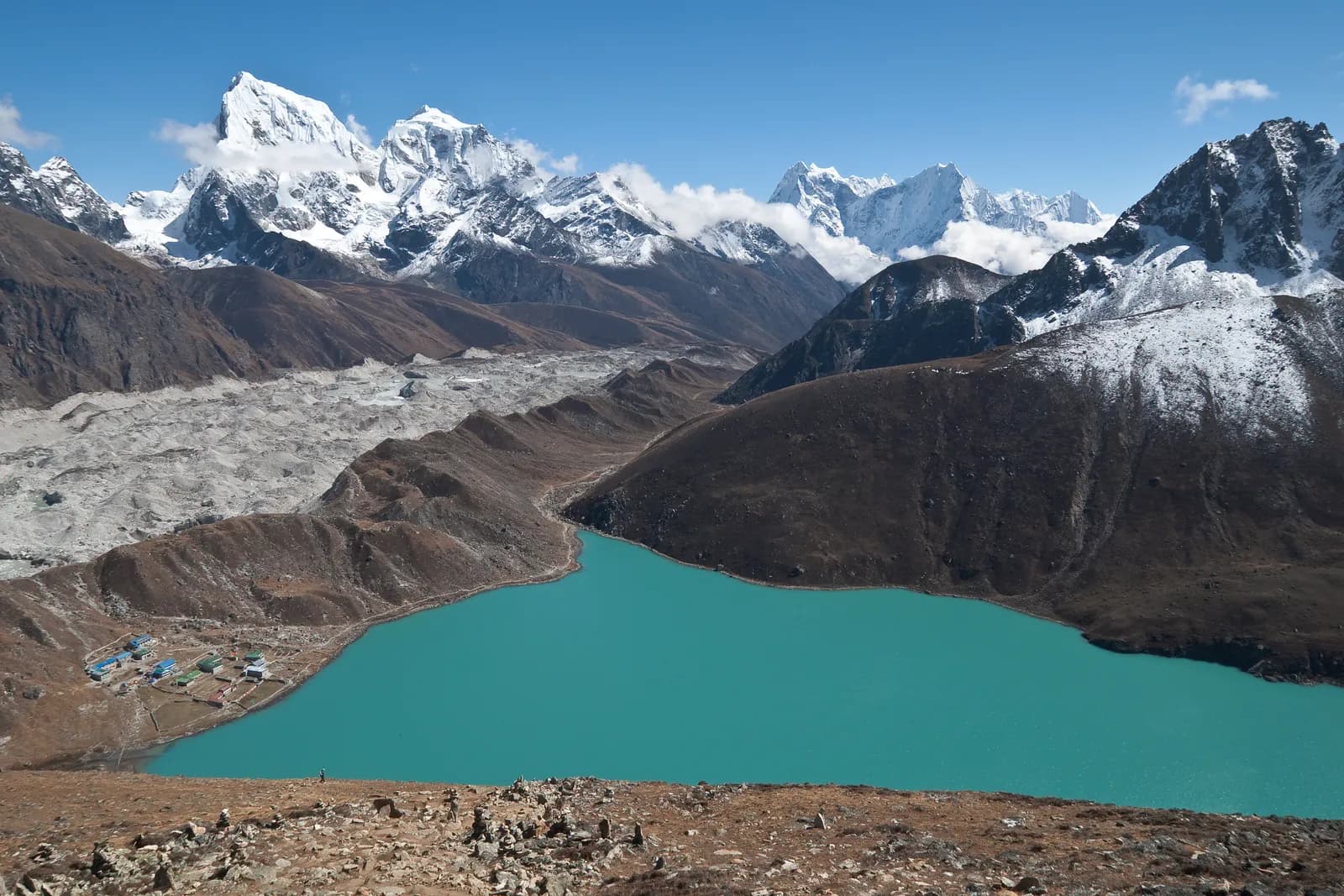
The 18-day plan runs clockwise. It follows the Base Camp route to Chhukung (4,730 m) in the Imja valley, then crosses Kongma La to Lobuche on day 8, a walk of eight to nine hours. It reaches Gorak Shep and Base Camp on day 9, then goes over Cho La from Dzongla to Thagnak on day 11, a seven- to nine-hour day, down to Gokyo (4,790 m), where there is a rest day for Gokyo Ri, then over Renjo La from Gokyo to Lungden on day 14, and down the Bhote Koshi valley through Thame to Namche and Lukla. The passes are about 5,370 to 5,535 m in our route data, and the days involve moraine, scree, snow patches and, on Cho La, a short glacier stretch where traction may be needed depending on conditions.
You therefore get Base Camp, Kala Patthar, Gokyo, Gokyo Ri and the Thame valley in one trek, with far fewer people on the passes than on the Base Camp trail. You also take on more risk.
Difficulty and who it suits
Our route page is blunt: the Three Passes is not a first high-altitude trek. You should be fit enough to walk eight to nine hours at over 5,000 m, comfortable with cold and exposure, and ideally have trekked above 4,500 m before. Our Base Camp page, by contrast, suits fit walkers with some multi-day trekking experience. Pass days depend on weather, and a pass may be closed for a day or more by snow or wind, which is why spare days matter.
If you are unsure, do Base Camp or Gokyo Lakes first and come back for the passes later. If you are fit, experienced and have time, the Three Passes is the better trek for solitude and variety.
Altitude and acclimatisation
Both plans use the same height gain through Namche and Dingboche, with rest days at each. The Three Passes adds more nights at 4,700 to 4,830 m (Thagnak, Dzongla, Gokyo) and a longer total stay above 4,000 m, so the NHS advice for altitude applies strongly: rest at the same height if symptoms appear, go down if they worsen, and take a rest day every three to four days once above 3,000 m. A spare day for weather also doubles as acclimatisation. See altitude sickness basics, the acclimatisation schedule and HAPE and HACE warning signs.
Gear and conditions on the passes
Pass days are cold and early. Expect a start before dawn, frozen ground, and snow on the north side of a pass; the south face can be loose scree. Crampons or microspikes are sometimes needed on Cho La, so ask your guide before you rent; see crampons and microspikes for high passes and snow and high-pass conditions. A warmer sleeping bag, good gloves and a proper down jacket matter more on the loop than on the Base Camp trail; see sleeping bag ratings and renting or buying a down jacket.
Cost
Costs are driven by days. As of October 2026 our Everest data gives a guide at NPR 3,400 to 4,700 a day and a porter at NPR 2,100 to 3,400, from operator price guides, with the Kathmandu to Lukla flight at about USD 190 to 240 each way; fares rose on 1 March 2026. The cost model uses 11 guide days and 11 porter days for Base Camp and 17 and 17 for the Three Passes. At those rates the guide alone is NPR 37,400 to 51,700 for Base Camp and NPR 57,800 to 79,900 for the Three Passes, and a porter adds NPR 23,100 to 37,400 against NPR 35,700 to 57,800. Lodge bills add six more days. Flights and the Sagarmatha National Park permit (NPR 3,000) and Khumbu trek card (NPR 3,000) are the same for both. See Everest Base Camp trek cost breakdown and splitting guide and porter costs.
Permits and the guide rule
Both need the Sagarmatha National Park entry permit and the Khumbu Pasang Lhamu Rural Municipality trek card, and both routes recommend insurance that covers helicopter evacuation at altitude. The guide rule is reported not to be checked in Khumbu because the Khumbu Pasang Lhamu municipality opted out of the Nepal Tourism Board rule (Kathmandu Post, 3 April 2023), so the framing is: a licensed guide through a registered agency is required in restricted areas (Department of Immigration) and, under the Nepal Tourism Board rule of April 2023, in national parks and conservation areas, where 2026 operator reports say checkpoints enforce it in Annapurna and Langtang but not in Khumbu (checked 19 October 2026). Reported not checked is not the same as advisable: on the Three Passes, a guide who knows the passes is essential in practice. See /guide-rule-nepal.
Crowds and season
Base Camp is the busiest trail in the Khumbu, particularly between Namche and Lobuche in April and October. The passes are quieter, and Gokyo is quieter than the Base Camp trail. Spring (March to May) and autumn (October to November) are the best months for both, as our region page says; see Everest Base Camp in spring and trekking in Nepal in October. Snow on the passes varies by season, and late autumn and early spring are the coldest.
Getting there
Both begin with a flight to Lukla, which is weather dependent, or a drive to Phaplu or Salleri; flights from Ramechhap leave in the busy months. Build in a spare day at each end. See Kathmandu to Lukla flight guide.
Which should you choose?
- First high trek, 12 days or fewer: Base Camp.
- Fit, experienced, 18 days or more, want quiet: Three Passes.
- Want lakes and a view without the passes: Gokyo Lakes, 12 days.
- Want both Base Camp and Gokyo but not the passes: add Gokyo as an extension, with a guide's advice on timing.
- Not sure: do Base Camp first.
Finding a partner
The Three Passes is a good trek to share, because the guide and porter days are long and the cost per person falls with each additional trekker. See the Everest Three Passes partner page or the Everest Base Camp partner page, and read how to vet a trekking partner before you commit to 18 days together. The comparisons category has more head-to-heads.