Combining a Nepal trek with Chitwan and Kathmandu sightseeing
How to build one Nepal trip from Kathmandu sights, a short trek near Pokhara and a Chitwan wildlife stay, with sensible order, travel days, season, spare time and ethical choices at Chitwan.

The easiest way to combine a trek, Kathmandu sightseeing and a wildlife stay at Chitwan is to start in Kathmandu for a day or two, take a short trek near Pokhara such as Poon Hill or Australian Camp, spend two nights in Chitwan to recover and watch wildlife, and finish in Kathmandu with a spare day. That fits comfortably into two weeks. Chitwan sits in the lowlands, so it is hot in late spring and wet in the monsoon, and it is best between about October and March. This guide shows how to order the stops, how many nights each needs, what to book and how to choose ethical wildlife activities.
Poon Hill Trek (Ghorepani) के ओपन ट्रिप
पार्टनर खोज रहे ट्रेकर्स के असली ट्रिप।

Why this combination works
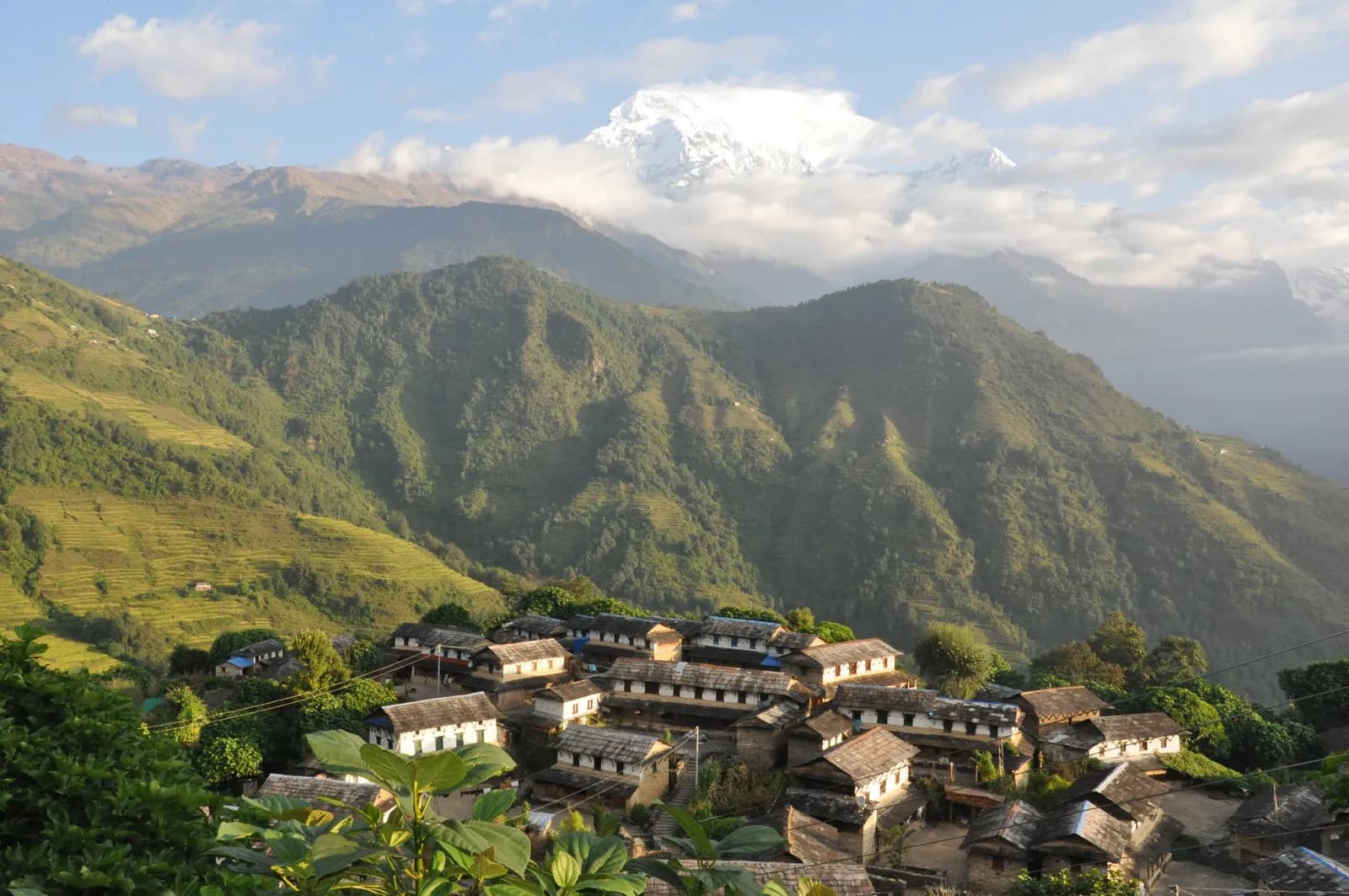
A short trek gives you mountains and village life; Kathmandu gives you temples, stupas and old squares; Chitwan gives you rhinos, deer, birds and, with luck, a glimpse of a tiger, in a completely different landscape. The three mix easily because they are linked by road and flights, and because the lowlands are a gentle contrast after days of stairs. Chitwan National Park in the Terai is known for the greater one-horned rhinoceros, and the sight of a rhino calf, like the one in the photo, is a highlight for many visitors.
Time is the constraint. Every transfer between these three places takes most of a day, so you cannot cram too much in. A realistic two-week plan includes one trek of four to five days, two or three days in Kathmandu, one in Pokhara and two nights in Chitwan, with a spare day.
A 14-day sample plan
| Day | Plan |
|---|---|
| 1 | Arrive in Kathmandu |
| 2 | Boudhanath, Pashupatinath, Swayambhunath |
| 3 | Travel to Pokhara (about 7 hours by road) |
| 4 to 7 | Poon Hill trek (four days) |
| 8 | Rest in Pokhara |
| 9 | Travel to Chitwan |
| 10 | Chitwan: jungle walk, canoe, village visit |
| 11 | Chitwan: morning safari, afternoon travel to Kathmandu |
| 12 | Bhaktapur and Patan |
| 13 | Spare day or Nagarkot |
| 14 | Fly home |
The four-day Poon Hill trek has a high point of 3,210 m and starts in Pokhara, which makes it the natural choice. If you want something gentler, replace it with the three-day Australian Camp and Dhampus trek and use the spare day for Pokhara's lakeside. If you prefer a trek from Kathmandu, the three-day Chisapani to Nagarkot trek fits without leaving the valley.
Kathmandu to Pokhara by road is about seven hours, and a tourist bus costs NPR 800 to 2,500 each way (as of October 2026). Our guide on getting to trailheads has more on transport.
Order and timing
Put Kathmandu first and last. The first Kathmandu day lets you adjust to the time zone and meet your agency; the last gives you a buffer against road and weather delays. The trek goes in the middle, when you are rested but not rushed. Chitwan comes after the trek, when you appreciate a warm bath and a swimming pool, and before the final Kathmandu days. If you reverse the order, with Chitwan first and the trek last, you risk finishing the trek tired and then having to rush the road trip.
Season matters. Autumn (October and November) and spring (March to May) are best for the trek, and the lowland season at Chitwan runs roughly from October to March. In late spring Chitwan is hot and humid, and in the monsoon heavy rain affects roads and wildlife viewing. So a trip in October, November or March works well for all three. Our best time to trek in Nepal breaks down the months.
What to do in Chitwan
Most lodges offer similar activities over a day or two:
- Jungle walks with a naturalist guide, in which you may see deer, monkeys, birds and, with luck, a rhino.
- Canoe trips on the river, good for birds and crocodiles.
- Jeep safaris into the park, which cover more ground.
- Village visits to Tharu communities, with cultural programmes.
- Elephant breeding centre. The centre in the photographs above, which is signed as the Chitwan National Park Elephant Breeding Centre, shows elephants and calves and gives context to the park's work.
Guides and park rules matter: stay with your guide, keep quiet and keep your distance from rhinos and elephants. Never leave the group.
Elephant rides and ethics
Elephant-back safaris have been a Chitwan tradition, but they are controversial. Animal-welfare organisations raise concerns about how captive elephants are trained and kept, and many visitors now choose walks, canoe trips and jeep safaris. If elephant welfare matters to you, ask the lodge how its elephants are kept, how many hours they work and whether it offers alternatives. A simple rule is that if an animal activity involves riding, forced performance or close handling, think twice. Wild animals deserve distance.
Health and comfort in the lowlands
The Terai is hot and humid for much of the year, and mosquitoes and other biting insects are present. The CDC's Travelers' Health page for Nepal and NHS Fit for Travel describe the insect-borne disease risks and recommended precautions, so ask a travel-medicine doctor before you go about malaria, dengue and other risks. Wear long sleeves and trousers in the evening, use repellent and sleep under a net if provided. Drink boiled or treated water and be careful with food. After a mountain trek, the humid lowlands can feel oppressive, so plan for rest and fluids.
Costs and booking
Chitwan lodges and packages range widely, from simple guesthouses to luxury resorts, and many include meals, safaris and park entry. Ask exactly what is included, and compare packages. Our cost data covers trek costs, not Chitwan; for trek budgets see our cost guide. Book Chitwan lodges and transfers through the same agency as your trek, or separately, but confirm each transfer in writing, and leave a buffer around flights home.
Making the transfers work
Road journeys in Nepal are slower and less predictable than the map suggests, and the Kathmandu to Pokhara and Pokhara to Chitwan legs both cross hills where a landslide, a breakdown or heavy traffic can add hours. Treat each transfer as the whole of that day: leave early, carry water and snacks, keep your passport and valuables in your daypack and do not schedule anything important in the evening of a travel day. Tourist buses, shared minibuses and private cars all run on these corridors, and a private car or an agency transfer costs more but gives you control over the start time and the stops.
Ask your agency or lodge to arrange the Chitwan pickup in advance and to confirm the pickup point, because Sauraha, the main tourist base, has several lodges and the drivers wait at specific places. When you return to Kathmandu from Chitwan, do not book an evening flight on the same day. A morning departure for the road, a hotel in the capital that night and a free day after it is far safer than a tight connection.
A day at Chitwan, hour by hour
A typical lodge day starts early, because animals are most active at dawn and dusk. You have tea around dawn, walk or drive into the park with a naturalist guide, and return for breakfast after a few hours. The middle of the day is hot, so it is spent resting, reading or visiting a Tharu village, and the afternoon brings a second outing, perhaps a canoe trip on the river, followed by dinner and an early night. Binoculars, neutral-coloured clothing, repellent, a hat and a refillable bottle are the useful extras. Do not wear bright colours, strong perfume or noisy fabrics in the park, keep your voice low and follow your guide's instructions about distance and direction without argument. Wildlife sightings are never guaranteed, so treat anything you see as a bonus, and remember that the guides' knowledge of birds, tracks and habits is often the most memorable part of the visit.
Budget and what to ask
Ask every lodge exactly what is included: transfers, meals, guided walks, jeep safaris, canoe trips, park entry and the village visit. Packages differ enormously, and a low headline price may leave out park fees or safaris. Ask how many people share a jeep and a guide, whether the guide is a licensed naturalist and how the lodge handles elephant welfare. For comparison, a trek is easier to price: our cost guide lists each line, and our teahouse prices guide shows how lodging and food costs rise with altitude, so you can see how much more the lowlands cost or save.
Alternatives and extras
If you have more time, add Nagarkot or Bandipur for a quiet hill stay, a rafting day on the Trishuli or a longer trek. If you have less time, choose either Chitwan or the trek, and enjoy Kathmandu. Our two-week itinerary guide covers a plan without Chitwan, and short treks from Pokhara lists options.
A short checklist
- Order: Kathmandu, trek, Chitwan, Kathmandu with a spare day.
- Choose a short trek (three to five days) for a two-week trip.
- Visit Chitwan between October and March if you can.
- Ask about elephant welfare and choose walks, canoes or jeep safaris if unsure.
- See a travel-medicine doctor about insect-borne diseases.
- Keep a buffer before your flight home.
For the wider beginner path, read the first-time trekking guide, the short treks from Pokhara and the first-timers hub. To find a partner for the trek leg, see the Poon Hill partner page.
इस ट्रेक की योजना बनाएँ
- Annapurna क्षेत्र गाइड
- Kathmandu Valley क्षेत्र गाइड
- Pokhara क्षेत्र गाइड
- Trekking partner for Poon Hill Trek (Ghorepani)
- Australian Camp and Dhampus Trek trekking partners
- Find someone to trek Chisapani Nagarkot Trek with
- Poon Hill Trek (Ghorepani) यात्रा-कार्यक्रम
- Australian Camp and Dhampus Trek यात्रा-कार्यक्रम
- Chisapani Nagarkot Trek यात्रा-कार्यक्रम