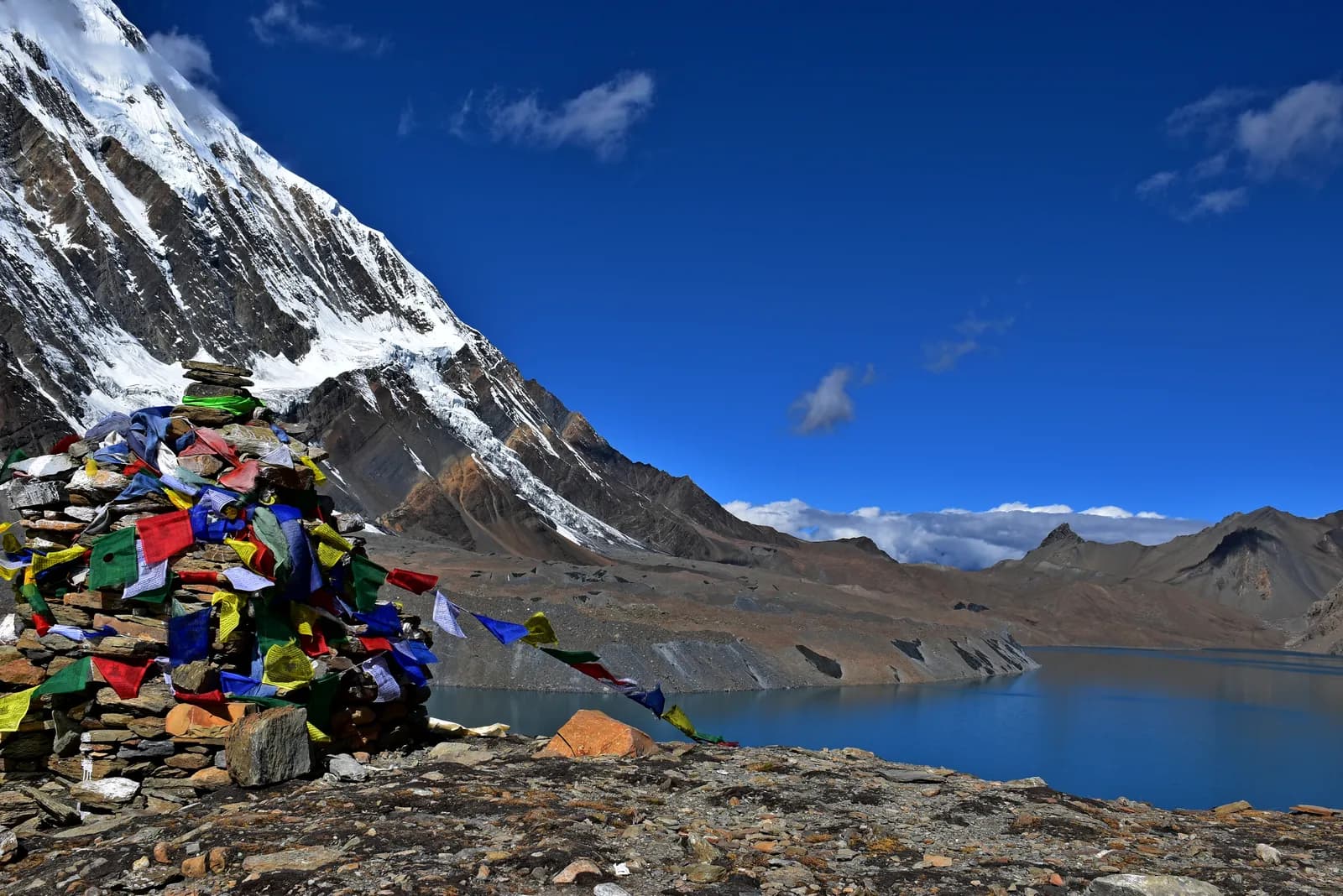

Travel Insurance for Trekking Above 4,500 m in Nepal
What a travel policy needs for a Nepal trek: altitude ceiling, helicopter evacuation, delays and repatriation, how to match cover to your route's high point, and the questions to ask before you buy.

For a trek in Nepal above about 3,000 m, a normal holiday policy is often not enough. The policy you buy should name your trekking altitude, cover helicopter evacuation and mountain rescue, and pay for delays and repatriation. The UK Foreign, Commonwealth and Development Office puts it plainly: make sure your insurance includes cover for mountain rescue services and helicopter costs, and that it covers your itinerary, planned activities and expenses in an emergency. The rest of this guide shows how to turn that into a checklist for your own route.
We are not an insurer or an adviser, and nothing here recommends a company or a product. FindTrekkingPartner is a free, privacy-first platform for finding trekking partners; it is not an agency and does not sell insurance. What follows is a plain-language checklist, and an invitation to read your own policy wording line by line. For the medical background see altitude sickness basics, and for what happens when a rescue is needed, helicopter evacuation: how it works.
טיולים פתוחים בEverest Base Camp Trek
טיולים אמיתיים שפרסמו מטיילים שמחפשים שותפים.
Start with the highest point of your route
Every policy has an altitude ceiling in the small print, and every route has a high point. The two must match, with room to spare. The figures in our route pack are:
| Route | High point | Days |
|---|---|---|
| Poon Hill | 3,210 m | 4 |
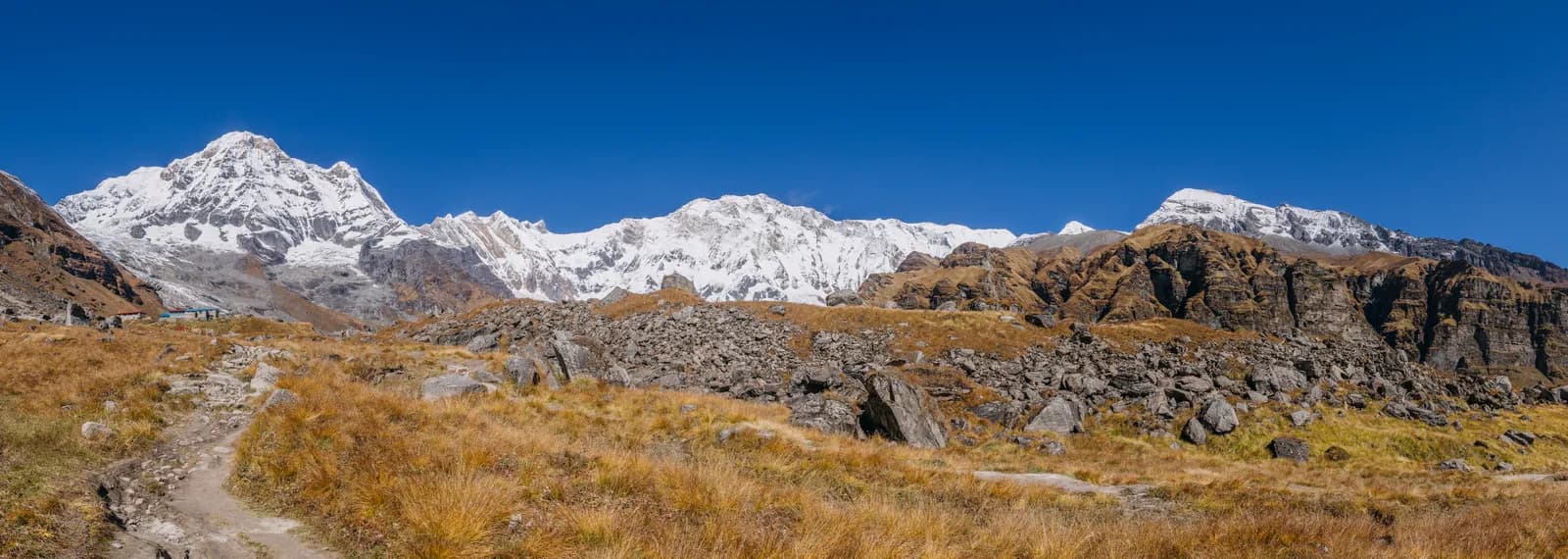
| Annapurna Base Camp | 4,130 m | 7 |
| Mardi Himal | 4,500 m | 5 |
| Langtang Valley | 4,773 m | 8 |
| Manaslu Circuit | 5,106 m | 14 |
| Kanchenjunga Circuit | 5,140 m | 21 |
| Gokyo Lakes | 5,357 m | 12 |
| Dhaulagiri Circuit | 5,360 m | 17 |
| Annapurna Circuit | 5,416 m | 14 |
| Everest Base Camp | 5,545 m (Kala Patthar) | 12 |
Our route pages say the same about cover. The Everest Base Camp page lists travel insurance covering helicopter evacuation to about 6,000 m, while the Everest Three Passes and Gokyo Lakes pages list cover for evacuation above 5,000 m. The pattern is simple: pick a policy whose ceiling is comfortably above your highest point, including any side trip. On the Annapurna Circuit that means more than the 5,416 m of Thorong La; on Everest Base Camp it means more than Kala Patthar at 5,545 m, not just the 5,364 m of base camp itself.
Trekking above 4,500 m: what the number must say
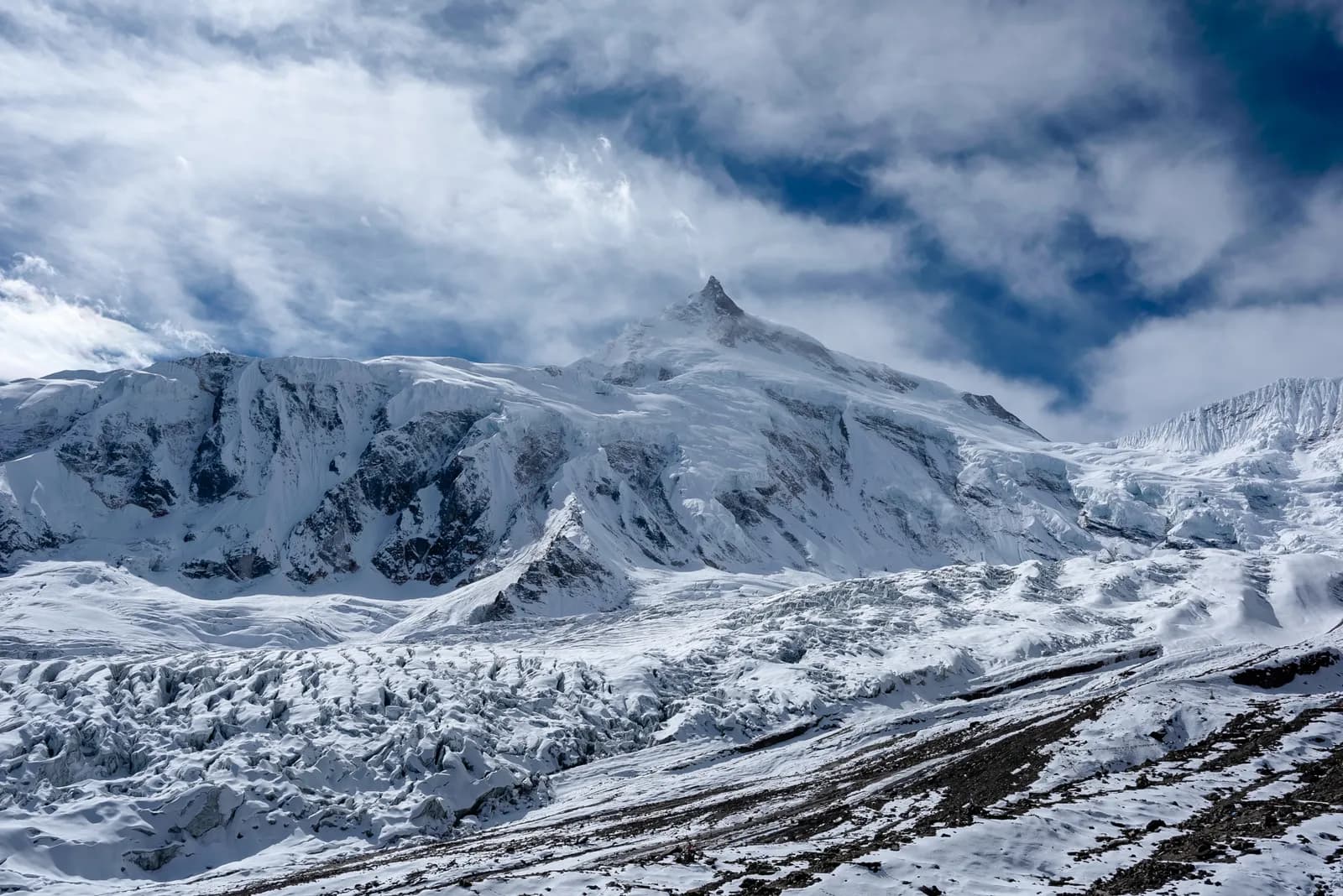
Many quotes state a ceiling such as "trekking up to 4,500 m". Against our route pack that matters in a specific way. Annapurna Base Camp (4,130 m) fits under it. Mardi Himal reaches about 4,500 m, so the viewpoint day sits right on the limit. Langtang Valley (4,773 m), the Manaslu Circuit (5,106 m), the Annapurna Circuit (5,416 m) and Everest Base Camp (5,545 m at Kala Patthar) are all above it. So do not accept "4,500 m" for these routes. Ask for the ceiling in writing, ask whether it covers walking only or also helicopter rescue from that height, and keep a margin: our Annapurna Circuit cost breakdown says cover should reach 5,500 m or more because Thorong La is 5,416 m, and our Everest Base Camp page lists helicopter evacuation cover to about 6,000 m. How the evacuation itself works and who pays is in helicopter evacuation in Nepal; the premium and the list of cover items are in trekking insurance for Nepal: cost and cover. For a restricted-area route the permit also needs an agency, so see the Manaslu Circuit cost breakdown for what the totals leave out.
The six things a trekking policy must say
First, altitude. The wording should give a maximum height in metres, or say that trekking up to a stated height without ropes or technical equipment is covered. "Hiking" and "trekking" are not the same word to every insurer. Second, helicopter evacuation. It should be named, and it should say whether it covers rescue from the mountain to the nearest suitable hospital. Third, emergency medical costs with a limit that would cover a stay in a Kathmandu hospital and treatment, not just a clinic visit. Fourth, repatriation, meaning the cost of getting you home on a medical flight if needed. Fifth, trip delay and cancellation, because the flights to Lukla and Jomsom depend on the weather; see our Kathmandu to Lukla guide for why delays are normal. Sixth, personal belongings and cash limits, which are usually low and matter if a bag is lost on a flight.
Exclusions that catch trekkers out
Read the exclusions section before you read anything else. Common traps are an altitude cap that is lower than your route, a requirement that a guide or a registered agency is used, an exclusion for ascending against a doctor's advice, and a clause that excludes illness you could have avoided by descending. Some policies exclude pre-existing conditions unless they are declared, so declare them. Others require the insurer to approve a helicopter evacuation first unless the situation is life-threatening. If the wording says "mountaineering", check how it defines it and whether peaks such as Kala Patthar or Gokyo Ri count as hiking or climbing. When in doubt, email the insurer with your route and your highest point and keep the answer.
Rescue fraud and why it matters for claims
The FCDO notes isolated reports of some trekking guides taking inexperienced trekkers to high altitudes too quickly, and of guides then calling expensive helicopter evacuations from which the guides take a cut. This is rare, but it is why insurers ask for medical evidence and why the decision to evacuate should rest on how you are, not on pressure from anyone. If you feel well, say so; if you are told you need a helicopter, ask what the symptoms are and ask to speak to the insurer's emergency line before you agree. Our emergency guide sets out who to call and in what order. A good agency and a slow itinerary are the best protection: the acclimatisation schedule shows what slow looks like.
Keep the paperwork where you can reach it
Carry a printed copy of the policy number, the insurer's 24-hour emergency number, your emergency contact and your blood group if you know it, and give a copy to your partner and your guide. Save the same details offline on your phone, because coverage can disappear for days. Photograph your passport and your policy. After any treatment or evacuation, keep every receipt and every medical report, and write down times and names while you remember them. Insurers need evidence, and a clean paper trail turns a slow claim into a faster one.
Sharing a trek with partners
If you share a guide or a route with partners you have met through a platform like ours, agree a few insurance rules in advance: everyone has a valid policy covering the route's high point, everyone shares the policy number and the emergency line with at least one other person on the trek, and everyone knows what the group does if one person needs an evacuation. The what if your partner cannot continue guide covers how shared costs are settled, and what to agree with trekking partners before you book includes an insurance line in its checklist. If you are looking for partners on a long route with a high pass, the Annapurna Circuit and Everest Base Camp partner pages are a good place to start.
Cost and the quote you actually need
We give no premiums here, because the price depends on your age, your country, your health and the policy. The sensible way to compare is to ask each insurer for a written quote that states altitude, helicopter evacuation and medical limits, and then to compare the wording rather than the headline price. A cheap policy with a 4,000 m ceiling is more expensive than none if your route goes to 5,416 m. For the other costs of a trek, see the Nepal trekking cost guide.
A note on the guide rule
A licensed guide through a registered agency is required in restricted areas (Department of Immigration) and, under the Nepal Tourism Board rule of April 2023, in national parks and conservation areas, where 2026 operator reports say checkpoints enforce it in Annapurna and Langtang but not in Khumbu (checked 19 October 2026). Some policies ask that you trek with a guide above a certain height regardless of the rule, so check both. The guide rule by region and the Annapurna Circuit route page cover the details, and the altitude and health hub links the rest of the series. For the Manaslu restricted area, which needs a guide, see the Manaslu Circuit page.
Reading a quote: a worked checklist
When a quote arrives, do not stop at the price. Open the policy wording and find five things. First, the exact altitude wording: is it a maximum height in metres, and is it for walking or for any activity? Second, the helicopter wording: is it "emergency evacuation" or "rescue", and does it say whether it applies on a mountain path or only to a transfer between hospitals? Third, the medical limit per person and whether it is per trip or per condition. Fourth, the conditions for a claim: must you call the assistance company before treatment, and within what time? Fifth, the excess, which is the amount you pay yourself. Write the answers in two lines per policy and compare the lines, not the adverts. If a point is unclear, email the insurer and keep the reply with your documents; a written answer is worth far more than a phone call when a claim is disputed.