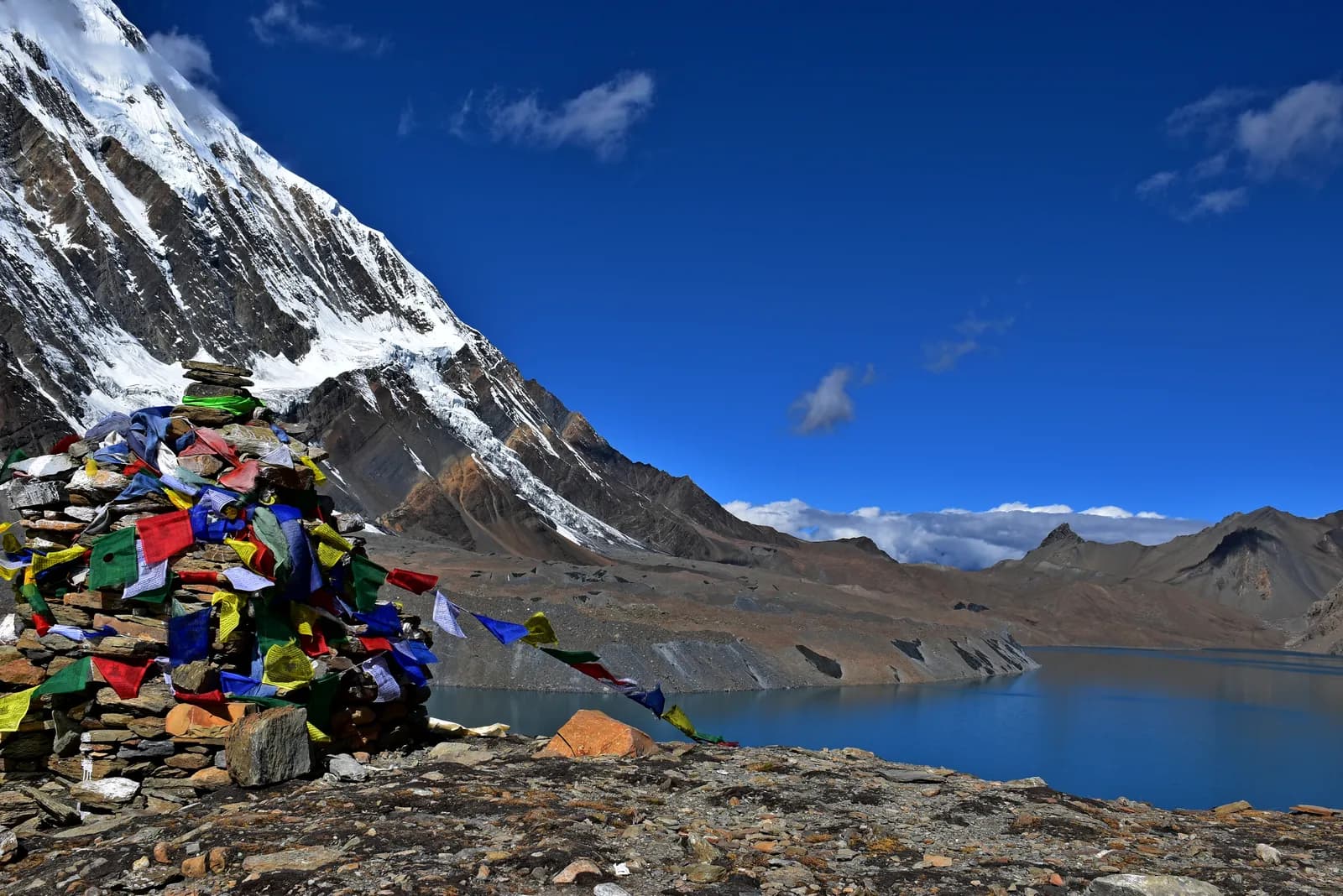
Splitting Guide and Porter Costs Fairly Between Partners
How to split the guide and porter fairly between trekking partners, with Everest Base Camp numbers from our dated cost data for 1 to 6 people, rules for uneven use, early exits and different nationalities, and how to settle safely.
The guide and the porters are the biggest costs you can share on a Nepal trek, and the biggest source of awkwardness between partners who have only just met. The fair default is simple: split the guide equally between everyone who uses the guide, split each porter between the people whose bags that porter carries, keep permits and personal costs separate, and write the split down before anyone pays. The numbers below, from our dated cost data as of October 2026, show how much sharing saves and where it stops saving, so you can agree on arithmetic instead of feelings.
This guide covers what is shared and what is not, what the guide and porter lines cost on the Everest Base Camp route as the group grows, how to handle unequal use, early departures, different nationalities and extra days, and how to settle up without sending money to a stranger. It builds on the ABC budget worksheet, which works the same method on Annapurna Base Camp.
טיולים פתוחים בEverest Base Camp Trek
טיולים אמיתיים שפרסמו מטיילים שמחפשים שותפים.
What is shared and what is personal
The rule from our cost guide holds: the guide, the porters and a private vehicle are shared costs, and everything else is personal.
| Line | Shared or personal | Why |
|---|---|---|
| Licensed guide | Shared | Charged per day for the group |
| Porter | Shared by the people whose bags it carries | Often one porter per two trekkers |
| Private jeep | Shared | Charged per vehicle |
| Park and conservation permits | Personal | Per person, and nationality changes the amount |
| Flights (for example to Lukla) | Personal | Per person |
| Lodging and food | Personal | Per person, or a room shared by two |
| Insurance, gear, tips | Personal | Each person's own |
The numbers: Everest Base Camp
Our Everest cost data, which feeds the Everest Base Camp route page, quotes a licensed guide at NPR 3,400 to 4,700 a day and a porter at NPR 2,100 to 3,400 a day, and our route plan uses 11 guide days and 11 porter days for the 12-day trek. Assume one porter for every two trekkers. At NPR 134 to the dollar, the guide and porter lines per person look like this:
| Group size | Guide per person | Porter per person | Both per person | In USD |
|---|---|---|---|---|
| 1 | NPR 37,400 to 51,700 | NPR 23,100 to 37,400 | NPR 60,500 to 89,100 | 451 to 665 |
| 2 | NPR 18,700 to 25,850 | NPR 11,550 to 18,700 | NPR 30,250 to 44,550 | 226 to 332 |
| 3 | NPR 12,467 to 17,233 | NPR 15,400 to 24,933 | NPR 27,867 to 42,167 | 208 to 315 |
| 4 | NPR 9,350 to 12,925 | NPR 11,550 to 18,700 | NPR 20,900 to 31,625 | 156 to 236 |
| 6 | NPR 6,233 to 8,617 | NPR 11,550 to 18,700 | NPR 17,783 to 27,317 | 133 to 204 |
Three things stand out. The first partner is worth the most: going from one trekker to two halves the guide line and cuts the combined line from USD 451 to 665 down to USD 226 to 332. The third person saves much less, because a second porter is needed, so the porter share rises from NPR 11,550 to NPR 15,400 at the low end. And beyond four, the porter line stops falling, since porters are added in step with the group, so the only line that keeps shrinking is the guide's. This matches the pattern in our worksheet, and it is why a group of four is often the sweet spot.
The same logic holds on other routes. On the Manaslu Circuit, where a guide is required for 14 days at the same regional rate, the guide alone is NPR 23,800 to 32,900 per person for two, NPR 15,867 to 21,933 for three and NPR 11,900 to 16,450 for four.
How to split fairly
Equal split of the guide. Everyone who walks with the guide pays the same share, even if one person is slower or asks the guide more questions. The guide's day rate does not depend on how much of it you use.
Split the porter by whose bags it carries. If one partner carries their own pack and another wants a porter, the porter line belongs to the second person alone. If two people share one porter, they split it between them. The convention in the data, one porter per two trekkers at mid-range, is a planning assumption, not a rule; your agency will tell you the weight limit per porter.
Keep permits separate. Permits are per person, and nationality changes the amount. As of October 2026, the Sagarmatha National Park permit is NPR 3,000 for foreigners and NPR 1,500 for SAARC nationals, and the Khumbu trek card is NPR 3,000 and NPR 2,000. A partner who holds a SAARC passport pays less, and that is not unfairness to the others. Our permit guide has the details.
Share vehicles by seat. A private jeep at NPR 24,000 to 29,500 for the Manaslu road costs NPR 6,000 to 7,375 a head for four. Divide it by those who ride.
Tips: Agree the total up front and the split, then give them directly to staff at the end, each person adding their share.
Hard cases to agree in advance
- Someone leaves early. The guide and porter lines do not shrink for the people who stay. If a partner turns back with altitude sickness on day 6, the remaining group pays more per person for the remaining days. Decide before you start who covers the difference: the most common fair answer is that the person who leaves pays their share of the days already used and their share of the days still committed under the agency's cancellation terms, and the others absorb the rest. See what if your partner cannot continue.
- Someone joins late. They pay a share only from the day they join, and the agency must list them on the permit. For restricted areas this needs advance notice.
- Extra days. If the group agrees to a rest day or a weather delay, everyone shares it. If one person wants an extra day for a side trip, that person pays the incremental guide day and lodging.
- A weather or flight delay. A delay hits everybody equally, because it is part of the shared plan. Our buffer days guide puts a number on a lost day.
- Different budgets. One partner prefers budget lodges and another mid-range; that is fine because lodging and food are personal. The guide and porter are the only shared items that tie your costs together.
Settling up safely
Pay the agency directly, ideally at a registered office, and never send money in advance to someone you have not met. Agree three things before any money moves: who pays the agency, who collects reimbursements and by when. Keep a shared note with the quote and each person's share. Our partner vetting checklist and safety guide say the same. The FindTrekkingPartner cost splitter does the arithmetic for a posted trip, calculating permits per member by nationality group and dates and splitting guide, porter and transport costs between the members who use them, and recalculating when someone joins or leaves. It is an estimate only; the platform does not collect or hold any money.
A worked example for two partners
Say two trekkers, one foreign passport holder and one holding a SAARC passport, book the 12-day Everest plan with one guide and one shared porter. The shared lines are the guide at NPR 37,400 to 51,700 and the porter at NPR 23,100 to 37,400, so NPR 30,250 to 44,550 each, as of October 2026. Each pays their own permits: NPR 3,000 plus NPR 3,000 for the foreigner and NPR 1,500 plus NPR 2,000 for the SAARC holder, a difference of NPR 2,500 that belongs to the passports, not the partnership. Each pays their own return Lukla flight, which our data puts at USD 190 to 240 each way for foreigners, and their own lodging and food. If the partners take a double room, the room cost is halved and the rest of the lodging line is personal. On day 6 one partner is unwell and descends; the other continues with the guide. The shared lines stay as they are, so the remaining trekker pays the full guide cost for the days left, unless the two agreed otherwise. That is the situation to write down, in a sentence, before the flight to Lukla.
What to write down
A one-paragraph agreement covers most disputes:
- the route, the dates and the number of guide and porter days;
- who pays the agency and who is reimbursed by whom, with a date;
- the split of the guide, the porters and any vehicle;
- how early departure, late arrival and extra days are handled;
- the currency and the exchange rate you will use;
- what happens to costs if the trip is cancelled before it starts.
For a longer list, see what to agree with trekking partners before you book.
A note on roles
The guide and the porter do different jobs, and it is fair to pay each for what they do. Our guide versus porter roles guide explains the difference and why a guide is not a porter. A group that treats them as colleagues, pays on time and agrees tips openly has a better trek, and the cost split is part of that.