Renting versus buying trekking gear in Kathmandu
Whether to rent or buy trekking gear in Kathmandu depends on how often you will use it, how personal it is and how cold your route gets. This guide gives a rule for each item, a break-even method and a rental checklist, without inventing prices.
Rent the bulky, cold-weather items you will use once, such as a down jacket and sleeping bag, and bring the personal items that must fit and be broken in, above all boots and socks. That one split settles most of the rent-or-buy decision for a Nepal trek. The rest is arithmetic: how many days you will use an item, how often you will use it again and what a shop in Kathmandu or Pokhara actually quotes you. We do not give prices in this guide, because rental and shop rates are not in our cost tables and vary a great deal between shops and seasons; we give you the method and the checks that protect you from a bad deal.
Planning for the right kit is covered in our Nepal trek packing list and the Everest Base Camp spring packing list. This guide is only about the money.
טיולים פתוחים בEverest Base Camp Trek
טיולים אמיתיים שפרסמו מטיילים שמחפשים שותפים.

The rule for each item
| Item | Usual best choice | Why |
|---|---|---|
| Boots | Buy at home and break in | Fit is personal, and blisters ruin trips; a new pair from a Kathmandu shop is untested |
| Socks and base layers | Bring from home | Personal, light and easy to pack |
| Waterproof shell | Bring or buy once | Fit and fabric matter, and you will use it again |
| Down jacket | Rent for one trek, buy if you will reuse | Bulky and expensive new; see our down jacket guide |
| Sleeping bag | Rent for a single trek | Heavy to fly with and rarely needed again; check the temperature rating guide |
| Trekking poles | Rent or buy | Cheap either way and useful on steep descents |
| Duffel bag | Often lent by the agency | Ask what your agency provides |
| Crampons or microspikes | Rent for a high pass | Only used on snow; see crampons and microspikes for high passes |
| Headlamp and batteries | Bring | Light, cheap and essential |
| Sunglasses, hat, gloves | Bring | Personal; good UV protection matters at altitude |
The pattern is simple: if the item is personal, light and cheap to carry, bring it; if it is bulky, expensive and only needed for a few days of cold, rent it.
A break-even method that needs no price list
For anything you could either rent or buy, ask three questions:
- How many days will I use it on this trip? On the Everest Base Camp trek the Everest region's own range is 12 to 20 days, and the coldest days are the last few ascending nights.
- Will I use it again within a year or two? If not, a purchase is a bad deal unless it is cheap.
- What is the rental quote per day, and what is the purchase price? Divide the purchase price by the daily rental rate: the result is the number of days after which buying wins. If it is higher than the days you will actually use the item, rent.
Collect at least three quotes for each item. A single quote tells you nothing, because Thamel prices vary with the shop, the season and your bargaining. Ask for the price for your whole trip, not per day, and what is included.
What can go wrong with rental gear
- Down that has lost its loft. Repeated use and washing flatten down. Shake the jacket or bag and watch how it recovers.
- Dirt, smell or damp. Open the item fully and smell it.
- Broken zips and torn seams. Run every zip twice and check stitching at stress points.
- Wrong rating. Ask for the rating and for the temperature at your highest sleeping altitude.
- Small sizes. A jacket must fit over a fleece and still close.
- Disputes on return. Photograph the item and note any damage before you leave the shop.
Ask what the shop holds as security, and whether it will store your spare luggage while you trek. Do not leave your passport as the only deposit if you can avoid it, and see our guidance in the trekking scams guide on documents and deposits.
Buying in Thamel: what to know
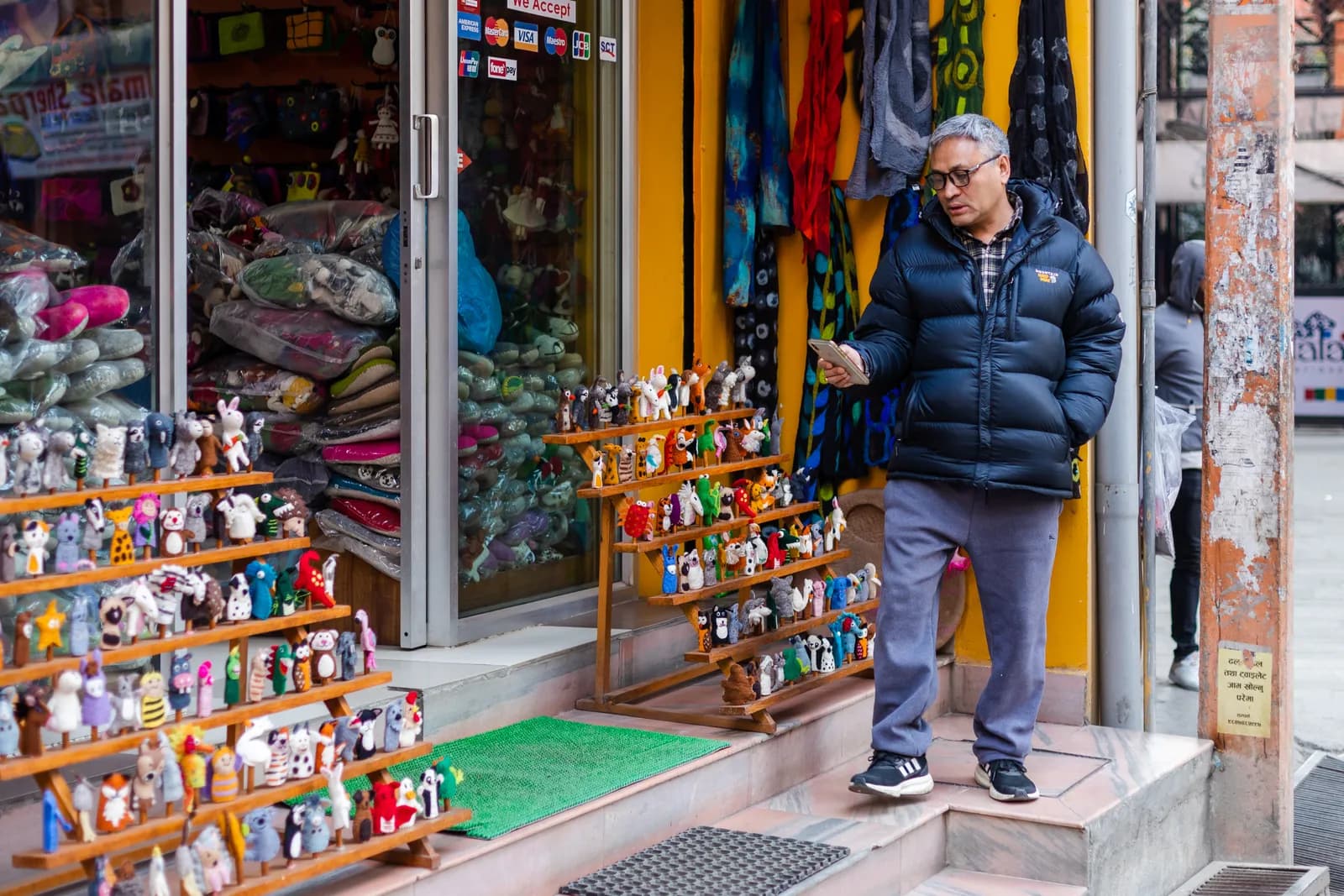
Thamel is the tourist district in Kathmandu where most gear shops cluster, and Lakeside in Pokhara plays the same role for Annapurna. Many items on sale are copies of branded gear, and quality varies from excellent to poor. Judge each item by its construction, the warmth it gives and the guarantee, not the logo. A cheap jacket that is not warm is not a bargain. If you buy, do it on your first full day in the city, so you can exchange something that does not fit before you start the trek. Our Kathmandu pre-trek costs guide explains how to plan that day.
Altitude, season and what you need
The coldest part of a trek is the highest sleeping altitude, and the season changes how cold it is. Spring and autumn are the main trekking windows for Everest and Annapurna, and winter and monsoon change both temperatures and what you must carry. See best time to trek in Nepal and plan the kit to match. Poon Hill, for example, reaches 3,210 m on a four-day route, and the Poon Hill route page is a good test of how much warm kit a short trek needs. Rented or not, the kit must be right for the coldest night.
Sharing gear with trekking partners
Partners can share some kit and so cut the bill. A pair can share one set of poles only if they walk together, which is unusual, but they can share the cost of a group first-aid kit, a water filter or a power bank. Do not share a sleeping bag or a down jacket, and do not borrow a bag that will not suit you. Decide before you go who brings what; our trekking partner hub and what to agree before you book explain how.
A short plan for gear day
- List what you own and what the route needs.
- Mark what you will rent, and collect three quotes for each.
- Inspect each rented item as above and take photos.
- Ask about return time and what happens if you return late after a flight delay.
- Keep receipts and the shop's name and address.
- Put rented items in your daypack or duffel, and keep them dry.
A worked decision for three kinds of trekker
The one-trek visitor. You will do one Himalayan trek and may never repeat it. Bring boots, socks, base layers and a headlamp from home, and rent the down jacket, sleeping bag and poles. Buying a full set of cold-weather kit for one trek is the most expensive way to be warm, and the bulk costs you baggage allowance on small aircraft; see our baggage limits guide.
The repeat trekker. If you trek every year or two, the maths flips for the items you use on every trip. A sleeping bag you trust and a down jacket that fits you are worth owning, because you know their loft and warmth, and you do not spend your first day in Kathmandu inspecting someone else's. Keep renting the specialist items you use rarely, such as traction devices for a high pass.
The short-trek trekker. For a four-day route such as Poon Hill, the nights are cold but not extreme, and many lodges supply blankets. Ask your agency what it provides before you spend anything; you may need only a warm layer and a rented bag, or nothing more than what you already own.
Looking after rented kit on the trail
Rented gear is your responsibility once it leaves the shop. Keep a down jacket dry, since wet down loses its warmth; carry it inside a dry bag or a bin liner in your pack. Do not dry a sleeping bag directly on a hot stove. Photograph the item at the start so you can show its condition, and report damage honestly when you return it. If a flight delay means you will be late back, message the shop, because many have a daily charge and most will agree a sensible arrangement if you tell them early.
Returning gear and the final bill
Agree before you leave what the total will be for your actual days, what happens if you are back early or late, and what the shop holds as security. Ask for a written receipt that lists each item. On return, inspect each item with the shop owner present and keep the receipt until your deposit is back. If you are leaving Nepal soon after the trek, return the gear the day you arrive in the city, not the morning of your flight.
The ethics of buying cheap copies
Fake branded outdoor gear is common in tourist districts. It may be warm enough for a short walk and poor for a night at altitude. If you buy, choose an item whose warmth and construction you can judge directly: pick it up, feel the fill, check seams and zips, try it on over your layers. An honest unbranded jacket that is warm is a better purchase than a counterfeit that is not. If you cannot tell the difference, rent from a shop with recent reviews instead.
Using partners to cut the cost
Partners can split the cost of communal items such as a first-aid kit, a water filter and a power bank, so each person carries less and pays less. Coordinate before you shop so that you do not both buy the same thing. Our trekking partner hub explains how to find partners, and what to agree before you book lists what to settle, including who owns shared kit afterwards.
For the rest of the budget see the Nepal trekking cost guide and the costs and budget hub. Rates change; confirm prices with each shop before you pay.