Leave No Trace on Nepal trails: the seven principles at altitude
How the seven Leave No Trace principles apply on Nepal treks: planning to avoid single-use plastic, staying on paths, carrying waste down, leaving mani stones and plants alone, fuel and firewood, wildlife and being considerate of porters, villagers and other trekkers.
Leave No Trace applies in Nepal almost word for word, but altitude and distance change the weight of each principle: everything you bring up has to be carried down again, whether by you, your porter or a yak, the lodges rely on carried-in kerosene, gas and yak dung rather than firewood, and the biggest everyday problem is single-use plastic. Leave No Trace's seven principles are simple to state: plan ahead and prepare, travel and camp on durable surfaces, dispose of waste properly, leave what you find, minimise campfire impacts, respect wildlife and be considerate of others. This guide takes each one in turn and shows what it means on a Nepal trail, with the rules our route and region pages give. It also covers plastic bottles, which are the single easiest habit to change.
טיולים פתוחים בEverest Base Camp Trek
טיולים אמיתיים שפרסמו מטיילים שמחפשים שותפים.

The seven principles in Nepal
Leave No Trace states them as follows: plan ahead and prepare (know before you go, check weather, regulations and trail conditions); travel and camp on durable surfaces (stick to trails and durable ground so plants and soil can recover); dispose of waste properly (pack it in, pack it out); leave what you find (take photos, not souvenirs); minimise campfire impacts (use a stove when you can, and keep fires small, contained and legal); respect wildlife (watch from a distance and never feed wild animals); and be considerate of others (keep noise down, yield to others and leave room for everyone).
1. Plan ahead and prepare
Most waste is decided before you leave. Choose your bottle, filter and food in Kathmandu or Pokhara, not on the trail. Our water bottles, filters and tablets guide explains how to treat water without buying plastic, and the packing list tells you what to bring. Plan permits and rules too: the Sagarmatha entry guide explains the local fee and the rules that apply in the park. Prepare for weather and flights with spare days, so you are not tempted to rush.
Bring less. Every item brought has to be carried out, and many treks end with a pile of opened packaging in a lodge bin. Repack snacks into a reusable pouch in the hotel, and leave the cardboard behind. See what not to bring.
2. Travel and camp on durable surfaces
Stay on the path. Our route pages say to keep to the trail to protect the forest on Rara and Makalu, to keep to marked paths on the glacier moraine and avoid the fragile pastures on the Everest Three Passes, and to camp only where your agency has permission in Makalu. In the high pastures, fragile grass and thin soil take years to recover from trampling. Do not cut switchbacks, and give loaded yaks and mules room to pass.
On a camping trek, use established sites, and ask your guide where the crew camps. Our camping gear guide has more.
3. Dispose of waste properly
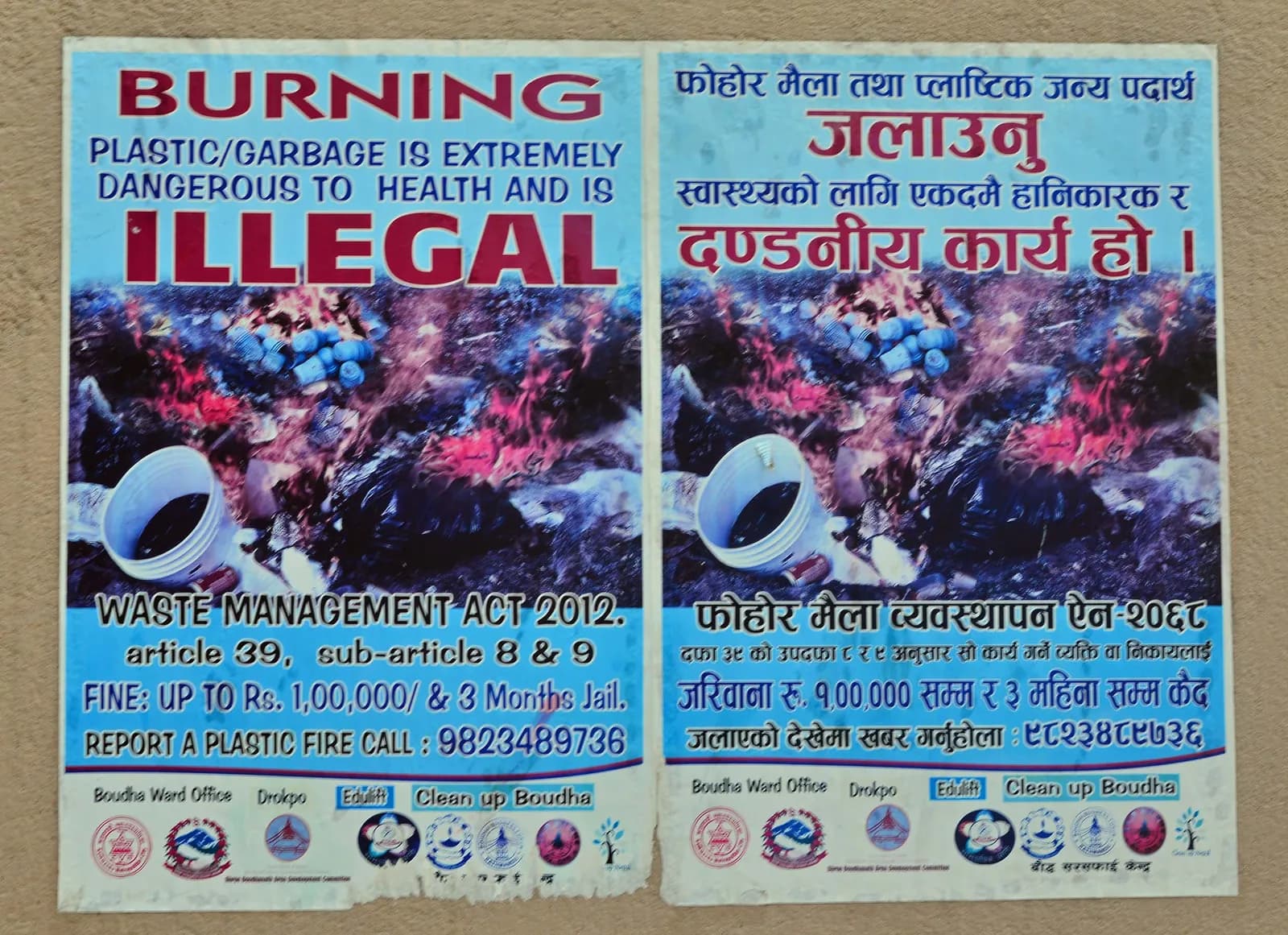
This is the heart of it in Nepal. Our Everest page says Sagarmatha National Park has a serious waste problem at altitude, because everything that is carried up has to come back down. Our Sagarmatha entry guide says to carry out what you carry in and not to burn rubbish. Our route pages repeat the habit in different words:
- Everest Base Camp: carry out all non-biodegradable waste and use refill stations.
- Everest region: avoid single-use plastic, carry out your own batteries and wrappers and use toilets rather than going on the trail side.
- Upper Mustang: carry out your rubbish and do not leave plastic on the plateau.
- Kanchenjunga: pack out your rubbish, avoid plastic bottles by using a filter and buy from local lodges.
- Langtang, Poon Hill and Annapurna: carry out your waste, avoid single-use plastic and use refill stations where available.
Plastic bottles first. A bottle of water bought at 4,500 m was carried up on someone's back, and if you buy it, the empty has to be carried down. The Khumbu municipality has restricted single-use plastic water bottles in parts of the area, according to our Sagarmatha guide, and many lodges sell refilled boiled water or provide filtered water points. The Annapurna Base Camp page says not to buy bottled water in the sanctuary and to bring purification tablets or use the refill points. Bring a bottle and a treatment method, and refill. The Annapurna page says the same: carry out your plastic, use refill stations where available, take only photographs and do not feed animals.
Everything else. Batteries, wrappers, tissues, sanitary products and food waste all go in a bag that stays with you. Do not leave rubbish in lodge bins unless the lodge has a system for it: ask. In many villages there is no collection, and what you leave behind is burned or dumped. If you can carry it to Namche, Lukla, Kathmandu or Pokhara, do. See trekking gear for women for a plan for hygiene waste.
Human waste. Use lodge toilets and avoid the trail side. If you have no choice, move well away from water, paths and camps, and ask your guide what is acceptable locally; do not leave paper behind. On camping treks, use the toilet tent and ensure the crew deals with waste properly.
Grey water. Do not wash yourself, dishes or clothes in streams or lakes that people drink from. The Rara route page lists not swimming in, washing in or littering the lake, and our etiquette guide says not to bathe in sacred water.
4. Leave what you find
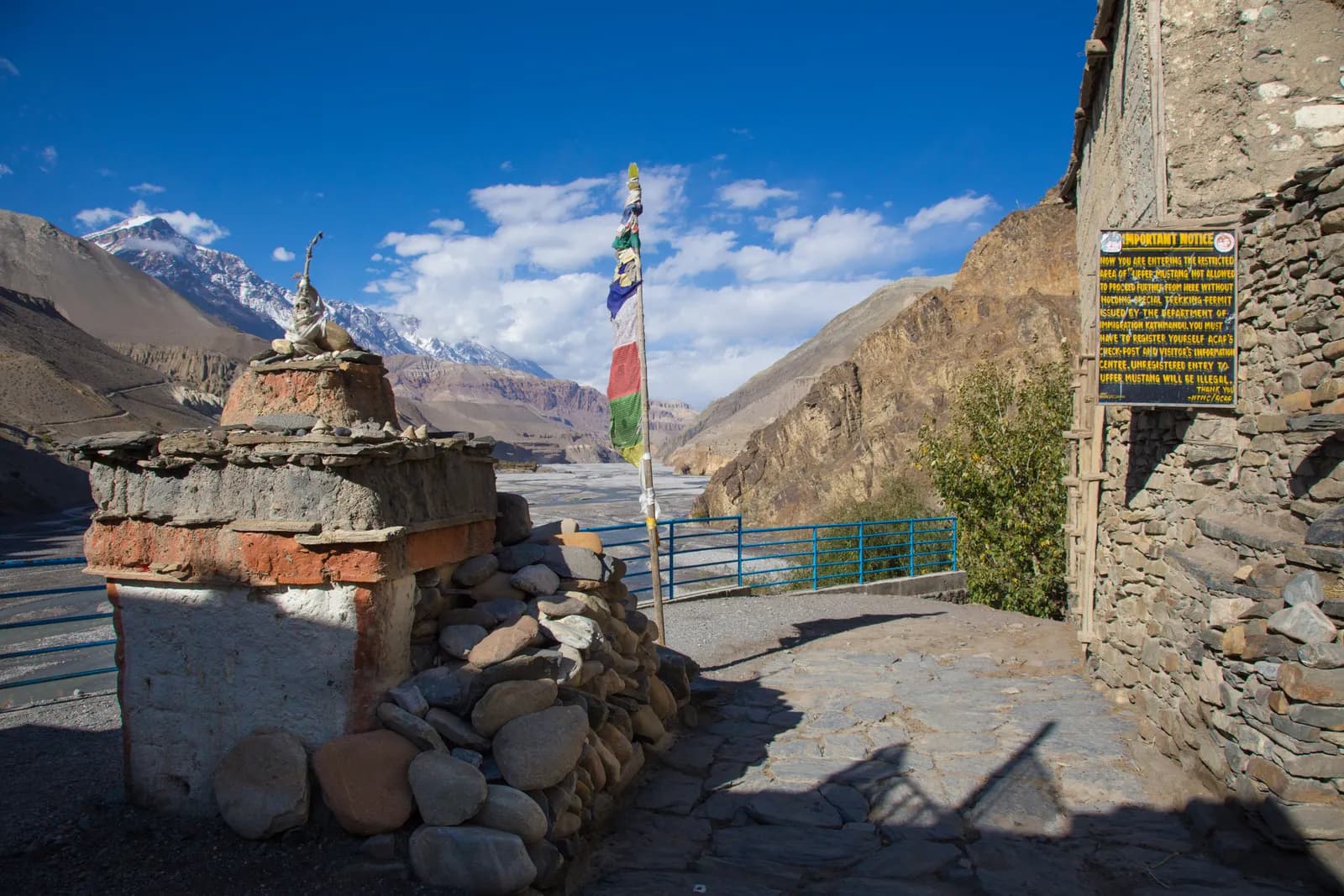
Take photographs, not souvenirs. Do not pick flowers, collect stones or take mani stones, prayer flags or carved slabs; our monastery etiquette guide explains why these are religious objects. Do not climb on chortens or mani walls. The same applies to cultural sites: do not touch paintings, and do not disturb caves and monasteries, as the Upper Mustang page says.
5. Minimise campfire impacts
Lodges in Nepal's popular regions cook and heat with kerosene, gas and yak dung rather than wood, according to our Sagarmatha guide, and our Everest page says not to burn rubbish. The Kanchenjunga page says to limit firewood by choosing lodges that use kerosene or other fuel at the higher camps. The Dolpo page says to avoid wood fires in the national park, and the Rara page lists no fires. Use the lodge stove, share its warmth and do not light your own fire. Do not take part in burning plastic in a lodge stove; if you see it, say something polite.
6. Respect wildlife
The Annapurna page says do not feed animals, and the Kanchenjunga, Dolpo and Manaslu pages describe snow leopard, tahr, musk deer and birds that live in the conservation areas. Keep your distance, do not approach nests, do not feed monkeys or birds, and keep food in your pack. Do not buy or ride yaks without the herder's agreement, as the Dolpo page says. On narrow trails, step to the uphill side to let yaks and mules pass.
7. Be considerate of others
Everyone on the trail shares the path: porters, mule trains, villagers, school children and other trekkers. Keep noise down, yield to loaded animals and people, and leave room at viewpoints. In lodges, follow teahouse etiquette, and on the trail follow photography etiquette. Support local businesses by eating where you sleep and buying locally. Our porter welfare guide covers consideration of those who carry your bag.
A simple waste kit
For any trek: a refillable bottle (or two), a filter or tablets, a reusable snack pouch, a few sealable bags for waste, a small cloth bag for rubbish at the top of your pack, tissues in a bag, and a plan for where you will take the waste. In Kathmandu or Pokhara, ask your hotel to dispose of it. If you see litter on the path and it is safe, pick up a piece or two; the Annapurna page notes that the popular trails show signs of heavy use.
Why it matters
The Annapurna region page notes that entry fees help fund trail maintenance, schools and clinics, and that lodges follow rules on firewood, waste and kerosene. Sagarmatha National Park, according to Wikipedia, was established in 1976 and became in 1979 the country's first national park inscribed as a Natural World Heritage Site. Places like that are held in trust for the people who live there and for people who will walk there later. The Makalu, Kanchenjunga and Dolpo pages ask for the same habits in remote areas where no collection exists at all.
Planning and sharing
Partners help: you can share a filter, a first-aid kit and the habit. Agree a waste rule before you go; see what to agree with trekking partners before you book. The Everest Base Camp partner page, Annapurna Base Camp partner page and Langtang Valley partner page list people planning those routes, and the Everest Base Camp, Annapurna Base Camp and Langtang Valley itineraries show where lodges and refill points lie. For the rest of the series, go to the trail etiquette and culture guide. The best measure of how you travelled is what you leave behind: footprints, a few friends and no rubbish.