Annapurna Base Camp versus Mardi Himal
Annapurna Base Camp or Mardi Himal: days, altitude, difficulty, scenery, crowds, lodges and permits side by side, with a clear recommendation for each type of trekker.
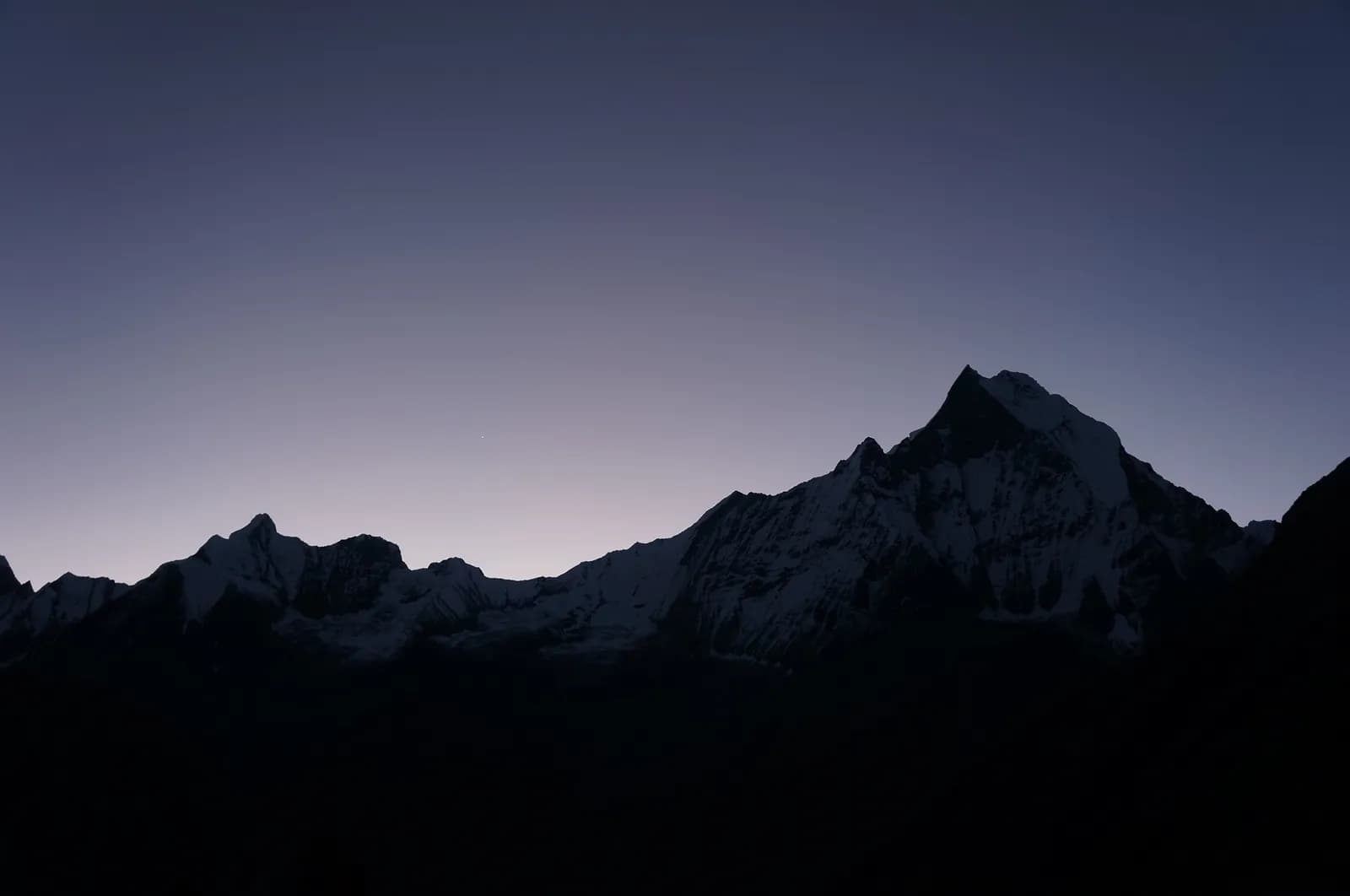
Annapurna Base Camp (ABC) and Mardi Himal both start near Pokhara and both end with a ring of white peaks, but they are different treks. ABC is the longer, deeper trek into the Annapurna Sanctuary, reaching 4,130 m in about seven days; Mardi Himal is a shorter ridge walk, usually five days, reaching a viewpoint of about 4,500 m. If you have a week and want the amphitheatre, choose ABC; if you have four or five days and want ridge views and fewer people, choose Mardi Himal.
This guide compares them on days, altitude, difficulty, views, crowds, lodges and cost, using the figures in our two itineraries: Annapurna Base Camp and Mardi Himal. The wider choice is in the route comparison hub.
טיולים פתוחים בAnnapurna Base Camp Trek
טיולים אמיתיים שפרסמו מטיילים שמחפשים שותפים.

At a glance
| Factor | Annapurna Base Camp | Mardi Himal |
|---|---|---|
| Typical length | 7 days from Pokhara (more via Poon Hill) | 5 days from Pokhara |
| Highest sleeping point | 4,130 m (ABC) | about 3,550 m (High Camp) |
| Highest point reached | 4,130 m | about 4,500 m (viewpoint) |
| Style | Valley into a glacial sanctuary | Steep ridge walk |
| Terrain | Many stone steps, forest, then open basin | Forest, then exposed ridge |
| Difficulty | Moderate to hard | Moderate, steep, short |
| Crowds | Very busy in peak months | Busy but quieter |
| Lodges | Many, from basic to comfortable | Fewer, simpler, close together |
| Permit | ACAP, TIMS if required | ACAP, TIMS if required |
| Route pages | ABC | Mardi Himal |
The routes
Annapurna Base Camp
The standard seven-day plan goes Pokhara to Jhinu Danda (about 1,780 m), Bamboo (about 2,310 m), Deurali (about 3,230 m), then up through Machapuchare Base Camp to ABC (4,130 m), and back down. The route climbs through Gurung villages such as Chhomrong, rhododendron and bamboo forest, then a narrowing valley into the sanctuary, where Annapurna I, Annapurna South, Hiunchuli, Gangapurna and Machapuchare form a ring. Heavy snow brings avalanche risk in parts of the upper valley, and guides watch conditions closely.
Mardi Himal
The five-day plan goes from Pokhara to Forest Camp (about 2,500 m), Low Camp (about 2,970 m), High Camp (about 3,550 m), then a long day to a viewpoint at about 4,500 m and back, and out. The route follows a ridge through rhododendron forest and then open grass, with Machapuchare very close and the Annapurna range spread along the horizon. Lodges are simpler, and the trail is steep rather than long.
Difficulty
ABC is longer and has more cumulative climbing, including thousands of stone steps between Jhinu and Chhomrong and on the ascent from Bamboo. The final stage from Deurali to ABC is above 3,200 m, so altitude is a real factor, and one night at 4,130 m is the highest of the trek.
Mardi Himal has less distance but a steeper ridge, and the long viewpoint day climbs about 950 m from High Camp and back. Because you sleep at about 3,550 m, acclimatisation is easier, but the viewpoint day reaches 4,500 m, which is higher than ABC.
Both need a sensible schedule; see the acclimatisation schedule. Neither suits someone who has never done a multi-day walk without some training.
Views
ABC's reward is being inside the sanctuary at dawn, with the peaks glowing above you. Mardi Himal's reward is a long ridge with views both ways and a close-up of Machapuchare's fishtail. If you want a feeling of enclosure, ABC is better; if you want a skyline, Mardi Himal.
Crowds and lodges
ABC is among the busiest treks in Nepal in October and April, and lodges at Deurali and ABC fill up. Book ahead through your guide, or arrive early. Mardi Himal is quieter, with simple lodges at Forest Camp, Low Camp and High Camp that are close together, so there is less choice if one is full. In winter, some lodges close on both routes.
Cost and logistics
ABC costs more simply because it takes more days of food, lodging and guide or porter wages. Mardi Himal is cheaper and shorter, and suits people who have limited time. Both share the same permit, so permit costs are similar. Read the ABC budget example and the cost guide to see how sharing changes the picture, and the ACAP guide for permits.
Season
Both are best in October, November, March, April and May. In the monsoon, leeches and cloud affect both, and in winter, snow on the upper sections closes routes or raises the risk. See best time to trek in Nepal.
Which to choose
- You have a week or more and want the sanctuary: ABC.
- You have four to five days: Mardi Himal.
- You want fewer people: Mardi Himal, or ABC outside October and April.
- You are worried about steps and distance: Mardi Himal, with care on the ridge.
- You want both: some people link Poon Hill, ABC and Mardi Himal in a long loop, with more days and permits.
Partners and planning
Both treks suit small groups, and sharing a guide and porter cuts the cost per person. If you need a partner, see how to find a trekking partner safely, and for another popular comparison, Poon Hill versus Mardi Himal.
Side by side, day by day
Using the standard plans from our itineraries (altitudes are approximate sleeping altitudes):
| Day | Annapurna Base Camp | Mardi Himal |
|---|---|---|
| 1 | Pokhara to Jhinu Danda, about 1,780 m | Pokhara to Forest Camp, about 2,500 m |
| 2 | Jhinu to Bamboo via Chhomrong, about 2,310 m | Forest Camp to Low Camp, about 2,970 m |
| 3 | Bamboo to Deurali, about 3,230 m | Low Camp to High Camp, about 3,550 m |
| 4 | Deurali to ABC, 4,130 m | High Camp to the viewpoint (about 4,500 m) and back |
| 5 | ABC back down to Bamboo | High Camp down to Siding and Pokhara |
| 6 | Bamboo to Jhinu | |
| 7 | Jhinu to Pokhara |
Mardi Himal gains height faster in the first days, since Forest Camp is already at about 2,500 m on day one, so the sleeping altitudes rise by about 470 and 580 m on the next two nights. That is at the edge of the 500 m guideline, which is why a spare night at High Camp is a good idea if anyone feels unwell. ABC climbs more steadily, but the last step from Deurali to ABC adds about 900 m in a day, which is why many groups stay a night at Machapuchare Base Camp when they can. Both plans are discussed in the acclimatisation guide.
What fitness each needs
- ABC. Be comfortable walking five to seven hours a day for a week, with long stair climbs. Train on hills and stairs with a loaded daypack.
- Mardi Himal. Be comfortable with steep, sustained climbs for four hours at a time and a long viewpoint day with an early start. Train on hills, not just flat distance.
Neither requires technical skills in normal conditions, but both reward a few weeks of preparation. A knee brace or poles help on the descents, especially from ABC down the stone steps.
Who each trek suits
Choose ABC if:
- you have at least seven days and can add a buffer;
- you want the sense of being enclosed by high peaks;
- you are comfortable with a busier trail and book ahead;
- you want a well-supplied route with many lodges and villages.
Choose Mardi Himal if:
- you have four or five days;
- you prefer a ridge walk with long views;
- you want fewer trekkers, especially outside October and April;
- you accept simpler lodges and fewer fallback options.
Risks specific to each
| Risk | ABC | Mardi Himal |
|---|---|---|
| Avalanche | Upper valley after heavy snow; guides check conditions | Less exposed, but snow on the upper ridge |
| Altitude | Night at 4,130 m | Viewpoint day to about 4,500 m |
| Crowding | Lodges full in peak weeks | Few lodges, so one full lodge matters |
| Weather | Cloud builds by midday; early starts matter | Ridge exposed to wind and cloud |
| Knees | Long stair descents | Steep ridge descent |
Combining the two
Some travellers link them: a Poon Hill loop, then ABC, then Mardi Himal on the way back, in a ten to fourteen day loop through the Annapurna foothills. It is a good way to see the range, but the permits, route planning and weather margin all grow. If you are interested, read the Poon Hill versus Mardi Himal comparison and the Annapurna region page for how the routes connect.