Nepal tourist visa for trekkers, and extensions
Which Nepal tourist visa length fits your trek, how to apply before or on arrival, how extensions work (up to 150 days in a visa year), and how the visa interacts with restricted-area permits.

For a trek you need a Nepal tourist visa, and the main decision is how many days to buy. Nepal issues multiple-entry tourist visas valid for 15, 30 or 90 days, and a tourist visa can be extended up to 120 days on request in Kathmandu or Pokhara, with a further 30 days possible from the Department of Immigration, for a maximum of 150 days in a visa year (January to December), according to the Nepali embassy visa page. Choose a length that covers the trek, the days before and after in Kathmandu or Pokhara, and a buffer for flight delays.
This guide explains how to match the visa to your plan, how the application works, how extensions work and how the visa interacts with permits. It deliberately gives no visa fees: the figures vary between third-party guides, so check the official portal on the day you apply. Rules differ by nationality, so confirm yours with the Department of Immigration at immigration.gov.np or your nearest Nepali embassy.
سفرهای باز Everest Base Camp Trek
سفرهای واقعی که ترکرهای جویای همراه ثبت کردهاند.
The visa types
The embassy page lists tourist visas of 15, 30 and 90 days, all multiple entry, and defines the visa year as January to December. Everything else in this guide builds on those three numbers. For a trek, think of your stay as three blocks:
- Before the trek. Arrival, permit shopping, a rest day and a briefing with your guide. Our permit guidance says to allow a working day in Kathmandu or Pokhara for permits, and Saturdays and public holidays can close offices.
- The trek. Use the route plan's day count, which includes drive and flight days.
- After the trek. A buffer for flight or road delays, plus any days you want in Kathmandu or Pokhara.
Matching the visa to the trek
Our route pages give the day counts below. The "stay needed" column adds a typical three to four days around the trek for permits and onward travel, which is a rule of thumb for planning, not a Department of Immigration figure:
| Route | Plan days | Stay with 3 to 4 extra days | Smallest visa that fits |
|---|---|---|---|
| Poon Hill | 4 | 7 to 8 | 15 days |
| Mardi Himal | 5 | 8 to 9 | 15 days |
| Langtang Valley | 8 | 11 to 12 | 15 days, with little spare |
| Everest Base Camp | 12 | 15 to 16 | 30 days |
| Annapurna Circuit | 14 | 17 to 18 | 30 days |
| Manaslu Circuit | 14 | 17 to 18 | 30 days |
| Upper Dolpo | 22 | 25 to 26 | 30 days, tight |
| Kanchenjunga Circuit | 21 | 24 to 25 | 30 days, tight |
Routes that depend on small-plane flights, such as Upper Dolpo and Everest via Lukla, can lose days to weather. Our region pages say flights to Juphal are weather dependent and often delayed, and that Lukla flights are weather dependent with one to two spare days recommended. If your visa has no slack, an extension in Kathmandu costs time and a fee, so a longer visa at arrival is the safer choice for those routes.
Applying
The embassy page directs applicants to the Department of Immigration's online portal at nepaliport.immigration.gov.np for pre-arrival and on-arrival visas. The portal is the place to find the current steps, the accepted payment methods and the fees, and to check whether your nationality can use it. Have a digital passport photo and your passport details ready before you start. Check the portal for how the pre-arrival route works for your nationality and what you must show at the airport. Do not rely on a visa agent's quoted fee without comparing it with the portal.
Keep the visa page, the entry stamp and your passport together. Restricted-area and national park permits are issued against your passport, so the details must match.
Extending the visa
The embassy page says a tourist visa can be extended up to 120 days on request from the Department of Immigration in Kathmandu and the Pokhara Immigration Office, and that a further 30 days can be granted by the Department, with the total capped at 150 days in the visa year. A few practical points follow:
- Extend before the visa expires. Do not wait until the last day; offices close on public holidays and Saturdays, and our permit guidance already advises allowing a working day for any office visit.
- Bring your passport and the visa details. The Department's site and the portal list the current documents.
- Pokhara is an option. If you finish a trek such as Annapurna Circuit, Mardi Himal or Upper Mustang in Pokhara, you can extend there rather than returning to Kathmandu.
- The 150 days are per visa year. The visa year is January to December, so a long stay near the turn of the year is counted against that calendar year; confirm how the Department counts it for your dates.
If a flight delay is likely to push you past your visa, extend before you trek rather than after. Our guide to buffer days and itinerary flexibility explains how many spare days to hold.
Visa and trekking permits
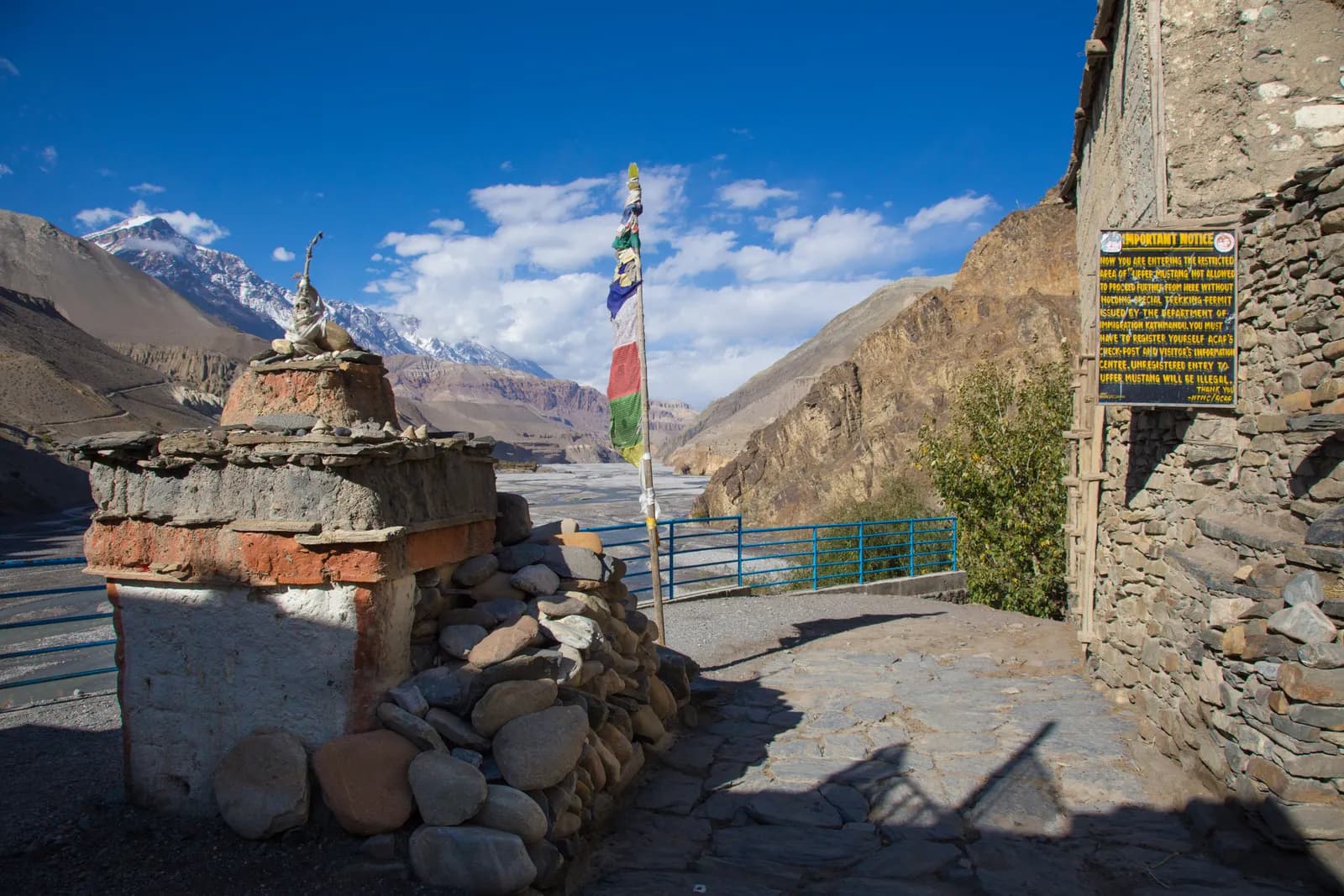
The visa and the permits are separate documents with separate rules. The Restricted Area Permit is issued by the Department of Immigration through a registered trekking agency, and your agency will need your passport and visa details to apply. The permit is priced by days or weeks as of October 2026, per the Nepal Tourism Board, and it does not extend your visa. For the Manaslu Circuit the permit is USD 100 for the first week plus USD 15 a day beyond it from September to November, and USD 75 plus USD 10 a day from December to August; for Upper Mustang it is USD 50 a day. Our Manaslu restricted-area permit guide and Upper Dolpo permit guide cover how those applications work.
Individual foreigners have been able to apply for a restricted-area permit since 22 March 2026, but a licensed guide through a registered agency is still required; the Department restated this in June 2026 (guide rule checked 19 October 2026). National park and conservation area permits such as ACAP or the Sagarmatha permit are bought separately and are not tied to the visa length. For the whole picture, see Nepal trekking permits explained and the paperwork checklist.
What can go wrong
- A visa that is too short for a delayed trek. Weather can hold flights for days. Extend in Kathmandu before the trek if your margin is thin.
- A mismatch between the passport and the permits. A new passport number or a misspelt name can stall an application, so check every line.
- Overstaying. An overstay can cause problems at the airport on departure, and the Department sets the charges. Extend in time rather than hoping nobody checks.
- Confusing visa days and permit days. A restricted-area permit counts days or weeks from entry into the restricted area, which is a different clock from your visa.
A quick decision guide
If you are choosing a visa length today, work through four questions. How many days will you be in Nepal in total, including the arrival day, the permit day and the buffer? Does your route depend on flights that weather can delay, such as Lukla, Jomsom, Juphal or Simikot? Will you apply for a restricted-area permit, which needs your visa details early? And will you travel on afterwards, which could push your total towards the 150-day limit in a visa year? If the answer to the second question is yes, choose the longer visa category rather than counting on a short one and an extension, because an extension means a visit to an office in Kathmandu or Pokhara.
Planning with partners
Visas are individual, but the dates are not: if you share a guide or a restricted-area permit, everyone needs a visa that covers the full trek and the buffer. Agree start and finish dates with partners before anyone buys a short visa. Our guide on what to agree with trekking partners covers it, and the how many days you need for a Nepal trek guide helps you choose the length. For routes with long approaches, see the Everest, Manaslu and Dolpo regions, and the Everest Base Camp partner page. More rules guides are in the permits and rules hub.
این ترک را برنامهریزی کنید
- راهنمای منطقه Everest (Khumbu)
- راهنمای منطقه Manaslu
- راهنمای منطقه Dolpo
- Trekking partner for Everest Base Camp Trek
- Find someone to trek Manaslu Circuit Trek with
- Upper Dolpo: Shey Phoksundo to Shey Gompa trekking partners
- برنامه سفر Everest Base Camp Trek
- برنامه سفر Manaslu Circuit Trek
- برنامه سفر Upper Dolpo: Shey Phoksundo to Shey Gompa