A typical day on a Nepal teahouse trek, hour by hour
An hour-by-hour picture of a normal teahouse trek day, from the early wake-up tea and the morning walk to lunch, the afternoon arrival, ordering dinner and an early night, with rest-day variations.

A normal teahouse trek day starts around 6:00 with tea at your door, breakfast at 7:00, five to seven hours of walking broken by a lunch stop, arrival at the next lodge by mid-afternoon and an early dinner around the stove. By 8:00 or 9:00 you are in your sleeping bag. The rhythm is simple and very regular, which is part of the appeal: your only job is to walk, eat, drink and sleep. This guide takes you hour by hour through a typical day, using the real stages of the Everest Base Camp and Annapurna Base Camp plans, and describes what changes on rest days and high days.
سفرهای باز Everest Base Camp Trek
سفرهای واقعی که ترکرهای جویای همراه ثبت کردهاند.

5:30 to 7:00: waking up
Mornings are cold, even in spring and autumn. At higher lodges the rooms are unheated, and you wake to a frosty window and a thermos of tea or a knock on the door from the guide or lodge staff. Pack your duffel the night before as far as you can, because porters usually leave early with the main bags and reach the next lodge ahead of you. Keep your daypack separate and make sure it holds what you will need all day: water, a warm layer, a rain shell, sun protection, your camera, snacks, your passport copy, money and any medicine.
Dress in layers, with a base layer and a light mid layer, and leave a warmer jacket on top of your pack to put on when you stop. You will warm up within 20 minutes of walking, so it is easy to start too hot. If you slept badly, you are not alone: altitude, cold and unfamiliar beds do that. Drink water before breakfast.
Pay any extras from the night before, such as showers, charging and snacks, so you are not delayed. The bill for meals and rooms is usually settled in the evening. Our guide to rooms, bathrooms and bedding explains what to expect in the room.
7:00 to 8:00: breakfast
Breakfast is in the dining room, usually porridge, eggs, Tibetan bread, pancakes, toast or muesli, with tea or coffee. You ordered it the evening before, which is why it comes quickly. Eat as much as you can; appetite fades at altitude but you will burn through the calories. Fill your water bottles from the lodge's boiled or filtered water, or add your purification tablets, and be ready to leave at 7:30 or 8:00.
On our Everest Base Camp plan, the long days such as Phakding to Namche (about 6 hours) and Lobuche to Gorak Shep (7 to 8 hours) call for a start by 7:00. On shorter days you can leave later and enjoy the lodge's sunny courtyard.
8:00 to 11:30: the morning walk
The morning is the best part of the day for walking: cool air, clear views and fewer clouds. The trail may be a stone path through terraced fields, a dusty track beside a river or a mountain staircase. You walk at the pace of the slowest person, with regular short stops for water, photographs and a layer change. Your guide goes ahead or behind and sets the pace, and a good one will tell you to slow down.
You will cross suspension bridges, like the long plank bridge in the photo above, hung with prayer flags, and you will pass mani walls, chortens, shrines and small shops. Keep to the right of mani walls and stupas, as our ritual guide explains. When you meet a yak or mule train, stand on the inner, uphill side of the path, away from the drop, and let the animals pass. They have the right of way, and being bumped off a ledge is a real risk.
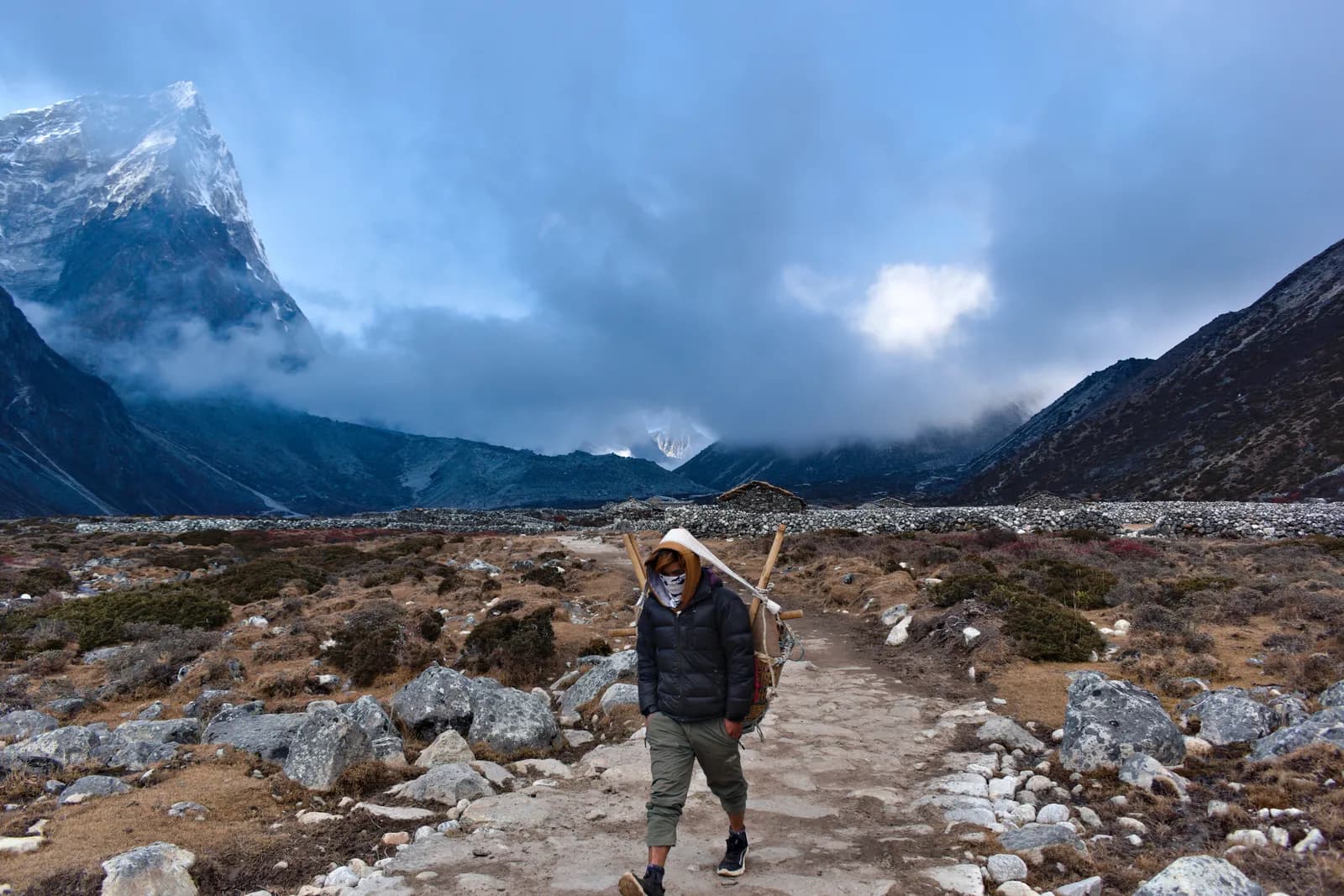
Porters carrying huge loads pass you on the way. The sight of a porter walking up a staircase with a load of lodge supplies, like the one beside a mani stone near Phakding in the photos, is a reminder that everything you eat or sleep on has been carried up the valley. Greet them with a "namaste" and give them room.
11:30 to 13:00: lunch
Lunch is in a village lodge, often the one nearest the halfway point of the day. You order from the menu, wait 30 to 45 minutes while the kitchen cooks for several groups, and eat dal bhat, noodles, fried rice, soup, momos or pasta. Many guides order for the whole group at the first stop of the day and let the kitchen know when you will arrive, which helps. It is a good time to take off your boots, dry your socks, reapply sunscreen and drink plenty of fluids.
Do not rush lunch. The break is part of the pace. If you are tired, rest and eat; if you are cold, put on a layer. Many trekkers feel fine in the morning and flag in the afternoon, which is the time to slow down further.
13:00 to 15:30: the afternoon walk
The afternoon is shorter, two to three hours, and the weather often changes. In the mountains, cloud builds from late morning, and in some valleys, such as the Kali Gandaki, wind rises in the afternoon, so people plan to arrive early. The trail may be steeper after lunch because you have eaten, or it may be a long, gentle approach to a village on a ridge. Keep drinking, keep your pace and do not race to arrive.
If the afternoon is hard, break it into short stages: walk to the next bend, the next prayer flag or the next lodge. Your guide will know how far there is to go and can give an honest estimate.
15:00 to 17:00: arrival, tea and a rest
You arrive at the next lodge by mid-afternoon, usually between 2:00 and 4:00. Take off your boots, drink a pot of tea, have a wash if hot water is available and get your sleeping bag out. Check in with the owner, choose your room and agree the order for dinner and breakfast, which the lodge will ask for now so the kitchen can plan. Charge devices if the lodge has solar charging (it usually costs a little), and put your laundry out to dry if the sun is still up.
Many lodges have a sunny terrace, and the afternoon is a pleasant time to read, write a diary or sit and watch the village. If you feel energetic and the altitude is above about 3,000 m, a short walk to a viewpoint and back down is a good acclimatisation habit; "climb high, sleep low" is the shorthand. Do not exhaust yourself; the aim is to arrive healthy tomorrow.
17:00 to 20:00: dinner and evening
As the sun drops, temperatures fall quickly and everyone moves into the dining room. The stove is lit, usually burning dried dung or wood, or in lower regions gas, and the room fills with trekkers drying gloves and drinking tea. Dinner is typically at 6:00 or 6:30. The dining room is the social heart of the lodge: you meet other trekkers, compare routes and swap stories. It is a good place to find walking companions for the next stage.
After dinner, your guide will usually brief you on the next day's plan, including the walking time and the altitude gain. Ask questions. On a high route, you may also be asked how you are feeling; answer honestly, including the small things like a mild headache or poor sleep. Our guide to what normal looks like at altitude explains which symptoms matter.
Evenings are early. Most people go to bed between 8:00 and 9:00, with a hot water bottle in the sleeping bag if the lodge offers one. You will have walked six hours, so sleep comes easily at the lower levels and less so higher up.
Rest days and big days
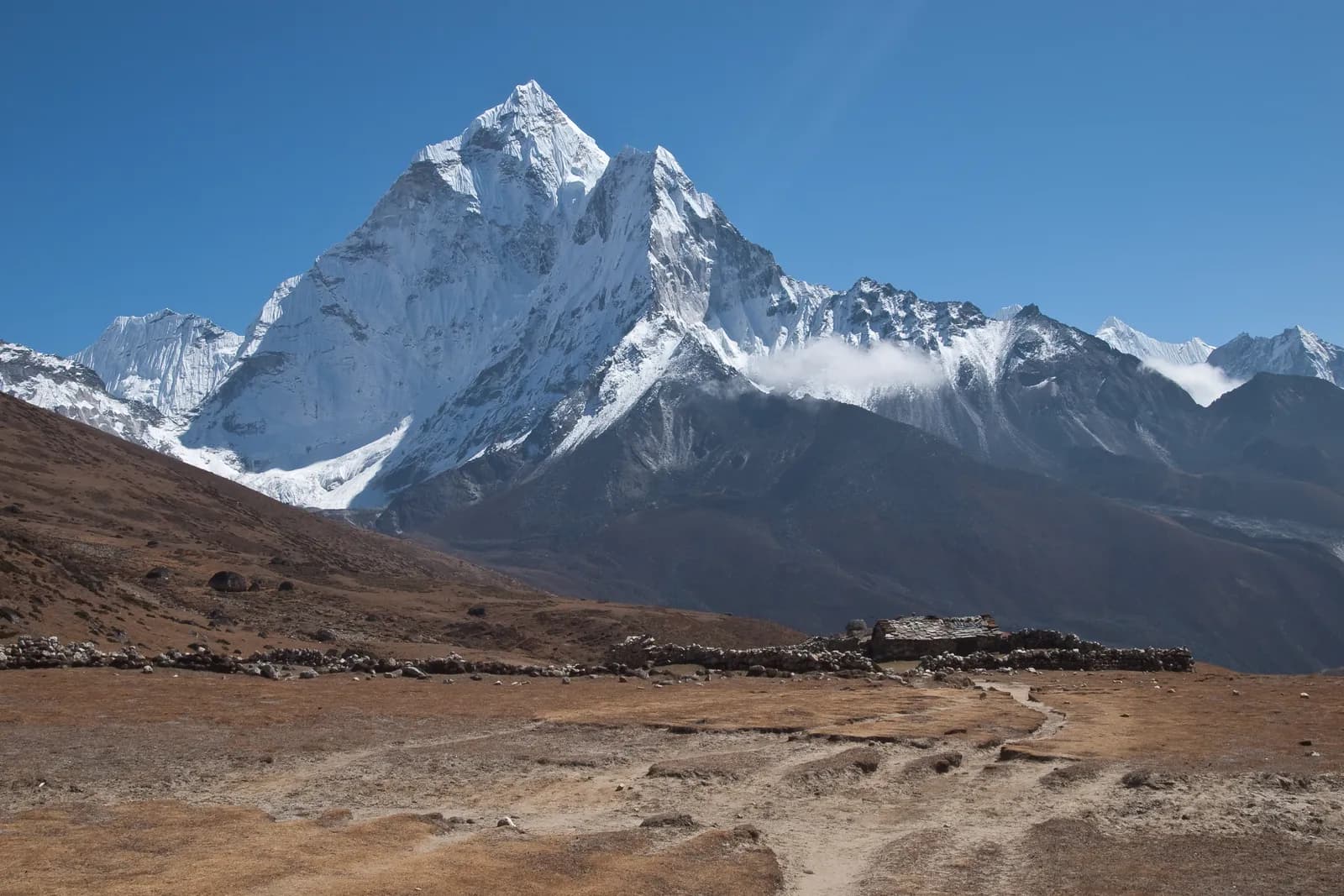
A rest day is a night spent at the same altitude to help your body adjust. On the Everest Base Camp plan, day 3 at Namche Bazaar (3,440 m) and day 6 at Dingboche (4,410 m) are rest days, each with a short walk of about three hours up to a viewpoint and back. The CDC suggests, above 3,000 m, raising your sleeping altitude by no more than about 500 m a night and adding an extra night for every 1,000 m gained, which is what these days do. The photograph of Dingboche above shows the sort of valley where you spend a rest day.
Big days are the ones with the highest sleeping altitude or the longest walk. On Annapurna Base Camp, day 2 from Jhinu Danda to Bamboo takes six hours, and the climb to base camp at 4,130 m takes four to five. Eat well, start early and keep the pace gentle.
What changes with altitude and season
Above 4,000 m, everything slows down. You walk slower, breathe harder, sleep less and eat less. The mornings are colder and the afternoons can be windy. In spring the days are longer and warmer, and in autumn the air is clearer but the nights are colder. In the monsoon, the afternoon rain changes the routine, with earlier starts and wet trails. Our guide to how many days you need explains how rest days and buffer days fit into an itinerary.
A summary day
- 6:00 tea, pack, dress in layers.
- 7:00 breakfast, fill water.
- 7:30 to 11:30 morning walk with short stops.
- 12:00 lunch, rest and refill.
- 13:00 to 15:30 afternoon walk.
- 15:30 arrive, tea, wash, order dinner and breakfast.
- 18:00 dinner, briefing, early bed by 20:30.
For the full story of the stages, read our Everest Base Camp itinerary and Annapurna Base Camp itinerary, and see the first-timers hub and the first-time trekking guide. If you would like company on the trail, check the Everest Base Camp partner page, and compare the stages with the Annapurna Base Camp plan.