Hydration at Altitude: How Much Water to Drink on a Trek
How much to drink on a Nepal trek: why no single number fits, the urine-colour test from the NHS, how dryness, cold and effort raise fluid needs, practical routines for lodges and passes, and when thirst is a symptom.

There is no magic number of litres, and the honest answer is to drink enough to keep your urine pale. The NHS says dark yellow, strong-smelling urine is a sign of dehydration and that drinking enough through the day should keep it a pale colour; it advises drinking more in hot weather, during exercise and when you are unwell, and avoiding alcohol and caffeinated drinks, which worsen dehydration. At altitude, dry air, cold, wind and long walking days raise what you need, and a day on the trail will usually take more fluid than you drink at home. Many operators suggest about 3 litres or more on trek days as a starting point, but your own urine, thirst and symptoms are better guides than any figure, and no source we cite recommends forcing fluids beyond that.
This is general information, not medical advice. If you have a heart, kidney or other condition that affects fluid balance, ask your doctor what is right for you. Fluids matter, but they are not a cure for altitude illness; the main protection is a slow ascent, as the CDC and NHS explain, and our altitude sickness basics guide lists the symptoms.
Open trips on Everest Base Camp Trek
Real trips posted by trekkers looking for partners.

Why you need more at altitude
Several things work together. The air is drier, so you lose water with every breath, and you breathe faster and deeper than at sea level. Cold air and wind increase fluid loss, you may sweat under layers without noticing and long walking days burn energy. Meanwhile, thirst is a poor alarm in the cold, and many trekkers drink too little because it is uncomfortable to stop, to take off gloves or to use the toilet outside in the dark. The CDC's altitude chapter lists dehydration among the conditions that can look like acute mountain sickness, which is another reason to keep the basics right: if you are well hydrated and still have a worsening headache, you know it is not just thirst. The NHS advice for altitude is to drink enough water so that you do not get dehydrated and not to drink alcohol while travelling or climbing.
The urine check
The simplest tool is free. The NHS says dark yellow, strong-smelling urine is a sign of dehydration, and that drinking enough through the day should keep urine pale. Check it every time you use the toilet, and use it to adjust: if it is dark in the morning, drink more with breakfast and in the first hours of walking; if it is almost clear many times in a row, you can ease off. The NHS lists the other symptoms as thirst, headache, dizziness or light-headedness, tiredness, dry mouth, lips and tongue, and sunken eyes. Urgent signs include dizziness on standing that does not go away, a fast heartbeat, fast breathing and confusion. On a trek, treat any of these as a reason to rest, drink and tell your guide, and to think about altitude illness as well.
A routine that works in teahouses
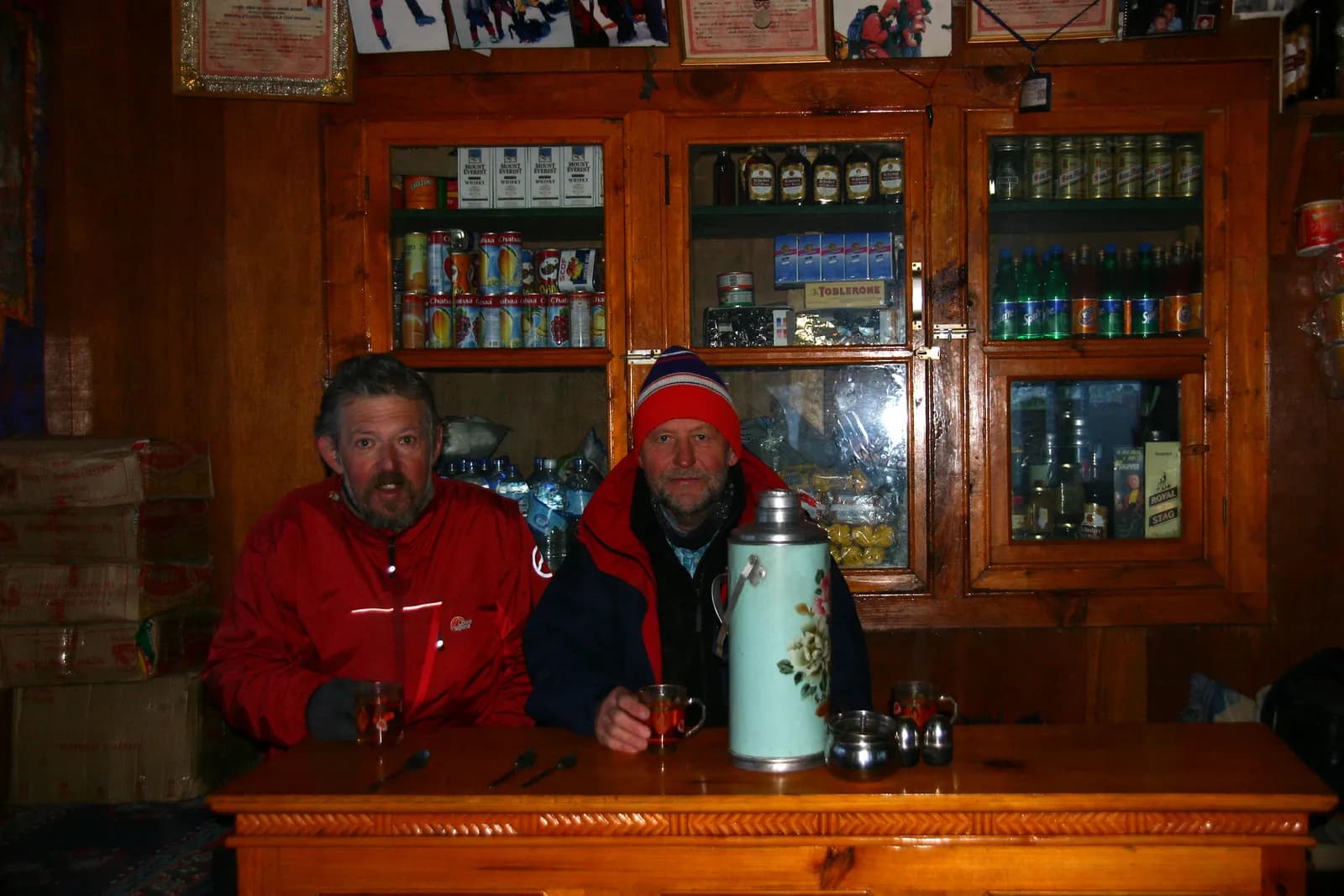
Build hydration into the day. Drink a large glass or a mug of water or tea when you wake, before you leave the lodge. Drink another half litre or so in the first two hours, then sip from your bottle at every rest stop, rather than waiting until lunch. At lunch, have soup or hot tea, which count as fluid, and fill your bottle again. In the afternoon, keep sipping until you reach the lodge, where hot lemon, ginger tea or soup are good choices. In the evening, drink with dinner, then taper so that you are not waking more than once at night. A bottle of hot water in your sleeping bag is a good way to stay warm and to have water ready in the morning, if the lid is tight. Our teahouse prices guide explains how the cost of boiled water and tea changes with altitude, and the water purification guide explains how to make water safe.
Passes, cold and frozen bottles
On pass days, plan for freezing. Water in a bottle in the outer pocket of a pack can freeze in the cold; carry it upside down, since the ice forms at the top first, put it in an insulated cover or inside your jacket, and take a flask of hot drink as well. A hydration hose with a tube freezes first, so blow the water back into the bladder after drinking if you use one, or use a bottle. Start the day with a warm drink, and keep sipping at every stop on the climb. The long days at high elevation, such as Thorong La at 5,416 m on the Annapurna Circuit and Kala Patthar at 5,545 m on the Everest Base Camp trek, are when you lose the most fluid and drink the least. See cold health for what goes with it, and sun protection for the dryness and glare.
What counts and what does not
Water, hot tea without much sugar, diluted squash, soup and broth all count. Caffeinated drinks and alcohol do not help, according to the NHS, which says to avoid them if you are dehydrated; the same advice applies on a trek, where alcohol also affects sleep, balance and judgement, and where the NHS says not to drink while travelling or climbing at altitude. Fizzy drinks and sweets are fine as a treat, but not as your main source. Oral rehydration salts are the right drink if you have diarrhoea or vomiting, as the NHS and CDC say, and a few sachets belong in your first aid kit. For food and stomach bugs, see teahouse food hygiene.
Is it possible to drink too much?
Yes, in principle, though it is uncommon on a trek, and we found no source in the CDC or NHS pages we cite that recommends forcing fluids. Drink when thirsty, aim for pale urine and stop if you feel bloated, nauseated or confused after drinking large amounts, and tell your guide. If you are on medicines that affect fluid balance, ask your doctor. The aim is to be comfortably hydrated, not to meet a number. If you have a headache after a day of drinking plenty, do not assume more water will fix it: follow the altitude rules and rest.
The trail logistics
Carry at least a litre in your day bag, and know where the next refill is. On the Everest Base Camp route, as on the Annapurna Circuit, lodges are every few hours, so a litre or two is usually enough between stops; on quieter routes, carry more. Buy boiled water at the lodge rather than bottled water if you can: it is cheaper and avoids plastic waste that cannot be recycled in the mountains. Refill in the morning, before the walk, and treat the water you refill from streams and taps. Keep a spare bottle in the group, and use a wide-mouth bottle that you can fill from a pot or a pipe.
Partners and hydration
Partners can nudge each other: ask at breakfast, "How is your urine?", and at every stop, "Are you drinking?" It sounds odd, but it works, because nobody wants to stop to drink on a cold slope. Agree to share a flask on pass days and to call a stop when someone slows down. If one of you is vomiting or has diarrhoea, stop and rehydrate before going on, and consider a rest day; see what if your partner cannot continue. The Everest Base Camp partner page and the Annapurna Circuit one are good places to find people who plan for slow days. The altitude and health hub lists the rest of the series.