Upper Mustang versus Lower Mustang and Muktinath
Lower Mustang and Muktinath are open to anyone with an Annapurna permit; Upper Mustang beyond Kagbeni is a restricted area with a daily permit and a guide. How the two compare on cost, days, culture, landscape and rules.

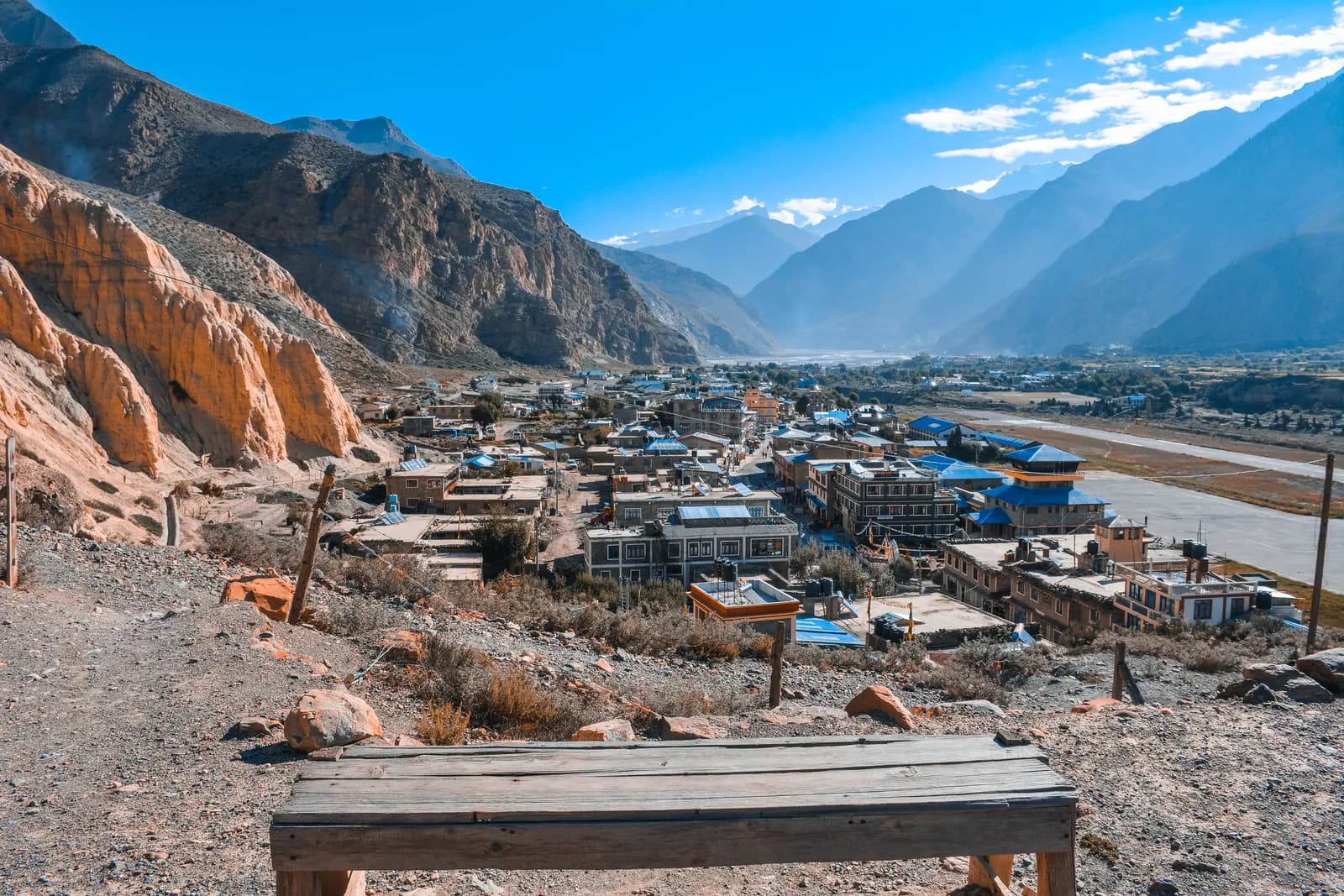
Lower Mustang and Muktinath are open to anyone with an Annapurna Conservation Area permit and need no guide beyond what the Annapurna rule asks; Upper Mustang, which begins at Kagbeni, is a restricted area that needs a special permit, a licensed guide through a registered agency and about 12 days. The scenery changes where the restriction starts: below it, apple orchards, pilgrims and the windy Kali Gandaki gorge; above it, the red cliffs, cave dwellings and walled capital of the old Kingdom of Lo. The question is how much time, money and paperwork you want to spend on the second half.
This guide compares the two, using our Upper Mustang route page and the Kali Gandaki section of the Annapurna Circuit. It sits in the comparisons category; the hub is which Nepal trek is right for you.
رحلات مفتوحة في Upper Mustang Trek (Lo Manthang)
رحلات حقيقية نشرها متنزهون يبحثون عن شركاء.

At a glance
| Factor | Lower Mustang and Muktinath | Upper Mustang |
|---|---|---|
| Where | Jomsom, Marpha, Kagbeni, Muktinath | Beyond Kagbeni to Lo Manthang |
| Highest point on our plan | Muktinath, 3,800 m | Marang La and nearby passes, about 4,280 m |
| Time | 2 to 4 days from Jomsom | 12 days from Pokhara |
| Permit | ACAP, NPR 3,000 | Restricted Area Permit plus ACAP |
| Guide | Nepal Tourism Board rule of April 2023 applies in ACAP | Required through a registered agency |
| Cost driver | Jeep or short walks | USD 50 per day permit, guide, flights |
| Character | Pilgrimage, orchards, windy gorge | High desert, Tibetan culture, walled city |
What counts as Lower Mustang
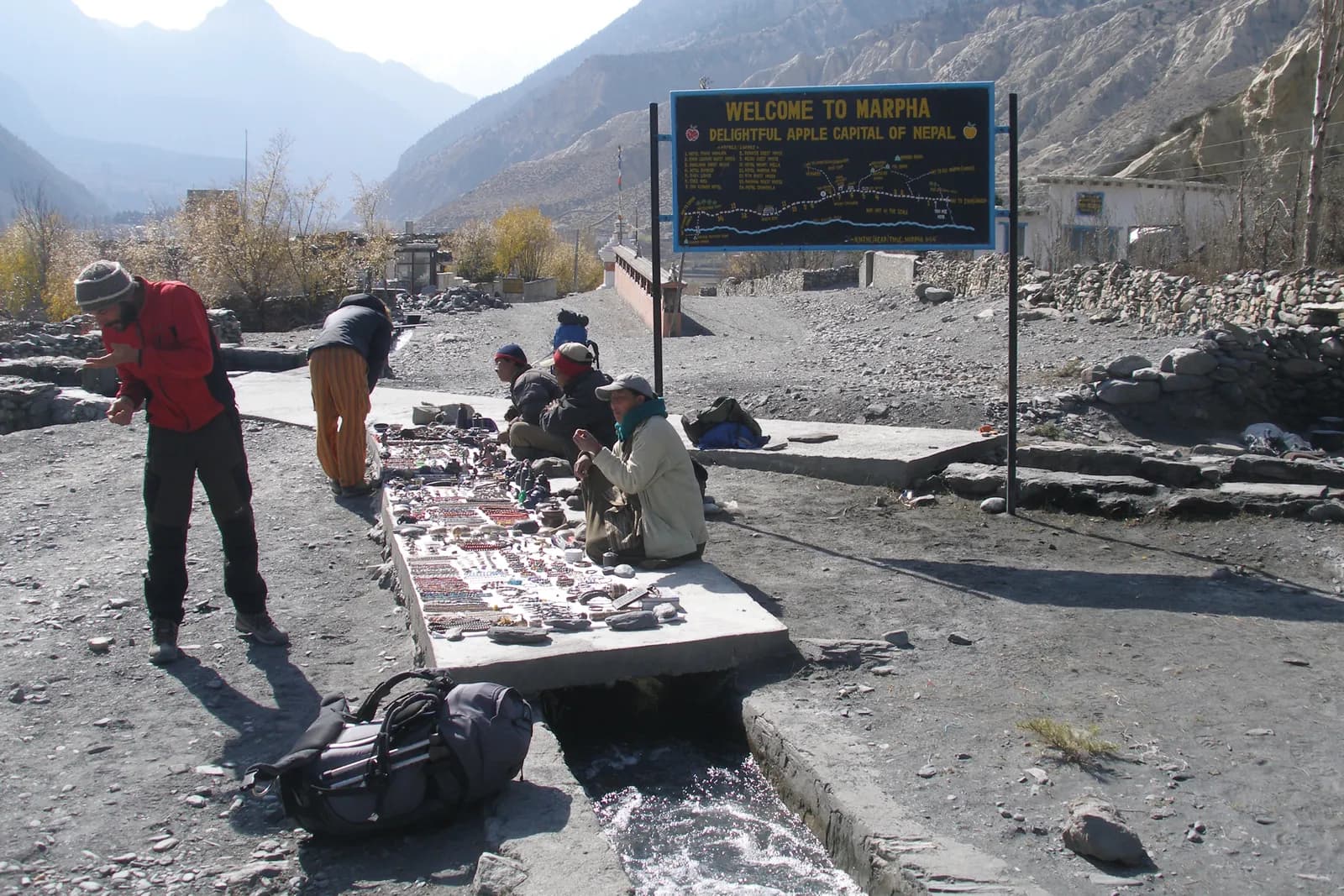
The name is informal. Mustang District stretches from the lower Kali Gandaki around Jomsom and Marpha up to the Tibetan border. Walkers use "Lower Mustang" for the part that is open under the Annapurna Conservation Area permit: the Kali Gandaki valley around Jomsom (2,720 m), the apple town of Marpha, Kagbeni (2,810 m), where the restricted area begins, and the pilgrimage site of Muktinath (3,800 m on our Circuit plan).
On the Annapurna Circuit, you come down from Thorong La to Muktinath on day 9 of our 14-day plan, walk to Jomsom on day 10 (about 5 hours) and continue down the valley. The same places are easy to reach without the Circuit: fly or drive to Jomsom and walk up to Kagbeni and Muktinath. See Pokhara to Jomsom flight versus jeep.
What Upper Mustang adds
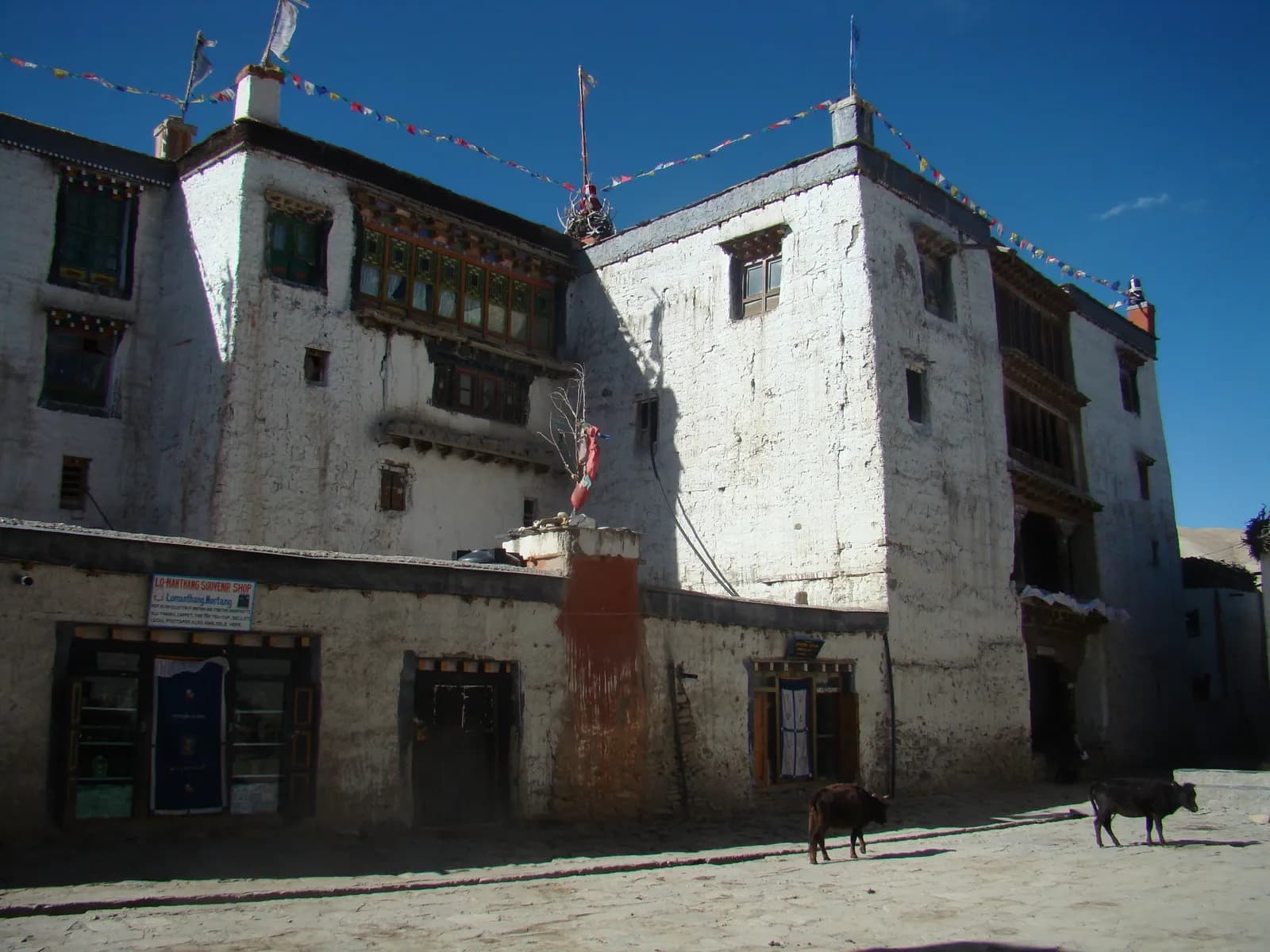
The Upper Mustang trek in our plan leaves Jomsom by the Kali Gandaki, enters the restricted area at Kagbeni and runs north through Chele (3,050 m), Syangboche (3,800 m), Ghami (3,520 m) and Tsarang (3,560 m) to Lo Manthang at 3,840 m, then returns by a different route via Dhakmar, Ghiling and Chhusang. The landscape is high desert: ochre cliffs, wind-carved canyons, cave dwellings, whitewashed chortens and long mani walls, with Tibetan Buddhist villages every few hours. Lo Manthang is a walled town with monasteries and a royal palace, and it is the main reason to go.
It is not a high-altitude challenge by Himalayan standards; our plan peaks at about 4,280 m and sleeps at 3,840 m, and our route page rates it moderate. The main discomfort is the afternoon wind, so days start early. Read our full Upper Mustang itinerary and best time for Upper Mustang.
Permits and the guide rule
This is where the two diverge most. Upper Mustang is a restricted area: you need a Restricted Area Permit from the Department of Immigration through a registered agency, and a licensed guide is part of the permit; the Department of Immigration reminded stakeholders of this in June 2026. The Nepal Tourism Board lists the permit at USD 50 per person per day (Lomanthang, Lo-Ghekar Damodarkunda and Baragung Muktichetra). The trade body TAAN lists USD 500 for the first 10 days and USD 50 per extra day, which comes to the same for a 10-day stay; confirm with your agency. Days count from entry at Kagbeni. The ACAP entry permit, NPR 3,000 as of October 2026, is also needed. Our Upper Mustang permit guide has the detail.
Lower Mustang needs only ACAP. For the protected-area rule, a licensed guide through a registered agency is required in restricted areas (Department of Immigration) and, under the Nepal Tourism Board rule of April 2023, in national parks and conservation areas, where 2026 operator reports say checkpoints enforce it in Annapurna and Langtang but not in Khumbu (checked 19 October 2026). So plan on a guide for Muktinath too, and see the guide rule explained. Individual applications for restricted-area permits have been possible since 22 March 2026, but a guide is still required.
Cost
The Upper Mustang trek costs more because of the permit, the longer duration and the flights. In our region data, the guide rate is NPR 4,000 to 5,400 a day and a porter NPR 2,100 to 3,400 as of October 2026, from operator price guides, and the 12-day plan uses 11 guide days. A Pokhara to Jomsom flight is about USD 120 to 200 each way. A 10-day permit at the NTB rate is USD 500 per person. Share those fixed costs and the per-person figure falls, which is why many people look for a partner; see splitting guide and porter costs.
A Lower Mustang add-on is cheap by comparison: a few nights in lodges, ACAP, and a jeep ride or short walks. On a longer Annapurna route it adds only days.
Season and weather
Both lie in the rain shadow of the Annapurna and Dhaulagiri ranges, which is why Upper Mustang's season in our region data runs March to November, longer than most of Nepal, and why people go when the rest of the country is wet. Wind is the constant: it builds in the afternoon in the Kali Gandaki gorge, so you walk early. Jomsom flights run in the morning and depend on the weather, so keep a spare day. See monsoon trekking in Nepal and rain-shadow routes.
Culture
Muktinath is a pilgrimage site sacred to Hindus and Buddhists, with a temple complex and a long tradition of pilgrimage. Kagbeni is a medieval-looking village at the junction of two valleys. Upper Mustang is the heart of Tibetan culture in Nepal, with monasteries such as Ghar Gompa on the return, the walled city of Lo Manthang, and local festivals; our May guide mentions the Tiji festival timing. Read monastery etiquette before you go.
Altitude is less simple than it looks
Upper Mustang peaks at about 4,280 m, which sounds modest, but the daily sleeping heights in our plan move around. Day 2 ends at Chele (3,050 m) and day 3 climbs to Syangboche (3,800 m), a gain of 750 m in sleeping height in a single day, which is more than the NHS guidance of no more than 500 m extra sleeping height a night once you are above 3,000 m. The plan then drops to Ghami (3,520 m) and climbs slowly to Lo Manthang (3,840 m), where it takes a rest day. Our route page rates the trek moderate, and the main discomfort is wind, but the early gain is a reason to ask your agency how it handles acclimatisation and to keep a spare day. Lower Mustang is easier in this respect: Jomsom (2,720 m) and Kagbeni (2,810 m) sit low, and Muktinath at 3,800 m is the only real step up. If you are unsure how your body responds to height, use a few nights around Jomsom and Kagbeni as a warm-up before going north, and read the acclimatisation schedule and altitude sickness basics.
Which should you choose?
- A week or less, or want to extend a Circuit: Lower Mustang and Muktinath.
- Culture, cliffs and Tibetan Buddhism, about 12 days: Upper Mustang.
- Tight budget: Lower Mustang.
- Monsoon-season trip: either, but check flights and roads.
- Both: fly into Jomsom, do Muktinath and Kagbeni first as a warm-up, then continue north with the right permit.
For the region background, read the Upper Mustang region page, and to find a partner for the permit and guide costs, see the Upper Mustang partner page and how to find a trekking partner safely.