Teahouse Treks versus Camping Treks in Nepal
Most Nepal treks are teahouse treks with a bed and meals every night; a few remote ones are camping treks with a crew. Costs, comfort, flexibility, route choice, footprint and which popular routes need which.
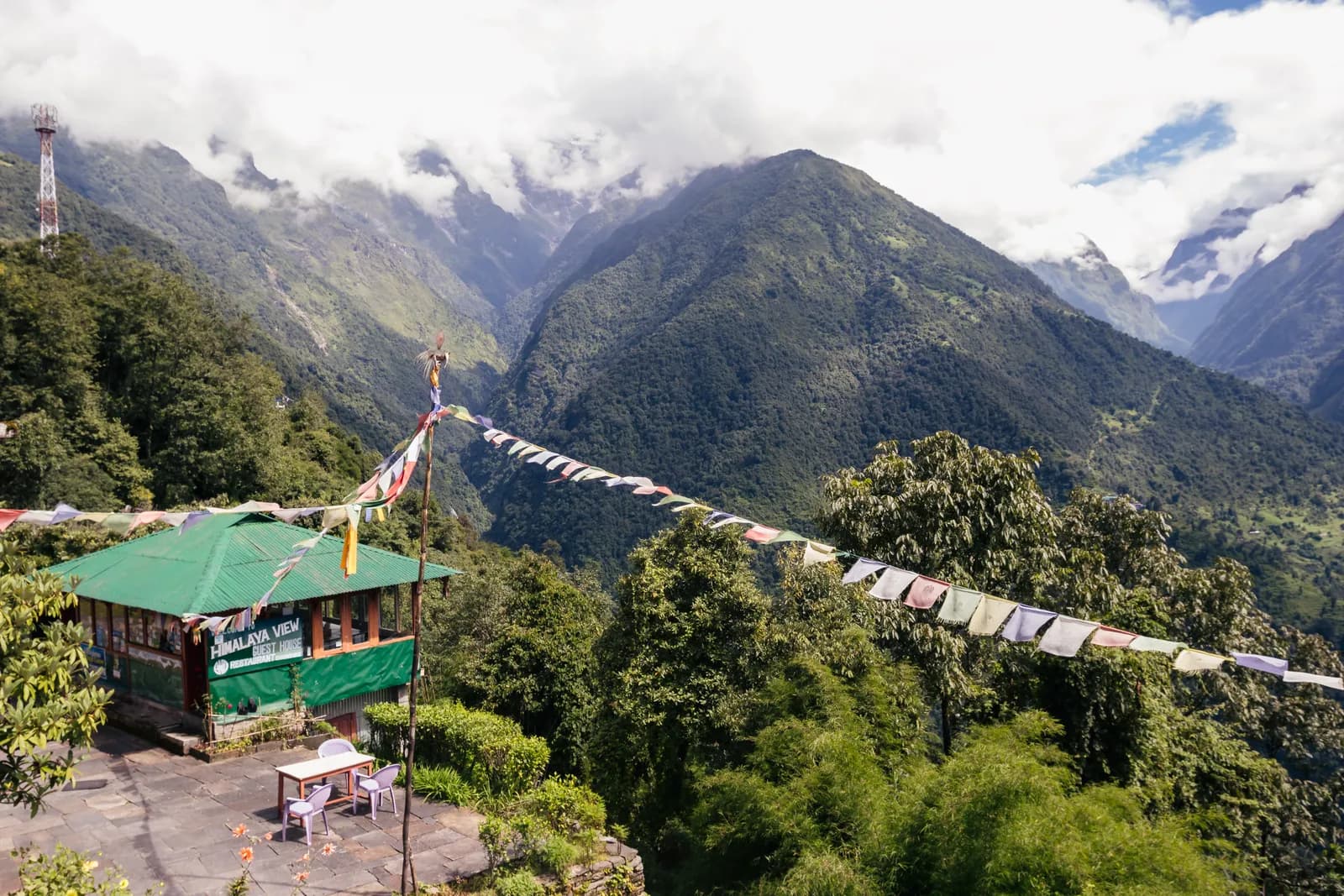
A teahouse trek means you walk lodge to lodge and carry little; a camping trek means an agency supplies tents, a cook and a crew so you can reach places with no lodges, and in Nepal the choice is mostly made by the route: the classic Everest, Annapurna and Langtang trails are teahouse treks, while the Dhaulagiri Circuit, Upper Dolpo and parts of Kanchenjunga and the far west are camping or homestay treks. For most first trips the answer is teahouse, because it is cheaper to organise, more flexible and more social. This guide explains how the two compare and where each fits.
The comparison hub is which Nepal trek is right for you; for what a teahouse trek is, start with what is a teahouse trek.
رحلات مفتوحة في Annapurna Circuit Trek
رحلات حقيقية نشرها متنزهون يبحثون عن شركاء.

At a glance
| Factor | Teahouse trek | Camping trek |
|---|---|---|
| Where you sleep | Lodge room, usually a twin with a thin mattress | Your tent, set up by the crew |
| Meals | Lodge menu, bought nightly | Cook and kitchen crew, carried food |
| What you carry | A daypack, with a porter for the main bag | A daypack |
| Where it works | Main trails with lodges every few hours | Routes with few or no lodges |
| Flexibility | High: stop early or late, change lodges | Lower: the crew sets camps and days |
| Typical cost basis | Lodge bills, meals, guide and porter | Agency price for crew, tents, food, permits |
| Footprint | Lower per person | Higher unless managed well |
How a teahouse trek works
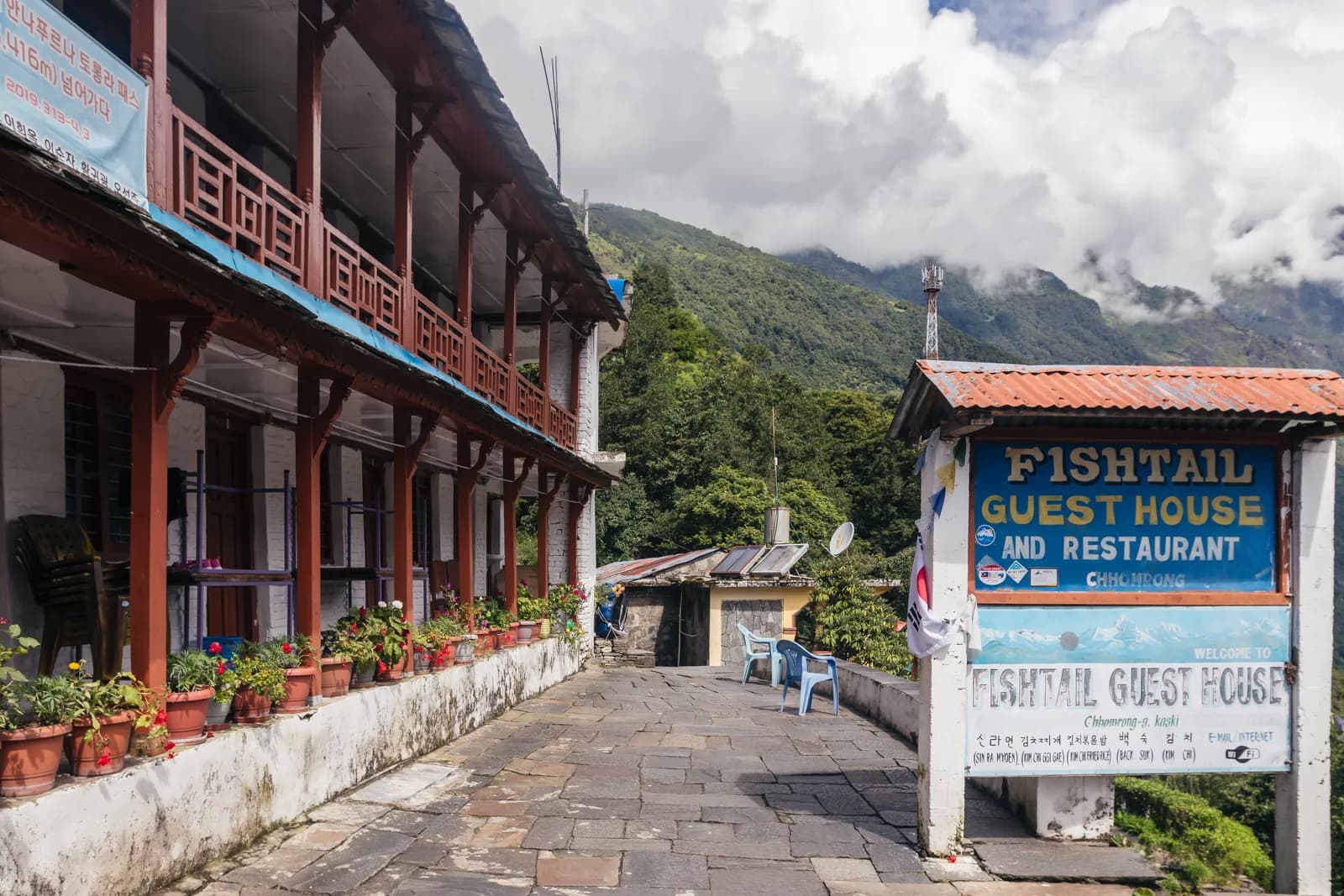
Teahouse is the common word for a trekking lodge. You arrive in the afternoon, get a room (often a twin with two beds and a shared bathroom), eat in a heated dining room and pay for food and lodging as you go. A porter carries the main bag; you walk with a daypack. Rooms are cheap and the meal is the main cost, with prices that rise with altitude.
In our cost data for Everest, a room costs NPR 300 to 1,200 below 2,500 m, NPR 800 to 1,500 between 2,500 and 3,800 m and NPR 1,000 to 2,500 above 3,800 m, and a dal bhat costs NPR 500 to 900, NPR 1,000 to 1,800 and NPR 1,200 to 2,000 in those bands, as of October 2026. On Annapurna the ranges are lower: a room is NPR 300 to 800 below 2,500 m, and a dal bhat NPR 500 to 1,000. Our post on teahouse prices by altitude gives more detail. The upside is the flexibility: if you are tired you stop at the next lodge, and if the weather is bad you sit in the dining room.
How a camping trek works
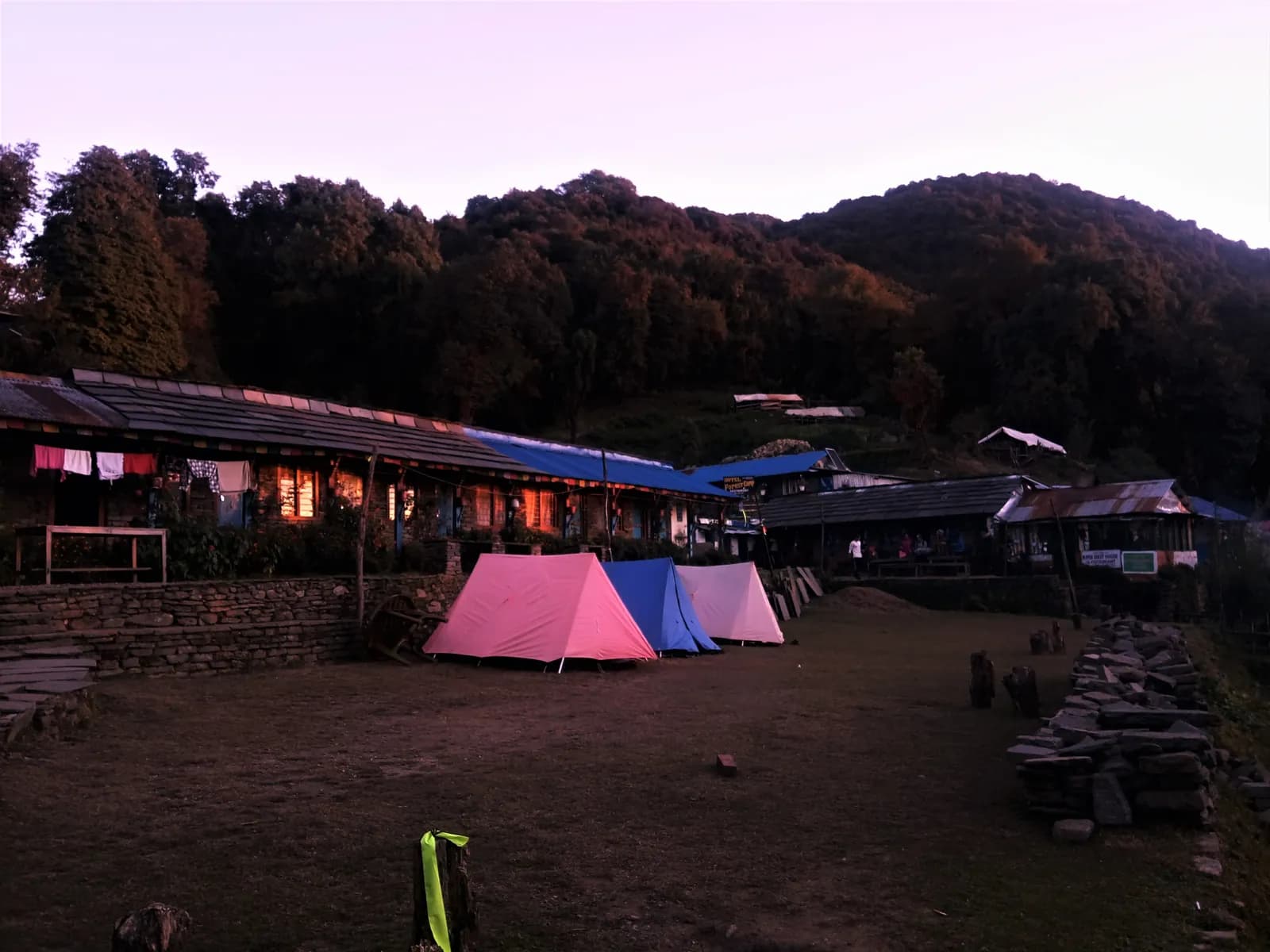
A camping trek is an agency-organised expedition: a guide, a cook and kitchen crew, porters or animals to carry the tents, food, fuel and stoves, and a team that pitches camp each day. You walk with a daypack and arrive at a prepared camp with a mess tent and hot meals. It is the only practical option in places with no lodges.
The agency's price covers the crew, equipment, food, permits and transport, so it cannot be built up from lodge bills, and we publish no figure. Our Dhaulagiri region page says plainly that camping gear and food are carried from the road, so the cost is in the agency price, and the Dolpo region page says that permits, food, camping gear and flights make Upper Dolpo one of the more expensive treks in Nepal.
Which routes are which
| Route | Style | Notes from our region data |
|---|---|---|
| Everest Base Camp | Teahouse | Lodges at every stop |
| Annapurna Circuit | Teahouse | Teahouses nightly |
| Dhaulagiri Circuit | Camping | About 17 days, camping all the way, two passes above 5,200 m |
| Upper Dolpo | Camping or homestay | Most itineraries use tents and a cook; food carried in |
| Kanchenjunga Circuit | Mixed | Small seasonal lodges or camps; agencies often carry tents and a cook |
Other remote routes follow the pattern. The Limi Valley in Humla is run as a camping or homestay trek, and the Api Base Camp route has homestays in the lower villages and tents above. A route that lists "tents" in its description is a camping trek whatever the permit.
Comfort and sleep
Comfort is mixed. Teahouse rooms are basic and cold, walls are thin and in peak season bathrooms are shared, but there is a heated dining room, company and a roof. Camping gives you a private tent and a crew that pitches it, serves hot tea in the morning and cooks dinner, but nights are colder, there is no heated common room and everything is damp after rain. Whichever you choose, a warm sleeping bag helps; see sleeping bag temperature ratings and the packing list. On a camping trek the agency may provide tents and mats, so ask exactly what is included.
Food and hygiene
Teahouse food is a fixed menu, with dal bhat, noodles, fried rice, potatoes and eggs, and its quality varies. You choose what you eat and when. Camping food is cooked by a crew; a good cook is a major plus, and hygiene depends on the agency. Our guide to dal bhat and the teahouse menu shows what you will eat on lodge routes. Bring snacks either way.
Flexibility and risk
A teahouse trek is forgiving. You can add a rest day, shorten a day, stay in a different village or leave the route at a road. A camping trek is less so: camps are placed in advance, the crew's food is planned for the days, and in remote areas retreat is hard. If you get ill on the Dhaulagiri Circuit, the nearest help can be days away, which is why every operator supplies a licensed guide and a camping crew. For the same reason, build rest and spare days into any camping itinerary and check what the agency's evacuation plan is.
Permits and the guide rule
The Dhaulagiri Circuit is not a restricted area, but it crosses the Annapurna Conservation Area on its last days, so it needs the ACAP permit (NPR 3,000 as of October 2026) and a TIMS card from an agency, and our region page says to treat a guide and camping crew as the rule. Upper Dolpo and Kanchenjunga are restricted areas where a licensed guide through a registered agency is part of the permit. The wider guide rule is: a licensed guide through a registered agency is required in restricted areas (Department of Immigration) and, under the Nepal Tourism Board rule of April 2023, in national parks and conservation areas, where 2026 operator reports say checkpoints enforce it in Annapurna and Langtang but not in Khumbu (checked 19 October 2026). See the guide rule explained and Dolpo restricted-area permits.
Footprint and crew welfare
A camping trek needs more people and more equipment, so it has a bigger footprint. Our Dhaulagiri page recommends an agency that carries fuel instead of burning wood, packs out rubbish, pays and equips its porters properly and does not overload them. The same questions apply to any trek: ask about porter clothing, insurance and loads; see guide versus porter roles.
Which should you choose?
- First trek, flexible schedule, lowest cost to organise: teahouse.
- Remote route with no lodges: camping, with an agency that is experienced there.
- Want a roof, heat and company: teahouse.
- Want solitude and an empty trail and have the budget: camping on a remote route.
- Unsure: start with a teahouse trek, then decide whether you want the extra step.
Mixed styles and what to ask
Not every route is purely one or the other. Kanchenjunga has small seasonal lodges or camps at Lhonak, Selele, Tseram and Ramche, which is why agencies often carry tents and a cook, and in the shoulder seasons our region page says you should not count on a bed at every stop. Remote routes may mix homestays in the lower villages with tents higher up. When you compare quotes, ask exactly which nights are in lodges, homestays or tents, who provides the tent, mat and toilet tent, how many crew travel with you, what the fuel plan is, and what happens if a camp is cut short by weather. Ask also how many spare days are built in, because camping itineraries have less room to improvise than lodge routes. A clear answer to these questions tells you more about an agency than the price does.
Sharing a camping trek
Camping trips have high fixed costs, which makes sharing attractive: more trekkers dilute the tents, cook and guide (permits stay per person). See splitting guide and porter costs fairly and the Dhaulagiri partner page, and read how to vet a trekking partner before committing to more than two weeks together. The comparisons category has more.
خطط لهذه الرحلة
- دليل منطقة Everest (Khumbu)
- دليل منطقة Annapurna
- دليل منطقة Kanchenjunga
- دليل منطقة Dolpo
- دليل منطقة Dhaulagiri
- Trekking partner for Annapurna Circuit Trek
- Trekking partner for Everest Base Camp Trek
- Dhaulagiri Circuit trekking partners
- Upper Dolpo: Shey Phoksundo to Shey Gompa trekking partners
- مسار Annapurna Circuit Trek
- مسار Everest Base Camp Trek
- مسار Dhaulagiri Circuit
- مسار Upper Dolpo: Shey Phoksundo to Shey Gompa